Geely Xingyuan’s Bold Surge Past Tesla and BYD in China
“‘How does a $9,700 hatchback outsell Tesla’s global bestsellers in the world’s largest EV market?” This question has occupied China’s automotive scene all through 2025, with Geely’s Xingyuan car breaking all rules set in the electric car market.

Launched in October of 2024 with the Geely Group marque, which also encompasses Volvo, Polestar, and Zeekr brands, Xingyuan has managed what few others could: to displace BYD Seagull and Tesla Model Y and become China’s top-seller in the first six months of 2025, making great strides in only passing November with almost 430,000 units sold, and breaching the half million mark in just 14 months, positioning itself as the third best-seller worldwide, next only to Tesla’s Model Y and Model 3 but envisioned to take over the second spot by year-end.
The key to this success is the strong value for money. The 2026 model begins at 68,800 yuan, or around $9,700, and goes all the way to $12,340, firmly in the affordable category that for years was led by BYD’s Seagull. However, the features offered by the Xingyuan are clearly much better suited to the compact car market. Also, the model relies on Geely’s Sustainable Experience Architecture-Entry platform and provides its customers with two types of lithium-iron phosphate batteries, the 30kWh model guaranteeing a CLTC range of 310 miles, while the larger 40kWh variant goes all the way to 410 miles. Though the CLTC range is certainly very good as far as EPA is concerned, the expansion of the range does not necessarily increase in the same measure due to China’s developed charging infrastructure.
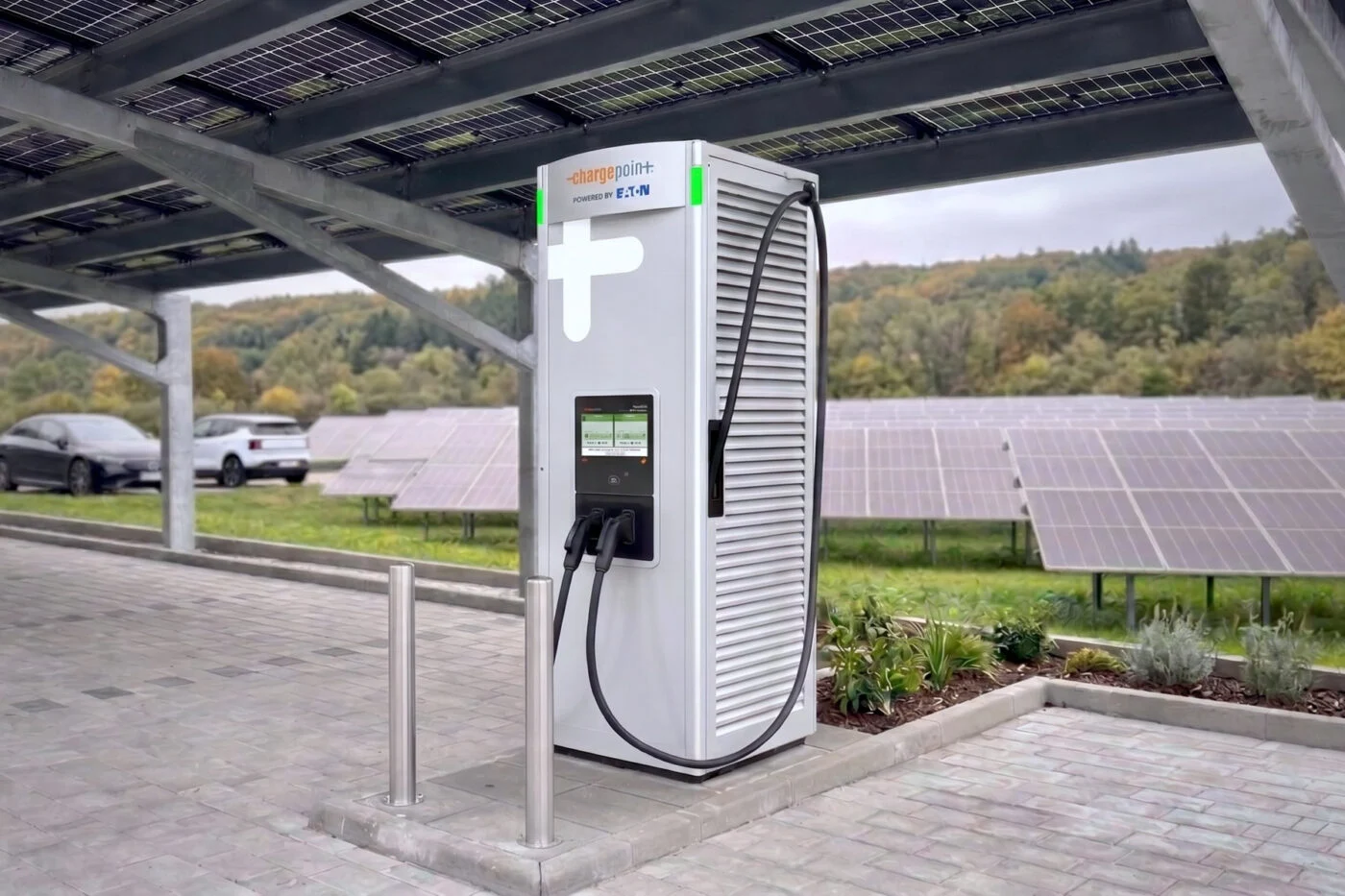
Such infrastructure has no equal in the world today.Today, there are over 3.5 million public charging points in the country, 1.6 million fast charging points, as well as 3.4 million shared-use private charging points in the country. There is only a denominator of two charging points per five vehicles in cities where owners of EVs are presented with a convenience that mitigates relatively low battery capacity. At the same time, petrol infrastructure shrinks as thousands of gas stations are set to shut down by the end of this decade, fully juxtaposing convenience in favor of electricity-based transportation solutions.
The engineering configuration also distinguishes the Xingyuan from its budget competitors. As for the powertrain, it features rear-wheel drive and independent rear suspension, providing a smoother ride than the Seagull, whose front-wheel drive and torsion beam rear suspension result in a harsher ride experience. Geely also installed the Flyme Auto intelligent cockpit solution, commonly found only on more premium automobiles, with its 14.1-inch screen on the infotainment screen and 8.8-inch screen on the gauge cluster, aside from its generous trunk and frunk capacity, measuring 375 and 70-liters respectively, beating the Golf from Volkswagen by capacity, given the Xingyuan’s compact size.
Chinese reviewers have also complimented the car by stating that it has high-quality material and a generous amount of space, and it is a pleasure to find these elements in a car of this price. This is an aspect that appeals greatly to first-time EV owners. The adaptability of the SEA platform reveals some underlying strategic competitiveness. Geely’s platform is designed to offer multiple driving modes, motor layouts, and even Range Extenders, allowing for economies of scale across its nine car brands. According to Li Shufu, its chairman at Geely Holding, “Our development of this transformative electric vehicle architecture marks the biggest leap forward at Geely in more than a decade.” The open-platform strategy of the SEA further beckons collaborations among other carmakers, potentially furthering its reach in the market.
Battery supply chain support also has an essential role in the speedy production of the Xingyuan model. CATL, the supplier of the battery powering the LFP battery pack in the vehicle, has made an unassailable lead in the global LFP battery supply for the electric vehicle, with 38.1% market share and an installation base of 355.2 GWh in the first ten months of 2025. Not all the trappings are without flaw, however. The lack of rear wipers, automatic front wipers, and remote trunk release is clearly the result of proprietary cost-cutting.
But such compromises have done little to slow the rush of enthusiasm, where the package offers performance, comfort, and technology at such an unexpected premium. The EV market in China is also changing at a rapid pace. Battery EVs comprised 61.6% of overall EV sales in October 2025, with plug-ins falling out of favor. The Xingyuan’s success is reflective of this trend, with consumers favoring pure EVs that offer an optimal blend of price and mobility. Rivals offered by Wuling, Xiaomi, and BYD are ongoing, but the Geely hatchback has clearly demonstrated that a superior offering at an optimal price can challenge even the most heavily established market leaders.