Tesla’s 4680 Battery Program Unravels Amid Cybertruck Sales Crash

“A failure of this nature in the supply chain meant not a stumble but a structural failure, as I pointed out earlier. Tesla’s enormously ambitious 4680 battery project, which was a vital step for making cheap high volume EVs a reality in the near term, will now see a drastic reduction in its supply chain with high nickel cathode materials. And this time, the reason is that the said company, L&F Co., based in South Korea, has reduced Tesla’s agreement to supply high nickel cathode material by a staggering 99% to a mere $7,386 from $2.9 billion.”
1. The Contract Collapse
In the filing by L&F, the historic reduction was revealed, described by the company as “change in the quantity of supply.” However, it did not take long for analysts to observe a link between the historic reduction and the Tesla incapability of scaling up the production of its 4680 cells. These cells, which are cost-effective and have higher energy density, have a tough dry electrode manufacturing process, which, according to Elon Musk, “is a challenge to scale up.” In essence, Tesla does not need the cathode materials.
2. Cybertruck’s Role in the Decline
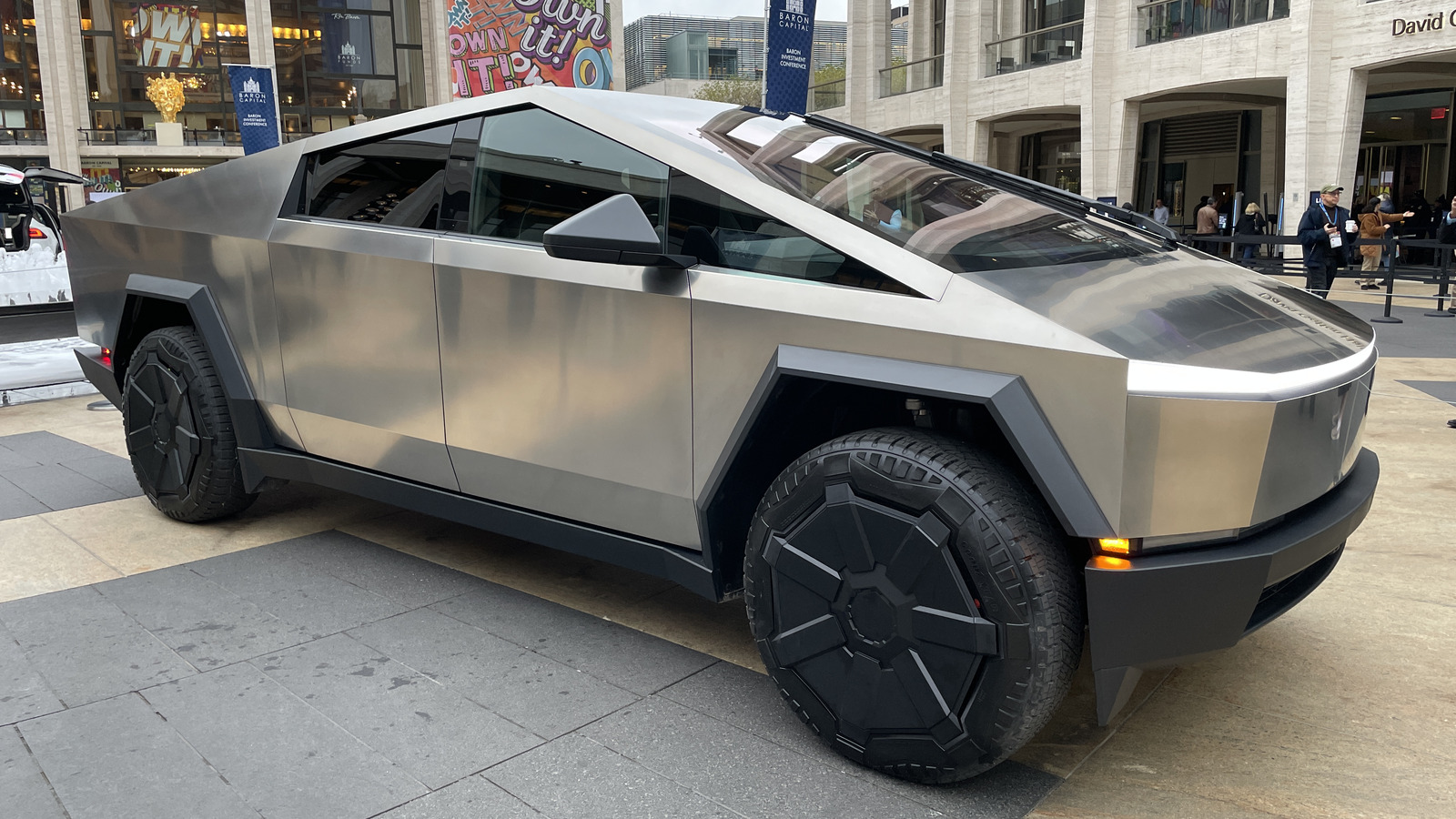
Currently, Cybertruck is the only Tesla model that uses 4680 cells. This has been very costly for Tesla. The production capacity of Giga Texas is 250,000 units per year, but it is producing only 5,000 per quarter in 2025, which is just 10% capacity utilization. Tesla is cutting production so that it won’t increase the estimated 3,000 vehicles in U.S. inventory.
3. Best Seller to Sales Slowdown
Cybertruck topped the list of bestselling electric pickup trucks in America in 2024, with a total of 38,965 units sold. Nevertheless, the sale numbers exhibited a significant drop from Q3, which totaled 16,692 units, to Q4, only totaling 12,991 units. Although complementary Supercharging services for a lifetime and 0% APR financing were offered, this failed to slow its slowing sales, confirming its difficulty in enhancing the sales of the cybertruck, as rendered by the analyst named Stephanie Valdez Streaty, who added, “it’s going to. continue to be challenging to really increase sales for the Cybertruck significantly.”
4. Manufacturing Bottlenecks
The dry electrode technology, which has been one of the forefront technologies of the 4680’s functioning, has been quite hard to mass manufacture as well. The problem with the yield, which has prevented mass manufacturing, has resulted in the inability to attain the objective to manufacture millions of cheap EVs using these batteries in the year 2020, as planned by Musk. The problem created in the technological field has presently shown its effects on the supply chain, having left L&F with no one to sell their high nickel cathode products to in the market.
5. Industry-Wide EV Retrenchment
Trouble at Tesla is just the symptom of a contracted EV battery sector. The South Korean battery makers are threatened by reduced car manufacturers’ plans related to EVs. LG Energy Solution is forecast to lose $9.41 billion revenue due to scrapped contracts, and SK On has walked out on the joint venture deal involving Ford Motor. The loss of federal EV subsidies in September, which affected the US, caused Ford Motor to write down $19.5 billion.
6. Cybercab’s Uncertain Future
Another car that will come equipped with the 4680 cells will be the Tesla Cybercab, and it is set for release in early 2026. There is very little hope that it will be released without the steering wheel, as Musk has promised this to the public. Though, it is certain that: “Tesla has not sought any exemptions for the Cybercab, and such exemptions are necessary for it to be allowed onto public roads without following any legitimate safety regulations.”
7. Autonomous Vehicle Risk
Moreover, the robotaxi tests carried out by Tesla in Austin are already being investigated by NHTSA for cases of strange driving occurrences. The tough parameters also set by Tesla in their tests, which do not feature any adverse weather and involve no interactions at intersections if there are fewer than 18 passengers, are indicators that Tesla has been lagging behind Waymo robotaxi tech, which has more than enough autonomous driving miles.
8. Strategic Implications for Tesla
“The L&F contract failure is only a blip on the screen but also the inability to manage product demand, manufacturing, and supply chain commitments by Tesla. With the product sale, the Cybertruck, underperforming and the new product offering, the Cybercab, having issues with the government and technology, the 4680 program future lies in limbo status today. This affects the future of Tesla to make way towards cost reduction. The lack of economies of scale affects the future of delivering an electric car priced at $25,000.”