Atlas Reached the Factory Before Optimus Because It Chased Components
What constitutes a “real” humanoid robot is not a stage show it’s whether the robot can be maintained, trained, and put to work on another company’s production line without a research team in attendance. At CES 2026, Boston Dynamics demonstrated this threshold with Atlas. Although the robot’s manners of waving, bending, and a torso turn that would be physically impossible for a human to accomplish were interesting, they were only secondary to the point being made: that Atlas has evolved from a lab robot to a development platform, with delivery contracts already signed for 2026 with Hyundai and Google DeepMind. This is important because most humanoid robots are stuck in pilot cages, where reliability is assumed rather than proven.

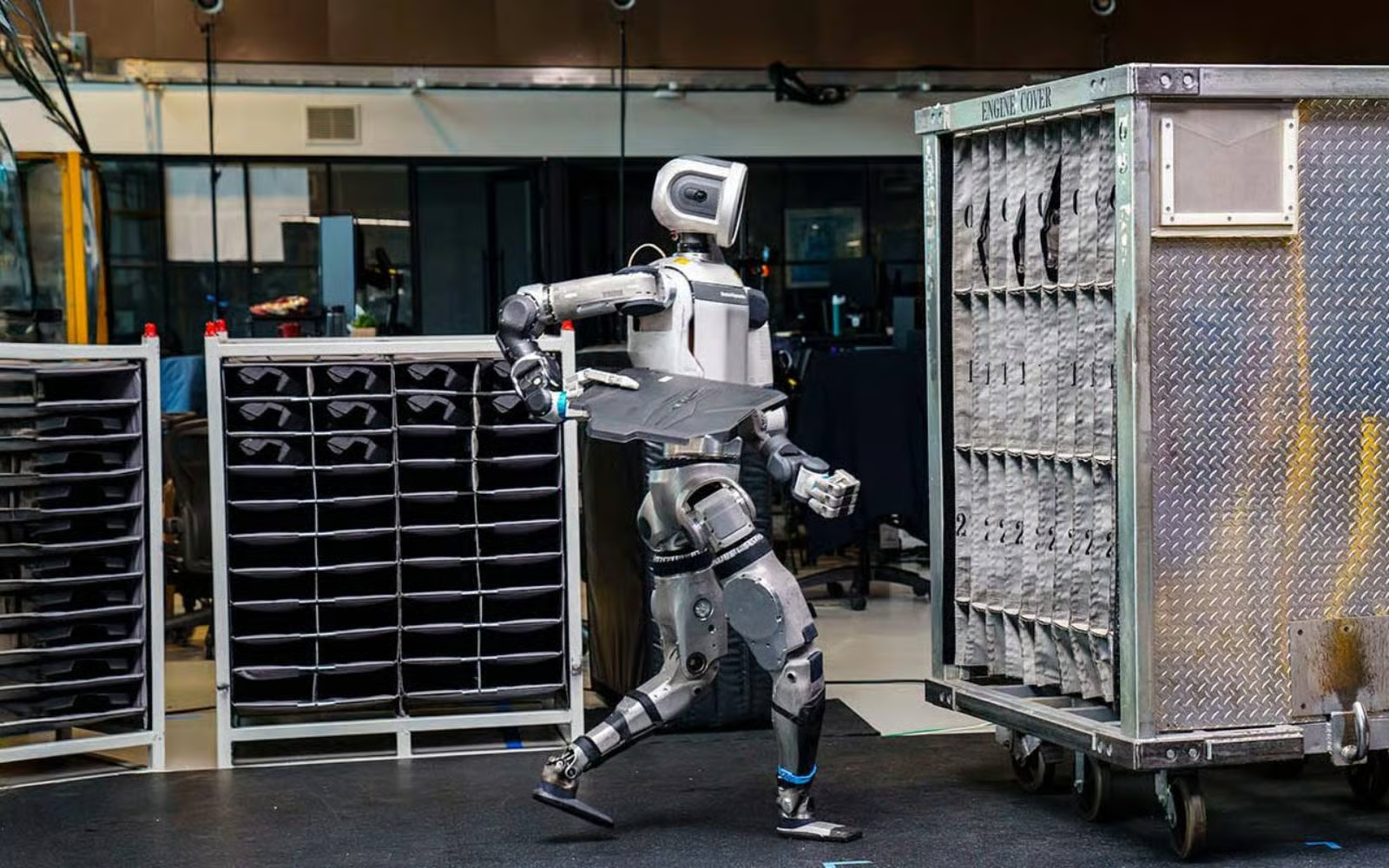
The design of the Atlas production robot is scaled and engineered, like industrial robots, to be 6.2 feet tall, weighing about 198 pounds, with a 7.5-foot reach and 56 degrees of freedom in fully rotational joints. It can support 110 pounds and 66 pounds continuously. It is designed to withstand conditions that would be brutalizing to delicate prototypes rated IP67 and designed to withstand -4°F to 104°F conditions. These qualities do not represent a humanoid designed to imitate a human; they represent a machine designed to outsmart human joint capabilities in a constrained environment, where turning around, stepping aside, and rotating a load are the hidden bottlenecks.
One of the most telling aspects of “factory intent” is power management. Atlas runs for about four hours on two battery packs, and then goes off to a station to switch out the packs in about three minutes before getting back to work. Recharge time is estimated to be about 90 minutes. From a manufacturing standpoint, this is not a convenience function but a scheduling primitive that enables planning of uptime without having to improvise a human intervention every time the robot runs out of power.
The other is safety and integration. Boston Dynamics positions the safety and integration aspect of Atlas by saying that it is suitable for use in collaborative working environments, with a 360-degree perception stack that can detect nearby humans and automatically pause, with padding and reduced pinch points to reduce the likelihood of contact. At the enterprise level is the Orbit software that integrates Atlas with factory software, including Manufacturing Execution Systems and Warehouse Management Systems. However, the greatest jump is in what Atlas is capable of on top of its actuators.
Boston Dynamics and Google DeepMind are working on applying Gemini Robotics foundation models to enable Atlas to learn industrial tasks by watching and then generalize. According to Carolina Parada, senior director of robotics at Google DeepMind, “The goal is to give Atlas the capability to understand the physical world the same way we do.” Boston Dynamics’ Alberto Rodriguez has stated about their collaboration that it is about “visual-language-action models,” a reminder that the problem is not simply to see parts or to touch them but to integrate all three view, language, action to safe action. The Hyundai roadmap also illustrates why it is components, and not choreography, that ultimately will determine who gets to market first.
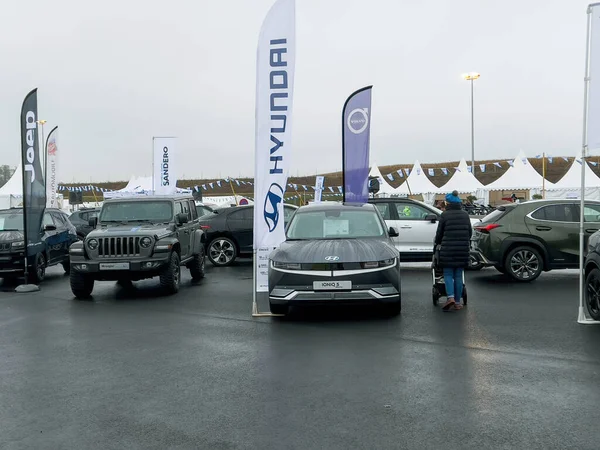
The first use of parts sequencing has been planned out by the company in 2028 at their Georgia facility, with hopes of expanding to more complex assembly by 2030. In conjunction with this, Hyundai has also outlined a robotics factory with production capacity for 30,000 robots per year. This is more about supply chain maturity gearing, sensors, actuators, batteries, and edge compute that can be procured, tested, and supported like automotive parts. Boston Dynamics has also stated that their product, Atlas, is designed to reduce special parts and plans for compatibility with the automotive supply chain, with Hyundai Mobis a large supplier of actuators.
In the industry at large, the forecasts, such as IDTechEx’s forecast that humanoid robots could approach US$30 billion by 2035, also indicate the same thing: that the winners will not be those who come up with the most interesting biped. They will be the ones who succeed in creating a bill of materials for humanoid robotics that has uptime, maintainability, and a learning stack that can be ascertained and deployed.