


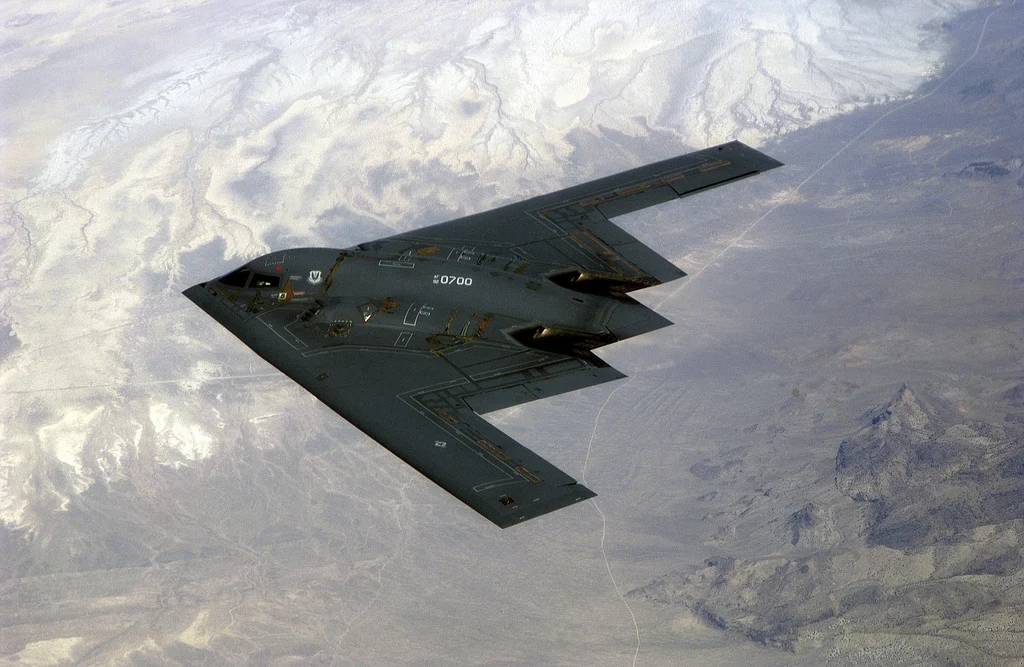
Why the B-2’s Stealth Design Locked In Its Biggest Limitation
First, the very idea of the B-2 Spirit was based on a harsh engineering trade off prioritizing the ability of the bomber to survive in highly sophisticated air defenses. It resulted in one of the most unique bombers ever built, but also forced the aircraft to operate within certain limitations, which it has never been able to overcome. The use of a flying wing configuration, buried engines, internal weapons delivery, and alignment of surfaces made the B-2 invisible on radar screens from the very beginning. Thus, low observability was never simply a feature added during late development stages, it defined all aspects of the aircraft’s design.

This, of course, explains why the main weakness of the bomber was never just an issue that needed to be addressed. Indeed, the B-2 Spirit was developed during the 1980s as a replacement for a traditional bomber capable of penetrating Soviet integrated air defenses. It traded high maneuverability for low observability, which meant giving up many conventional aerodynamics features. While a flying wing aircraft has a lot of benefits when it comes to radar signature reduction, it still requires continuous corrections to be stable, which makes flight control software essential. This same design resulted in a need for extremely precise and careful construction, maintenance, and scaling of the production into a larger number of bombers.
The problem grew considerably when the Cold War came to an end. The Air Force had originally planned over 100 aircraft of the type, but procurement was reduced to 21 in light of the change in circumstances, which made economic justification of the bomber much harder. Thus, with a total of only 21 bombers, there was no such thing as a production scale, which made each plane very expensive and precious in the literal sense of this term. In other words, the bombers would be hard to surge, even harder to replace, and rather expensive to keep at full operational readiness at any time.
A part of that effort took place on the ground, not in the sky, since the materials used in making the bomber’s surface required climate controlled hangars to preserve its low observable characteristics and reduce downtime for maintenance purposes. This particular issue also tells a lot about the B-2 Spirit as a whole since the aircraft was not just a bomber, but a whole platform that demanded specialized facilities, maintenance procedures, and manufacturing standards even years after the end of mass production.
By the way, a look at the B-21 Raider clearly shows how important some lessons have become. For instance, although it also uses the concept of a flying wing, it takes even more care to make its radar signature smaller, with much less transparent cockpit glazing. In short, while the Air Force may have changed its mind regarding some of the ideas behind the B-2 Spirit, it certainly understood their meaning well. As a result, it can be concluded that the bomber has several limitations due to the specifics of its design, but the most significant of them is also inherent in the latter.


