Georgia will soon see humanoid robots reshape EV factory work
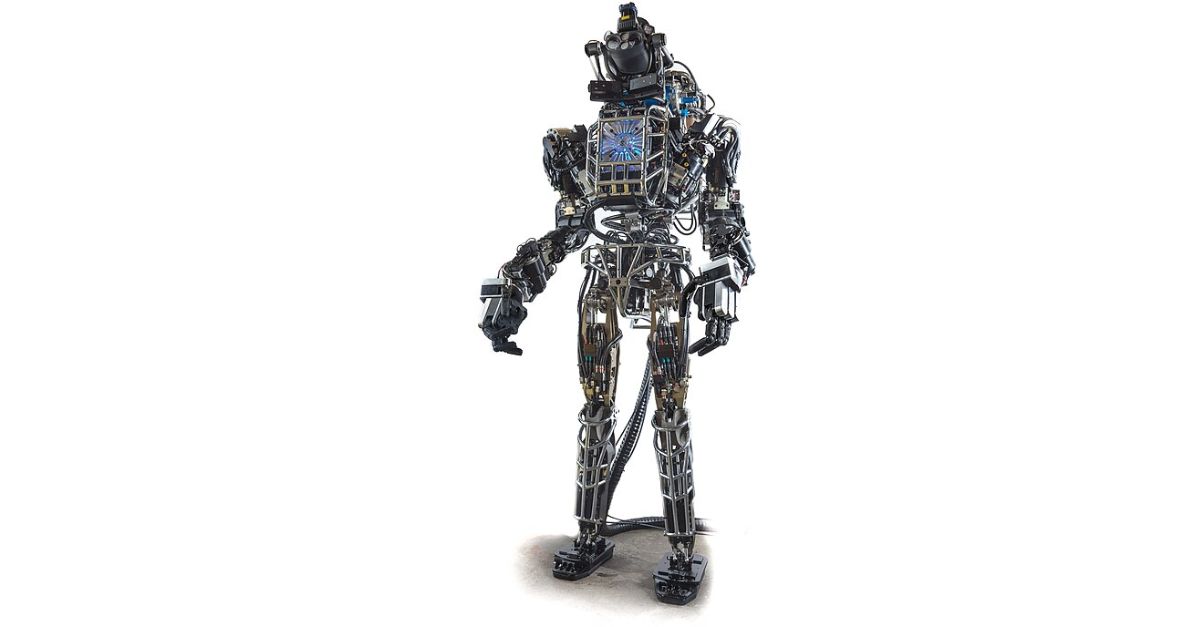
“This generation of Atlas significantly reduces the amount of unique parts in the robot, and every component has been designed for compatibility with automotive supply chains,” said Zack Jackowski, GM of Atlas at Boston Dynamics.

That design intent matters in Georgia, where Hyundai’s electric-vehicle manufacturing complex near Savannah is being positioned as a proving ground for humanoid automation. After decades in which humanoids were mostly confined to lab demos and tightly edited video clips, Boston Dynamics has begun framing Atlas less as a spectacle and more as factory infrastructure hardware meant to survive long duty cycles, interface with plant software, and repeat tasks at scale.
A live demonstration at CES underscored what manufacturers care about most: consistency. Robotics companies rarely put humanoids on a stage in front of an audience because missteps become the story. Instead, the industry generally relies on controlled recordings that hide the edge cases. The decision to show Atlas in public functioned as a statement that the platform is moving into product engineering, where tolerance stacks, serviceability, and supply chains dominate the roadmap.
Boston Dynamics describes the new Atlas as a fully electric humanoid intended for industrial work, with 56 degrees of freedom, 2.3 m (7.5 ft) reach, and 50 kg (110 lb) lift. It is built to operate from -20°C to 40°C and to recover its uptime by autonomously handling charging and battery management, including swapping out its own batteries. The company also emphasizes that the robot can be used autonomously, teleoperated, or guided through a tablet interface an important operational detail because early deployments often blend human supervision with increasing autonomy rather than jumping directly to “lights-out” behavior.
At Hyundai’s Georgia site, the first applications are expected to look less like android co-workers and more like mobile, human-form material-handling tools. Hyundai has pointed to “parts sequencing” moving the right parts to the right place at the right moment as an early fit for Atlas. That kind of work sits in a practical middle ground: it is repetitive and physically demanding, yet it benefits from a body plan that can navigate aisles, use human-scale fixtures, and manipulate packaging formats that were never designed around a six-axis arm in a cage.
The deeper shift is in integration, not gait. Boston Dynamics is positioning Orbit as a control layer and performance dashboard that ties robots into factory systems connecting Atlas to MES and WMS so tasks, exceptions, and throughput can be managed like any other production asset. In parallel, a partnership aims to bring Google DeepMind deployments into the same near-term window, signaling that “learning” is being treated as a fleet capability rather than a one-off prototype trick.
Georgia’s workforce story is evolving alongside the machines. The state’s adjacent Hyundai training pipeline has been built to support 8,500 jobs and includes labs focused on automation and mechatronics, mirroring the kind of skills needed to maintain sensor-rich, software-defined production lines. The most immediate takeaway is not that humanoids replace people, but that EV plants are becoming testbeds where technicians, process engineers, and robotics teams are part of the factory’s baseline operating model.
Atlas is scheduled to reach Hyundai’s Georgia operations by 2028. The critical question for advanced manufacturing won’t be whether the robot can walk across a stage it will be whether it can clock in, interface cleanly with production systems, and deliver repeatable work without becoming the newest maintenance bottleneck.