Japan’s H3 Returns to Flight With New Three-Engine Variant
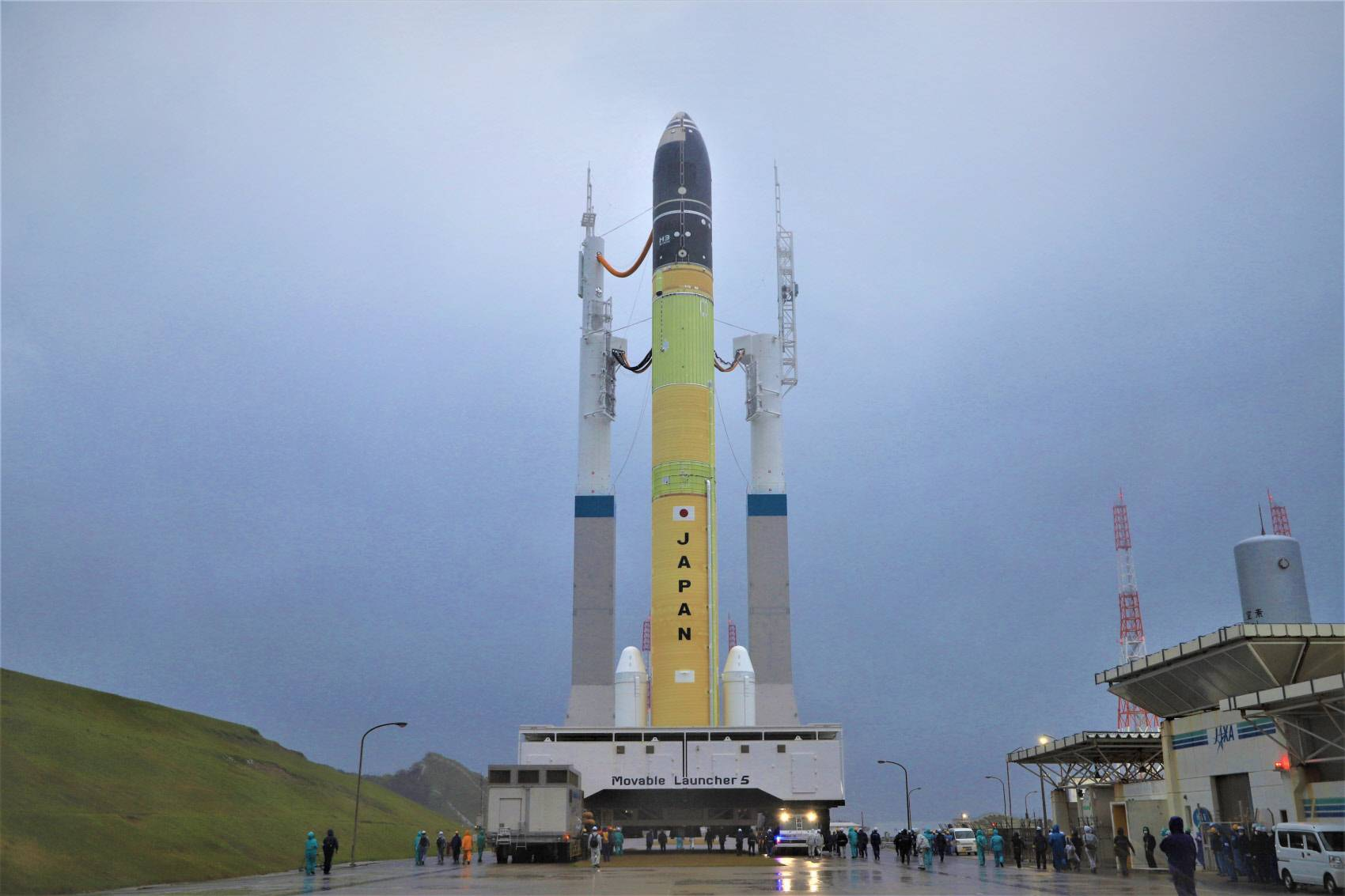
It seems as though the latest Japanese H3 rocket has made a comeback. However, what matters most in relation to the successful launch on June 12 is not just the fact of returning to space. It also proves corrective efforts conducted after a failure in late-2025 as well as the completion of configuration tests.
According to JAXA, the two-stage rocket was launched from Tanegashima Space Centre, delivering six satellites into their respective orbital paths. PETREL and STARS-X separated from the rocket around 16 minutes after its launch followed quickly by BRO-22, VERTECS, HORN-L, and HORN-R. The space agency reported that the rocket has accomplished all mission requirements.
To understand why this launch is significant, one needs to be aware of the fact that a return-to-flight mission is not just another chance to see if the engines work. Launching vehicles have a complex system that involves the whole range of different components, so a mission’s success also serves as a test of the investigation processes and actions taken during it. This particular rocket lost its mission because of the damaged payload adapter that led to inability to deploy the Michibiki 5 navigation satellite as well as secondary stage malfunction resulting in the failure to ignite an engine.
This aspect is very significant for the current analysis, as it allows talking about the importance of successful launches from the perspective of aerospace engineering. A launch vehicle can fail not because of a fault in its basic design (engine), so the issue is not solved until it proves itself through further missions. Engineers have been able to identify the problem, take necessary corrective actions, and this launch serves as proof that these decisions have done the job.
Furthermore, the June 12 launch also has its own peculiarity in the sense that the vehicle flew in a three-engine configuration. Previously, there had been five successful flights using a rocket with a two-engine setup. According to reports, this modification allows gaining additional thrust and increasing payload flexibility. Such progress is crucial for any launch family intended to serve a range of purposes.
In terms of system development, adding engines and boosting power is one of the most challenging processes associated with launch vehicle maturation. One cannot consider a rocket as fully-proven only after its first successful launch since each modification will change ascent performance, stresses, staging procedures, and many other factors. As a result, this recent launch demonstrates not only successful accomplishment of the mission, but progress towards building the capacity.
In general, the H3 is a rocket family under development of JAXA and Mitsubishi Heavy Industries that replaces the previous H-2A. After retiring it, there has been no alternative solution to guarantee a constant flow of launches. Thus, a quick return to the mission is very important for maintaining schedules and continuity of operations.
Taking all these circumstances into consideration, it becomes clear why this mission is especially significant. The H3 rocket has suffered several failures – its first mission ended unsuccessfully in 2023 and, prior to the unsuccessful December launch, there had been five successful launches. In other words, the launch analyzed in this paper represents an important landmark on the way to developing a reliable vehicle.
The lesson here is obvious: modern reliability of launch vehicles is defined not only by engines and flight parameters but also by interaction between payload and vehicle, separation stages, structure, and actions performed to solve possible problems. The success of the latest H3 launch means that the program is still moving towards reliability.
In conclusion, we can say that the return of this particular Japanese rocket to flight should be of special interest to the people observing the state of the global aerospace industry. It signifies not only that the vehicle has accomplished its latest mission but also that it has started to become more flexible in its configuration and reliable.
By David Whitaker — Associate editor for aerospace and drone systems; translates flight systems and UAV developments into accessible technical stories.