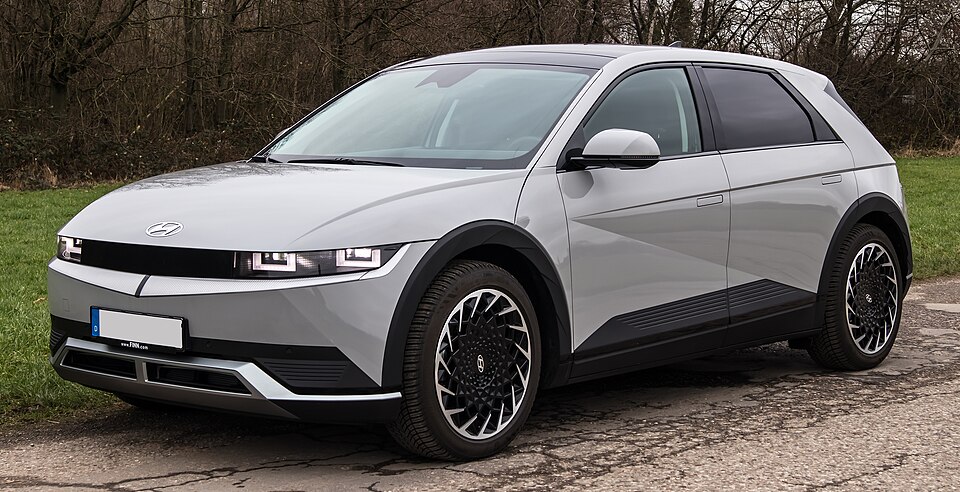
Hyundai Ioniq 5 N Redefines EV Performance
The fourth annual evaluation of new electric vehicles brought together 18 contenders, each subjected to rigorous objective and subjective testing before votes determined the standout. This year’s winner, the Hyundai Ioniq 5 N, marks the third consecutive victory for Hyundai in this competition, following the Ioniq 5 in 2022 and Ioniq 6 in 2023. Unlike its predecessors, the 5 N is aimed squarely at enthusiasts, delivering a visceral driving experience rare in the EV segment.

Electric vehicles are known for their instant acceleration, but their considerable weight and absence of traditional sensory cues—engine noise, vibration, torque interruptions—often leave drivers disconnected. The Ioniq 5 N counters that detachment with a blend of raw performance and cleverly engineered theatrics. As one judge noted, it’s not “fun for an EV.” It’s fun, period.
Under the skin, the 5 N packs dual permanent-magnet synchronous motors producing a combined 641 horsepower and 568 pound-feet of torque. Despite its 4849-pound curb weight, much of it from the 84.0-kWh battery, the SUV-class EV sprints to 60 mph in 3.0 seconds, covers the quarter-mile in 11.1 seconds at 123 mph, and reaches a governed top speed of 163 mph. Braking from 70 mph requires 153 feet, and it holds 0.96 g on the skidpad—numbers that place it firmly in sports-car territory. Highway range at 75 mph measures 190 miles, and thanks to its 800-volt architecture, charging from 10 to 90 percent takes just 35 minutes on a compatible 250-kW DC fast charger.
The competition’s scoring rests on four pillars: value, fun-to-drive factor, mission fulfillment, and advancement of technology. At $67,495, the 5 N meets the value criterion decisively. Fun-to-drive? Unanimous. Mission fulfillment was proven on track, where it demonstrated the capability to replace a gas-powered performance car for a drive-to track day without stranding its driver.
Technological advancement is where the 5 N distinguishes itself. Beyond its rapid charging capability, Hyundai’s N division has engineered features that tap into nostalgia for internal combustion. N Active Sound+ offers multiple synthetic engine notes, with the “Ignition” setting mimicking a four-cylinder at either a 6750- or 7750-rpm redline depending on mode. “As long as you aren’t actively thinking, ‘This is fake,’ it’s fun to play with it,” testers observed. On the freeway, the sound recalls a World Rally Championship car, adding a layer of drama.
Complementing the audio is N e-shift, a simulated gearshift system synchronized with the sound profile. It can bog if “too high a gear” is selected and will bounce off a virtual redline if the paddle isn’t pulled for an upshift. The pairing of tactile feedback and sound is precise enough to convince occupants they’re in a combustion-powered machine. Even simulated powershifts deliver a jolt through the seatback, complete with head toss. In this mode, acceleration to 60 mph slows to 3.5 seconds, and launch control is disabled, underscoring the authenticity of the experience.
Such integrations blur the line between novelty and genuine engagement. While some may dismiss them as gimmicks, their execution in the 5 N is convincing enough to evoke the emotional pull of classic performance cars. This blend of capability and character propelled it past competitors including the Acura ZDX, Audi Q8 e-tron, BMW i5 variants, Chevrolet’s Blazer, Equinox, and Silverado EVs, Fiat 500e, Fisker Ocean, Honda Prologue, Hyundai Kona EV, Kia EV9, Mercedes-Benz EQS SUV, Polestar 2, Tesla Cybertruck, and Volkswagen ID.4.
The Cybertruck’s early exit from testing—“the one we rented broke on the second day”—underscored the importance of reliability in mission fulfillment, earning it a zero in that category. By contrast, the Ioniq 5 N delivered consistent performance across all metrics, proving that an EV can be both practical and thrilling.
With its combination of high-output dual motors, rapid charging, tailored driving modes, and sensory engagement, the Hyundai Ioniq 5 N sets a benchmark for enthusiast-oriented electric vehicles. It demonstrates that the future of performance driving need not abandon the emotional connection forged by decades of combustion engineering.