FAA Investigates Boston Go-Around During Intersecting Runway Departure
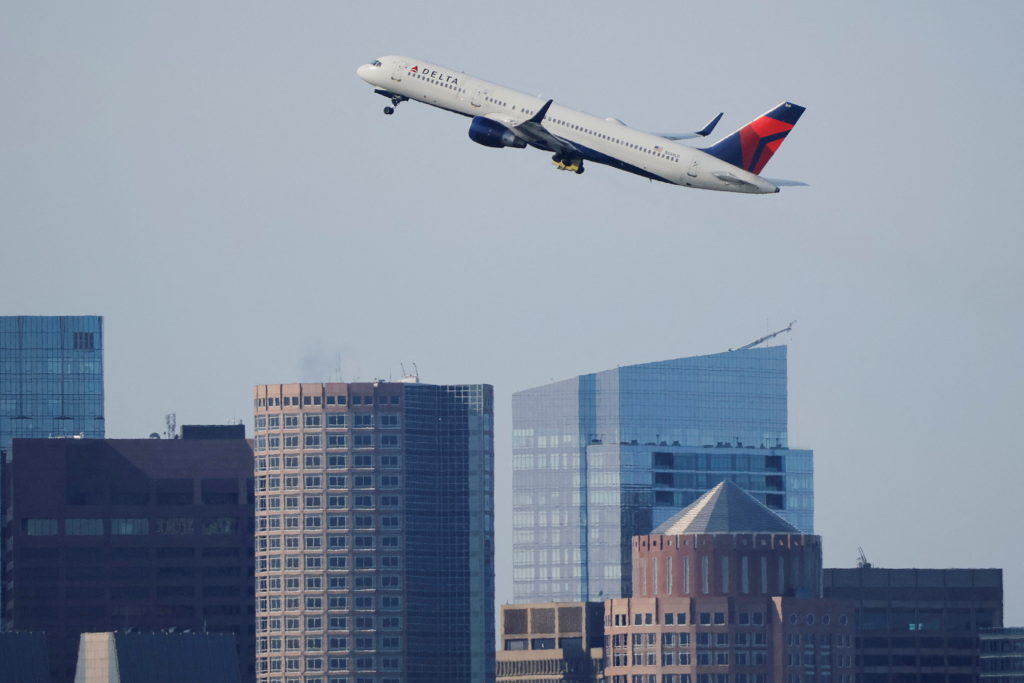
The FAA is investigating an incident involving a runway intersection at Boston Logan International Airport where a Delta Air Lines flight 2351 was forced to perform a go-around due to an airplane taking off from an intersecting runway. According to the FAA statement, the incident took place on Saturday, June 20 around 11:30 a.m. local time.

What has been confirmed so far is limited, yet important. Delta has stated that Flight 2351 flew from Dallas Fort Worth International Airport to Boston Logan with 129 passengers and six crew members aboard. The airline has claimed that the crew of the flight performed the go-around maneuver according to all established procedures with the coordination of air traffic control, landed successfully.
In addition, Delta has stated that during the descent of the airplane, the crew received an onboard advisory about the potential traffic. The company noted that its airplanes are equipped with the corresponding technology which is supposed to alert crews about the potential conflict with other airplanes. This is what has been confirmed so far: an FAA investigation, an intersecting-runway departure, a go-around, ATC coordination, and an onboard traffic advisory.
There are several pieces of information that have not been clarified yet in regard to this safety incident. First, the identity of the other airplane involved in the situation has not been revealed yet. Second, the runways used have not been identified so far. Third, it has not been revealed what role (if any) have played the actions of the controller, the flight crew, airport surface movement, or onboard alerting logic. Finally, there were no injuries and damages reported.
From an engineering and policy perspective, the incident is an example of an interaction of three layers of safety measures which are supposed to work in a collaborative manner instead of operating independently: airport procedures of using runways, sequencing through the air traffic control, and traffic alerting in the cockpit. A go-around maneuver is one of the built-in tools for recovering from such situations. By itself, it is not evidence of any failures in aircraft design or airline procedure. From the operational perspective, it is a maneuver that is used to discontinue the approach and regain necessary separation margins.
This detail is extremely important. In the public discussion of the event, it can be considered as evidence of a failure in the system of safety measures. However, the facts presented above cannot serve as evidence of such a failure. Instead, these facts prove that the crew has received an onboard traffic advisory, coordinated with ATC, discontinued the approach and landed safely. In turn, the main concerns of the investigators will likely be related to the procedure and system aspects of the accident: sequencing of the runways use, maintaining the situational awareness in the tower and in the cockpit, and interaction of the safety barriers.
Intersecting runway operations are common for the large airports, however, they require precise timing, clearance accuracy, and clear understanding of the controller and crew regarding the situation. This means that this kind of event is not about a failure in a particular component but about the interaction of the components of the system. As a result, the most relevant engineering problem is not only if the alert has been issued but how the human operators and safety barriers have reacted to this alert.
The investigation conducted by the FAA will provide more information on the event. Until the investigation is not finished, it is safe to say that it was a runway-intersection conflict scenario where the crew performed the go-around maneuver having received the traffic advisory and having coordinated with ATC.
By Thomas Caldwell — AMI’s senior editor for mechanical and mobility engineering, covering vehicle electronics, systems integration, electrification, chassis systems, propulsion, and safety policy.