E-Town Drives China’s Autonomous Mobility Revolution
In Beijing’s Economic-Technological Development Area, known as E-Town, autonomous vehicles have shifted from novelty to daily reality. Streets host driverless cars carrying passengers, sanitation vehicles cleaning through the night, patrol units maintaining security, and self-driving buses gliding beneath flowering paulownia trees. Initiated in September 2020, the area became the world’s first to deploy an integrated vehicle-road-cloud system, embedding advanced autonomous scenarios into everyday life.

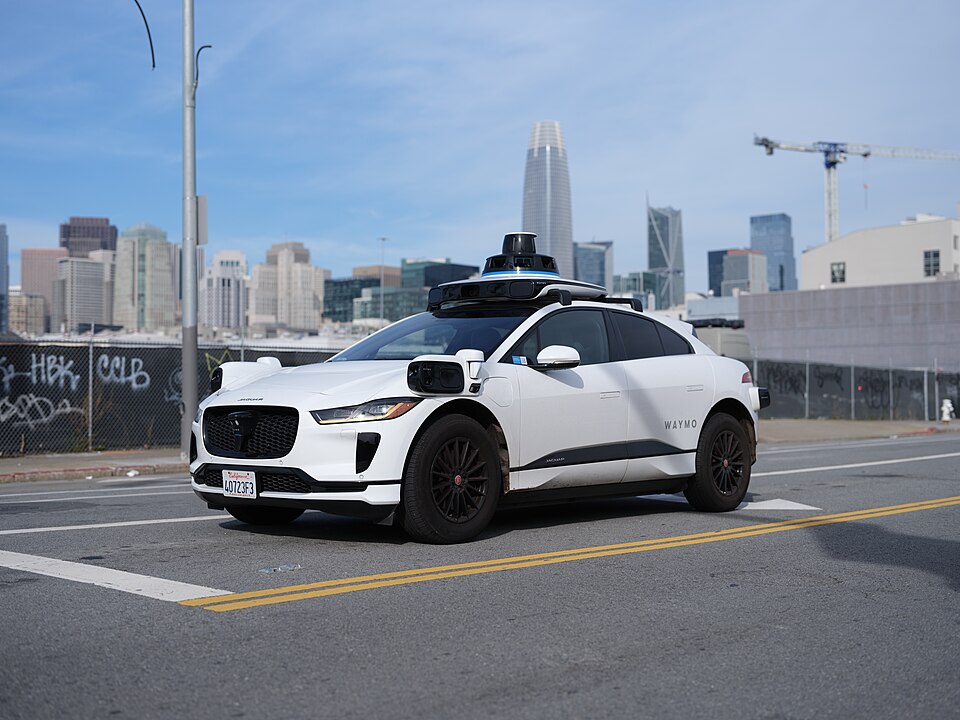
Pony.ai, a leading autonomous driving startup, operates over 100 robotaxis in E-Town. Co-founder and CTO Lou Tiancheng recalled early trials in 2018, when safety drivers sat behind the wheel. By late 2022, extensive testing allowed full removal of human operators. “If it’s your first time, you might feel quite nervous,” Lou said, noting that repeated use quickly dispels concerns. Robotaxis offer precise routing, smooth handling, quiet cabins, and frequent disinfection. Passenger space can be repurposed for meetings or rest, reflecting a vision where cars evolve beyond transportation.
Zhang Ning, Vice President and Head of Pony.ai’s Beijing Research Center, often uses the autonomous vehicle as a mobile office, ordering trips across E-Town to gather firsthand feedback. Safety remains paramount. Lou emphasized studying experienced drivers, who make their actions predictable to others, reducing potential errors. Since 2017, Pony.ai has logged over 31 million kilometers of autonomous driving, refining safety, comfort, and efficiency.
Beyond passenger cars, Pony.ai extends its technology to freight. In 2022, the “Tianjin Port to Majuqiao Logistics Park Highway Freight Autonomous Driving Pilot” became China’s first cross-provincial highway autonomous freight test. White smart trucks now travel the Beijing-Tianjin-Tanggu Expressway on predetermined routes. The project passed expert review as part of the Ministry of Transport’s initial intelligent transportation pilots. Pony.ai and joint venture CYANTRON Logistics have accumulated over 5 million kilometers of autonomous truck testing, moving nearly 25 million ton-kilometers of freight.
Neolix, another E-Town innovator, focuses on unmanned delivery vehicles. Crowds often gather to watch these small autonomous units navigate streets. Inside Neolix’s shared distribution factory, vehicles are loaded via conveyor belt before heading out. Founder and CEO Yu Enyuan explained, “This is a smart logistics factory that can operate completely in the dark.” The vehicles’ standardized autonomous systems integrate computing, communication, positioning, lidar, and cameras, offering 120-meter perception and 360-degree awareness. Thin frames minimize pedestrian collision risk, with Yu stating, “If our vehicle collides with a person, our principle is to ensure no harm to people, even if it means damaging the full truck of goods.”
Designed for short-distance hub-to-station transfers, Neolix’s vehicles boost courier efficiency from 200–300 to 500–800 daily orders. Most components are domestically produced, lowering costs to a fraction of foreign equivalents. Partnerships with SF Express and China Post support national expansion. Since earning its first road qualification in 2021, Neolix has secured public road test licenses in over 30 cities.
Underlying these applications is E-Town’s integrated vehicle-road-cloud infrastructure. Zhou Wei, strategic planning director at Beijing Connected and Autonomous Vehicles Technology, described the “China solution” as collective intelligence, integrating vehicles, roads, and cloud systems. Multi-pole, multi-sensor, and multi-box integration reduces costs and streamlines deployment. Intelligent traffic lights adjust in real time, enabling “green wave” traffic flow. Data from roadside sensors and test vehicles feed into the cloud control platform, supporting event investigation, violation monitoring, and safety alerts.
The demonstration zone hosts 29 companies in testing and commercial trials, with over 800 vehicles deployed and nearly 30 million kilometers of test mileage accumulated. Zhou asserted that “based on road index evaluations and technical personnel measurements, the entire demonstration zone leads the nation.” Lou noted the close policy-technology alignment, with government involvement matching industry expertise in safety definition and verification.
Policy support continues to expand. The 2024 Beijing Municipal Government Work Report outlined phase 3.0 completion and phase 4.0 initiation, enlarging the zone to 600 square kilometers and extending autonomous applications to railway hubs, airports, buses, and urban cleaning. Analysts see this as E-Town’s transition into the “Second Ring Era,” positioning it as a national driver of autonomous mobility innovation.