Hubble and JWST Fusion Pushes Earliest Ionizing Light Detection
Astronomers actually managed to make a breakthrough both in terms of the science of cosmology and in the way the resources of their observatories can be used detecting the ionizing ultraviolet photons in the galaxy MXDFz4.4 with the help of composite dataset collected with the use of NASA’s Hubble Space Telescope and observations performed by James Webb Space Telescope and Very Large Telescope of European Southern Observatory.

Announced in The Astrophysical Journal on June 23, this detection is called the first of its kind in the history of observations. According to the estimations, this light belongs to the epoch of reionization the period during which the intergalactic space got cleared from the neutral hydrogen and got ionized, allowing the energetic light to pass most of the Universe in its way.
This is what actually makes the discovery so remarkable from the technical standpoint. There is a period of time after the Big Bang, when the neutral hydrogen between the galaxies creates an opaque layer blocking the ionizing radiation. Detection of the light from that era was believed to be impossible due to the existence of such materials. This was thought to be impossible, said Ilias Goovaerts, who led the study.
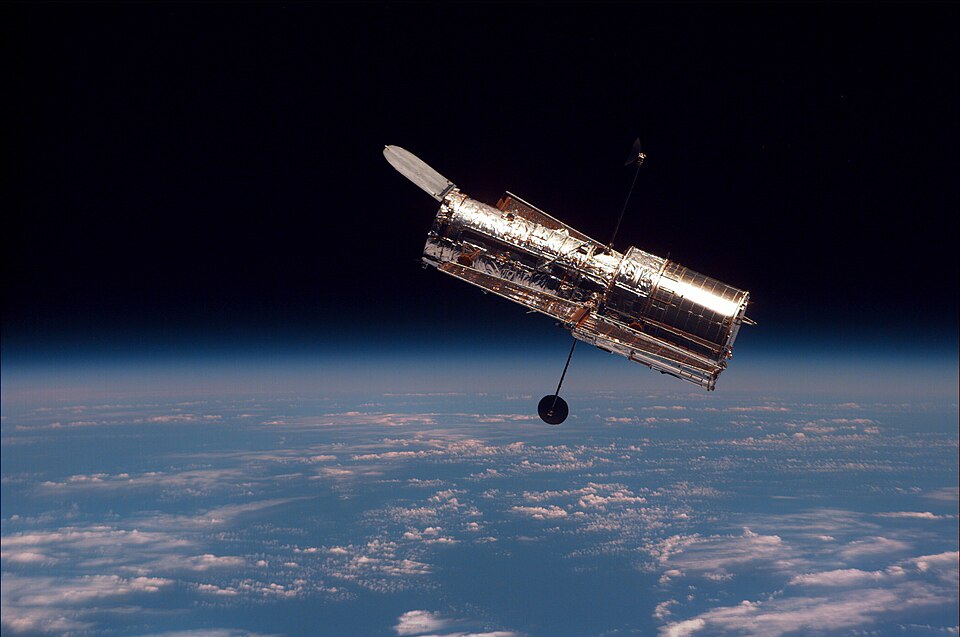
In fact, the result is not due to some particular instrument achievements, but to the cooperation of a few observatories. Hubble provided the necessary wavelength range, sensitivity, and space-based conditions for the light detection. Webb provided the general picture of the star distribution at the galaxy at various wavelengths, providing the opportunity to examine the specifics of the star formation process at this galaxy. And finally, VLT provided the extremely deep spectrum for 6 days of observing the Lyman-alpha emission line, helping to measure the distance to the galaxy.
It is the very cooperation which may be considered the success story of this research project. Hubble provided the necessary wavelength range, sensitivity, and space-based conditions for the light detection. Webb provided the population analysis of the galaxy’s stars, including the old generation and the ongoing star formation process at the galaxy. And finally, the ground-based spectroscopy helped to detect the period of the cosmic history at which the studied object was formed. None of these steps could solve the problem independently.
MXDFz4.4 turned out to be the highly efficient producer of the light in question. According to the researchers, this galaxy is 100 times smaller compared to the Milky Way, but it forms stars 10 times faster. This is the unusual combination of the size and activity. From the practical point of view, this is the concentration of the young massive stars, producing the surrounding gas and letting the ionizing light to pass, instead of trapping it locally.
As the team calculated, the ratio of ionizing light escape is the half or even the whole light produced. This is the wide range which explains why the galaxy of the kind is remarkable enough, as no other galaxy of the same age emitted the ionizing light, according to Marc Rafelski.
The scientific implications of the discovery are quite obvious. Scientists try to move from the discussion of the transparency of the early Universe to the measurements of the galaxies letting the ionizing radiation to escape from them. The result like this achieved for MXDFz4.4 is far from giving the definite answer, but it provides the best example of the final stage of the reionization process, than any other scientists could ever find.
The obvious U.S. space science angle is there as well. Hubble has been working for over 30 years now, but this result shows the continued importance of the NASA-led orbital assets in the smart cooperation with the new facilities and major ground observatories. JWST did not replace Hubble in this case; it supplemented and enhanced it. This difference is particularly important for those following the development of the long-lasting space infrastructure providing the new capabilities through the data fusion and not just simple one-to-one replacement.
The episodes of the active star formation like the one seen in MXDFz4.4 might play a significant role in clearing the hydrogen fog of the early Universe, according to the experts, and there are going to be many other similar galaxies ready for detection. If this happens, the next big step will not be provided by any spectacular images from any telescope, but rather by the repeatable workflow combining the deep imaging, wavelength coverage, and spectroscopic confirmation into the tight measurement chain.
This is the lesson to learn from the discovery. MXDFz4.4 is not only the milestone in the distant galaxy exploration, but the reminder that the U.S.-led space science capability is increasingly determined by the ability to cooperate, calibrate, and interpret the observatories. From the aerospace industry standpoint, this is the mission architecture which does all the work.
David Whitaker – Associate editor for AMI’s aerospace and drone systems desk, translating flight systems, aircraft programs, spaceflight, and UAV developments into accessible technical stories.