JWST Cosmic Web Survey Expands Deep-Space Mapping Precision
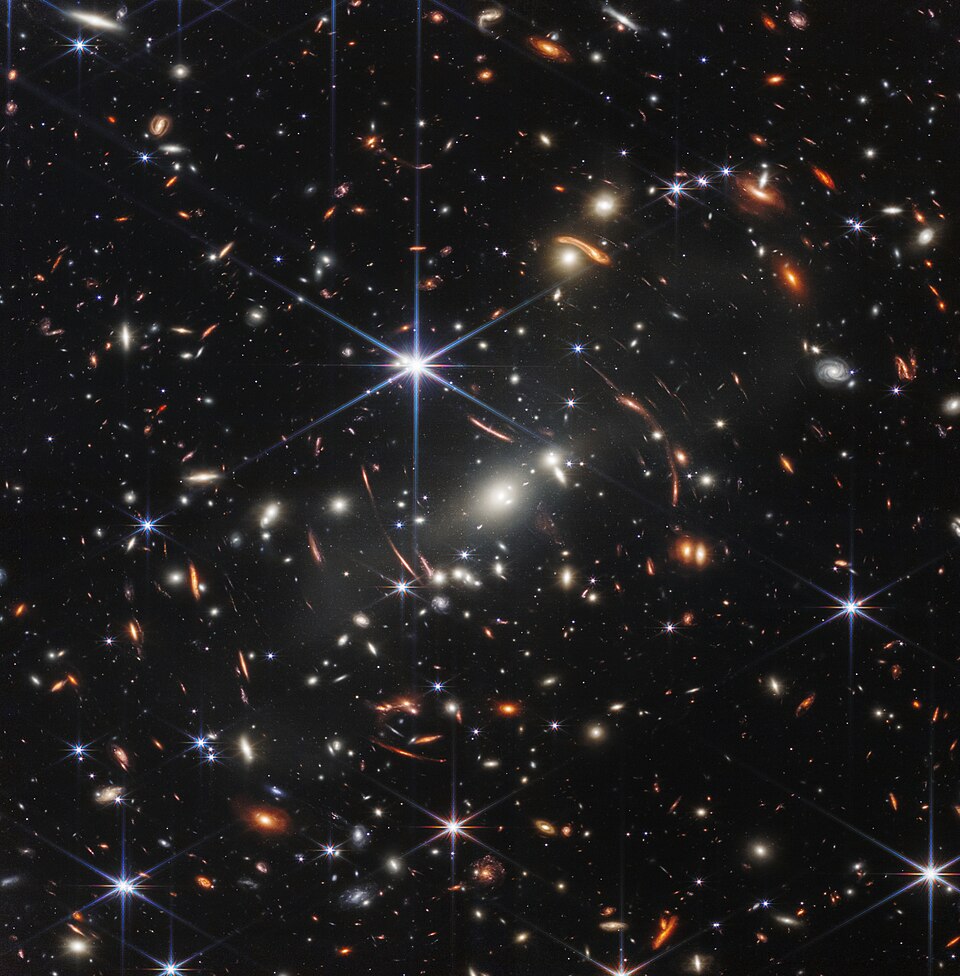
The James Webb Space Telescope is frequently lauded for its breath-taking images, but perhaps it makes an even bigger contribution to science in the form of better measurement. A new COSMOS-Web study by researchers from the University of California, Riverside demonstrates what this looks like in practice by mapping out the structure of the cosmos with unprecedented detail using 13 billion years of galaxy history reconstructed through JWST.

Published on May 6 in The Astrophysical Journal, the study is based on the COSMOS-Web program a 255-hour-long JWST treasury project covering an area of the sky the size of three full moons. The wide field of view is an important aspect of the design. Deep-field projects usually observe the space extremely deeply but over a relatively tiny field of view. A wide field of view is crucial for being able to trace large-scale structure.
The result in question is a step up from COSMOS2020 project published in 2021, which was based on the data collected using the Hubble telescope and others. According to the researchers, the new map delivers better redshift precision and more galaxies observed, particularly faint and distant ones. Redshift is an essential part of engineering-style measurements in modern cosmology since it allows astronomers to determine distance of a galaxy based on the way its light gets shifted towards red in the spectrum as it crosses the universe.
This measurement improvement results in a different map. While older reconstructions were considered to be sparser and more diffuse with less distinct structure, the new one reportedly preserves the contrast between dense and sparse regions of the universe. This might seem to be a data processing advancement of sorts, but it is crucial to the scientific value of the project. If the dense regions are too deep or the sparse regions too shallow, then the large-scale architecture of the universe would be blurred out. Preserving contrast allows the creation of a better picture of where the matter clumped and where the galaxies evolved.
The project is based on an analysis of a catalog of 164,000 galaxies made publicly available. This public release is an important element in its own right. In general, the point of treasury-scale space science projects is not merely publishing something first but creating the infrastructure for testing, comparison and reusing the data by other researchers. For the US space capability, this kind of scientific infrastructure increases the value of a major observatory by transforming a single observing campaign into a long-tailed research platform.
Scientifically, the map adds details to a discussion of how much galaxy evolution is caused by the mass of a galaxy itself and how much by its environment. According to the researchers, it appears that the dense regions used to be places of rapid galaxy evolution at earlier times but then became associated with the shutting down of star formation.
“At earlier times, dense regions appear to be sites of rapid galaxy growth, while at later times dense environments are associated with the shutdown of star formation.” explained one of the authors Hossein Hatamnia. The researchers found that massive galaxies in dense regions tend to be quiescent, meaning they do not actively form stars anymore.
To explain this shift, the researchers offer two mechanisms that operate at high levels of abstraction. One of them is connected to the galaxy mass once the dark matter halo reaches around 1 trillion solar masses, it is likely to have enough energy to prevent gas cooling and collapse into new stars. Another mechanism is related to supermassive black holes which can heat the gas and inhibit star formation using powerful jet streams of near light speed. In this case, according to the authors, the mass-related quenching mechanism was dominant until about 7 billion years ago while the environmental quenching became more important later.
This result is precisely the kind of a conclusion which can only be reached with better sensing capabilities. The strength of JWST is not only its ability to see farther but also its ability to resolve blurry blobs into the faint and ancient galaxies and place them accurately on large-scale structure. As the co-author of the paper Bahram Mobasher stated, the increase in depth and resolution is great enough that the astronomers could now start examining the cosmic web during the period of time when the universe was a few hundred million years old the time that remained unreachable until the JWST was launched.
There is also a lesson in terms of system design to be learned. When it comes to space telescopes, the greatest value is delivered in cases when hardware capability, observing strategy and data release policies are aligned. COSMOS-Web combines long time, large contiguous field of view and public catalog availability. This is a good model for a scientific infrastructure which improves not only the discovery potential but also the reproducibility and future analysis.
The main result of the project is an improved map of 164,000 galaxies, but the main lesson learned is the one about measurement architecture. Higher resolution sensing does not only provide prettier pictures of the universe. It provides more accurate map underneath which is an important thing in the field of astronomy.
By David Whitaker – Associate editor for AMI’s aerospace and drone systems desk, translating flight systems, aircraft programs, spaceflight, and UAV developments into accessible technical stories.