FAA Pushes U.S.-Europe Rule Alignment to Speed Jet Certification
There has been a notable change introduced to the process of certification of new commercial airplanes in the United States in regard to FAA standards, which is targeted at the reduction of repetitive compliance, decrease of time-to-approval and improvement of cross-border certification predictability without compromising the safety standard.

The proposed rule involves increased harmonization with the EASA. For manufacturers who constantly seek FAA type certification and EASA validation for the same design, it is a notable step because even a small difference in American and European regulations may require an additional engineering analysis, documentation and relief. Harmonization of selected requirements will decrease certification costs, time and complexity, while retaining or improving the safety level according to the FAA.
Please note that this is a proposed rule rather than the final one. However, it is worth noting because it touches upon the recurrent issue associated with certification of transport airplanes, namely the use of exemptions, special conditions and equivalent level of safety findings in situations, when airplane design cannot fit previously issued requirements. Those are a natural part of the certification process, yet the procedure of their application is resource-consuming for the applicant and regulatory agency because of the necessity to submit additional data and an additional FAA analysis.
The FAA initiative on modernization will bring many of such recurrent cases into the core of regulations. Practically, it will increase the predictability of certification planning at the initial stage of the program development, where risks and engineering efforts begin to accumulate. The agency has also noted that it intends to reduce the number of exemptions, special conditions and equivalent level of safety findings during the process of certification.
This proposed regulation is rather comprehensive rather than program-specific. It comprises standards for transport-airplane and propulsion certification, and as it is noted in the notice in Federal Register, it harmonizes 27 differences between American regulations and EASA CS-25 amendment 28, where it is applicable. Affected areas include cabin and executive interior, emergency exits and signage, lighting, cabin movement and markings, lavatory fire protection, cockpit visibility, fuel tank flammability assessment, and powerplant and cockpit indications standards.
This list may look a bit bureaucratic. However, it addresses certification workload issues directly: each unharmonized difference between two regulatory agencies requires from the manufacturer to prove the compliance twice or obtain project-specific relief. As for American-relevant programs, especially those that are meant to serve both domestic and European markets, harmonization will streamline the approval process regardless of the design of the aircraft.
The timing of the proposed rule is also crucial because the certification of new airplanes normally takes several years and includes testing and data collection. That is one of the reasons why the certification reform has become a strategic problem in program schedule planning, engineering resource allocation and production planning. According to FAA Administrator Bryan Bedford, the agency has been collaborating this year “to see how they can streamline the process.” FAA leadership of previous administrations had also mentioned technology as one of the tools of the process streamlining.
The FAA and EASA have made separate commitments to collaborate in the area of safety and certification, and to streamline approval processes for advanced aviation technologies and harmonize certification pathways. It should be noted that this broader context of collaboration is crucial as the rule is being proposed as the rewrite of selected standards rather than deregulation.
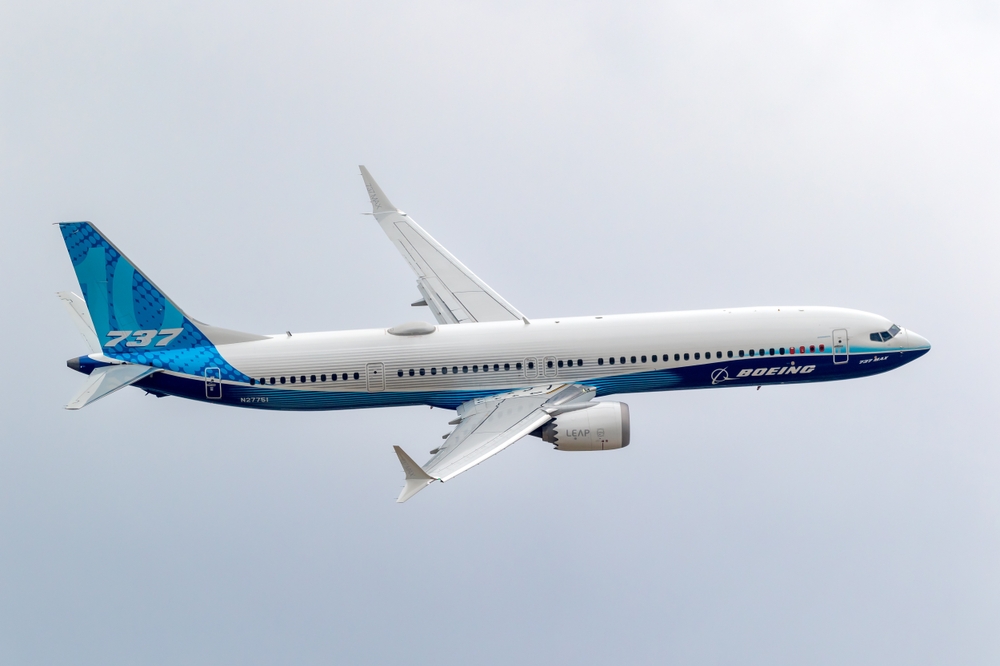
For Boeing watchers, the news has come amid the reports about the considerable progress in the certification of the 737 MAX 7 and MAX 10. Deputy FAA Administrator Chris Rocheleau has stated that both aircraft are nearing the completion of certification process, while EASA Executive Director Florian Guillermet has highlighted the validation of the MAX 10 as one of the top priorities of the European agency. Boeing was hoping to certify the MAX 7 in 2022; however, the certification process encountered many problems.
However, it would be wrong to consider this proposed regulation as the remedy to the problem of the particular program. Modernization initiative is general, and the FAA has noted that this regulation is not specific to any particular airplane. However, it is obvious that there is relevance. As regulators and manufacturers try to close the last stage of certification of derivative airplanes, reduction in duplicated compliance interpretation and project-specific relief becomes a helpful factor for schedule discipline and regulatory workload.
As for engineering relevance, certification modernization requires increasingly architectural approach rather than mere testing. With the increasing number of common cases of compliance included in the regulations, applicants can design against a more accurate target, while the authorities have less work to repeat the same findings project to project. For the U.S. aerospace programs, this kind of harmonization may turn out to be particularly valuable not because it changes the safety criteria of the airplane, but because it simplifies the demonstration of that safety in two of the key certification systems.
By Thomas Caldwell – AMI’s senior editor for mechanical and mobility engineering, covering vehicle electronics, systems integration, electrification, chassis systems, propulsion, and safety policy.