Rocket Launch Boom Could Bring New U.S. Space Constraints
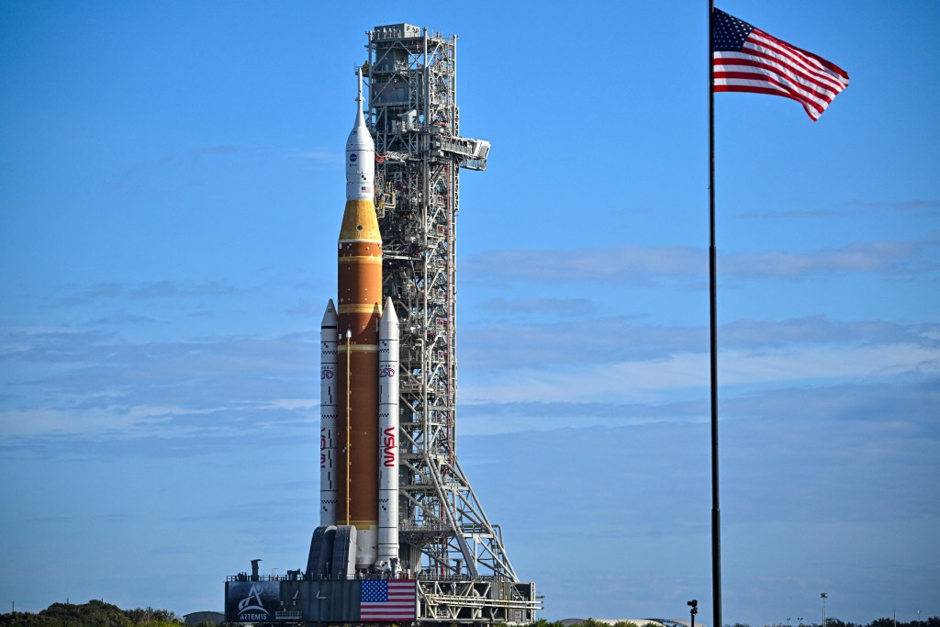
The United States commercial space industry has had an enviable run in the last several years in terms of launching payloads at a rate comparable to major commercial airlines. However, a new development in atmospheric studies suggests that the very pace may have engineering and regulatory consequences.

Research out of University College London published in Earth’s Future finds that the rapid increase in rocket launches is creating a growing burden in the upper atmosphere, exacerbated by the need to maintain megaconstellations. The study has particular relevance to the U.S. market as SpaceX dominates the launch sector with Starlink as the company’s main vehicle for rapid increases in yearly launches.
The issue is not ground level emissions, per se, but what happens when those emissions are dumped thousands of feet into the sky where removal processes take a far longer period of time and have an indeterminate impact on climate change. Of particular concern in the study is black carbon, i.e., soot, emitted during launches and reentries. The researchers find that soot emitted at high altitude may linger in the atmosphere 500 times longer than ground-level sources.
The very fact that atmospheric particles from launches and reentries can persist for centuries fundamentally changes the conversation around emissions for aerospace companies. While traditional aerospace engineering and regulatory physics has been focused on reducing the amount of propellant burned during launches with improvements in engines and operations, it turns out that the chemistry of the emissions during launch and reentry may be every bit as important.
According to the authors of the UCL study, the sheer pace of launches and reentries is the main problem. As noted in the study summary, humanity registered 114 rocket launches in 2020, but that figure was three times higher a decade later. Megaconstellation launches accounted for 35 percent of all carbon emissions from spaceflight in 2020, and that figure is set to rise to 42 percent in 2029, according to the researchers.
This raises crucial questions for U.S. launch companies as they look to the future. What percentage of total launches will be dedicated to initial constellation deployments, and what percentage will be devoted to sustaining megastructures as satellites are regularly replaced? The architecture of the constellation sustainer business model will dictate both the acquisition cost of the vehicles and their impact on the atmosphere.
The study’s authors do not suggest that the industry is on the brink of an ozone crisis. After all, in their analysis, launches were barely registering on the same scale as anthropogenic emissions for the stratosphere. Even when looking at the impact on the ozone layer from all launches through 2029, constellation launches would only reduce the layer by 0.2%. Still, the implications of that finding may prove far more significant. When viewed in the context of tens of thousands of launches for megaconstellations, spanning decades, and the potential for even more impactful chemistry when it comes to climate change, even small figures may prove to have long-lasting repercussions.
Meanwhile, the most pressing concern within the industry itself may well be the indeterminate impact of aerosols on climate forgo. According to the study, the emissions from launches could result in planetary cooling due to the planet’s energy budget being shifted out of balance. Eloise Marais, the UCL researcher who led the study, refers to the prospect as a “small-scale, unregulated geoengineering experiment” and warns that the cooling predicted by the models should not be dismissed as an unimportant counterbalance to global warming.
While Marais’ warning may sound hyperbolic, it actually contains precious little technical justification for concern within the industry. The phrase unregulated geoengineering experiment is arguably misleading. The reality is, that the industry will likely soon be forced to provide much more granular justification for atmospheric impacts associated with launches based on altitude and type of propellant burned. According to a similarly sobering study published in Communications Earth & Environment in 2025, a failed Falcon 9 launch on February 20, 2025, resulted in 30 kg of lithium entering the atmosphere. That represents more than ten times the typical daily dose of the element absorbed by the planet.
While that finding does not establish a threshold for regulation or even a specific danger, it does serve to illustrate that the atmospheric repercussions of launches and reentries may be far more complex and impactful than previously understood. Meanwhile, the sheer pace of launches will also play a role in any regulatory discussions. The study suggests that the impact on the atmosphere of a given launch vehicle would increase by up to tenfold when launches occur within a short timeframe. This is yet another factor that will complicate the economics and logistics of sustaining megastructures.
Finally, the debate over the impact of commercial spaceflight on the atmosphere adds another layer of complexity to ongoing debates over the future of the industry. The very real competition between aerospace firms for launch contracts will see companies striving to maximize both the payload capacity and the frequency of their launches. The ability to do so might well hinge on the technical details of how a given provider’s vehicles impact air quality thousands of feet above the ground. In the coming years, it is entirely possible that the debate over the environmental costs of the space industry will lead to restrictions on launch rates or changes to launch vehicle design.
In short, Marais’ study will almost certainly have repercussions for the industry in the coming years. The immediate implication for the U.S. space industry is that a looming regulatory environment may dictate the future of the launch market for years to come. It may prove far more impactful than any immediate constraints on launch pad capacity or vehicle reuse rates in dictating the long-term viability of a commercial launch provider.
By David Whitaker-Associate editor for AMI’s aerospace and drone systems desk, covering flight systems, aviation, spaceflight, and UAV developments and translating them into accessible technical reports.