




PAC-3 Ukraine Production Push Faces Hard Supply-Chain and Technology Limits
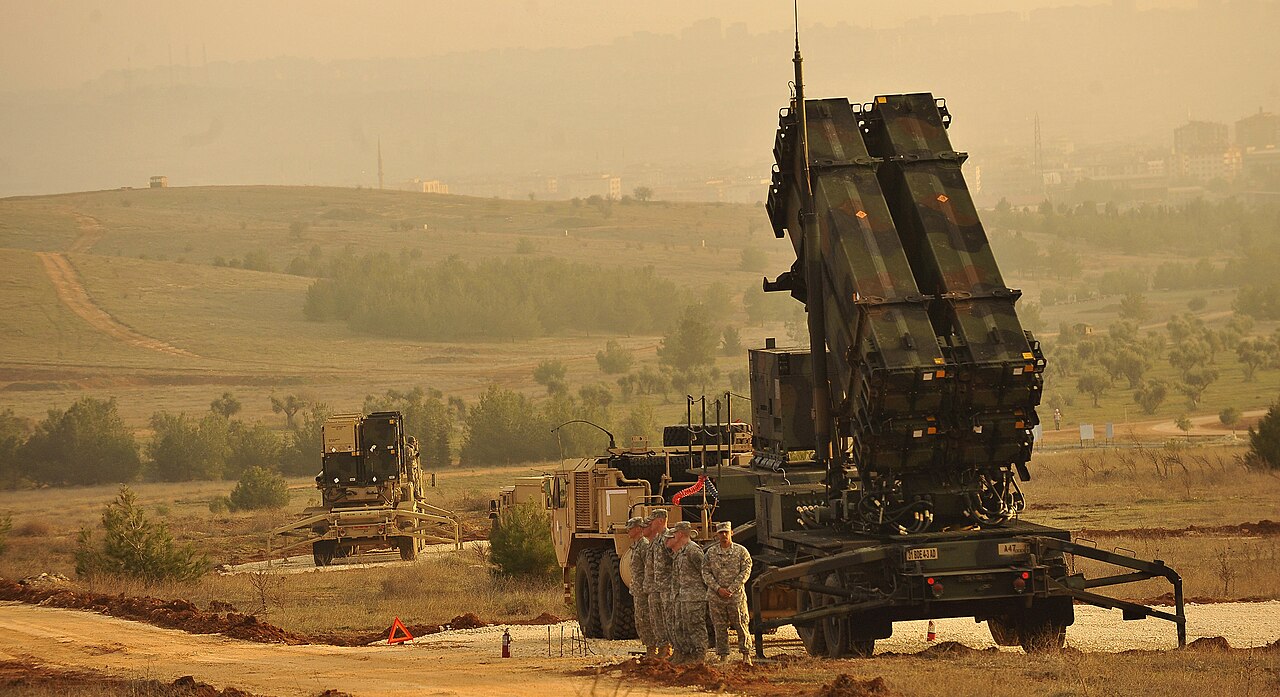
The headline development is straightforward: Washington says it will transfer a license for Patriot missile production to Kyiv. The manufacturing reality is much less straightforward, especially for the PAC-3 interceptor. For general readers, this is a useful reminder that advanced missile output is rarely limited by factory floor space alone. It is usually constrained by the hardest subsystems, the narrowest supplier base, and the time needed to qualify a stable production process.

That matters here because PAC-3 is not a simple steel-tube product that can be localized quickly once a building is available. Analysts cited in recent reporting say some structural elements, including the missile body, would be relatively easier to manufacture from an industrial standpoint. The bottlenecks sit deeper in the system architecture: the solid-fuel engine, the small steering motors used for maneuvering in the upper atmosphere, and the guidance system that controls those motors. Those are the parts where repeatability, materials control, and process discipline matter most.
From a mechanical-production standpoint, solid propulsion is one of the biggest barriers. A solid-fuel engine is not just a propellant-filled casing. It has to deliver the required energy with consistent quality from unit to unit. In any precision interceptor program, that means tight control over formulation, manufacturing conditions, inspection, and acceptance testing. A line that can build metal structures or simpler munitions does not automatically have the equipment, trained workforce, or quality system needed to produce that class of motor at scale.
The steering motors are another clue to why PAC-3 localization would be slow. Small maneuvering motors for high-altitude control are specialized hardware, not commodity parts. They have to work as an integrated control element, not as isolated components, which raises the bar for both manufacturing and system-level validation. The same is true of the guidance hardware and software that command those actuators. Recent reporting notes that few components, if any, could be bought off the shelf. That is a concise way of saying a new producer would need to recreate a tightly managed industrial ecosystem, not simply assemble purchased modules.
The seeker supply chain adds another layer of concentration. Boeing manufactures the PAC-3 seeker for both the U.S. and Japanese production lines. Even without getting into sensitive design detail, that single fact tells readers a lot about the current industrial structure. PAC-3 production today is not broadly distributed across many countries; it is concentrated in a small, established base. If a key subsystem already comes from one supplier serving the existing lines, opening a new national production path is less about pouring concrete and more about expanding or duplicating highly specialized capability.
That is why existing bottlenecks matter so much. Analysts say current Patriot supply chains are already overloaded, and Lockheed Martin has said tripling production is only possible by 2030. In other words, the United States and its partners are still working to expand output from the incumbent industrial base. A Ukraine line would have to compete for specialized equipment, trained labor, supplier attention, and controlled technologies at the same time the current network is trying to raise throughput.
This is also where production economics and readiness intersect. At about $5 million per missile, PAC-3 is an expensive interceptor, but the more important issue is lead time. One analyst said it takes years to build a Patriot missile. Long lead time usually signals a chain of constraints: limited-rate subcomponent production, qualification steps, inspection capacity, and integration sequencing. Those are difficult to compress quickly, even with political backing and urgent demand.
Technology controls further slow any localization plan. Analysts noted that Ukraine’s demonstrated ability to scale drones and other missiles does not necessarily transfer to PAC-3 because of strict U.S. controls. That distinction is important. Rapid wartime manufacturing often works best on systems designed around broader supply access and shorter qualification loops. PAC-3 sits at the other end of the spectrum: advanced, tightly controlled, and dependent on a narrow set of approved production methods and suppliers.
Then there is the survivability problem. Any new missile plant inside Ukraine would likely become a priority target for Russian attack, according to analysts cited in the reporting, with one suggesting Poland as a safer location. That is not just a security argument; it is an industrial one. Missile manufacturing depends on stable utilities, protected transport links, predictable workforce access, and confidence that expensive tooling will remain available long enough to amortize setup time. A vulnerable site undermines all of those conditions.
For U.S. readers, the broader lesson is that PAC-3 expansion is increasingly a supply-network problem, not just a prime-contractor problem. The current U.S.-Japan production base already shows how concentrated the program is, and the seeker example shows how a single subsystem supplier can shape the pace of output. A license transfer may be politically significant, but it does not remove the engineering, qualification, and survivability barriers that govern real production capacity.
The practical takeaway is simple: if PAC-3 manufacturing ever expands closer to Ukraine, the pace will be set by propulsion quality, control-system integration, supplier build-out, and site survivability far more than by the existence of a factory shell. In defense manufacturing, the hard part is almost never the building. It is the process discipline and industrial depth inside it.
By Robert McKinney — Editor-in-Chief for AMI’s automotive and mobility coverage, with a mechanical engineering background and a decade reporting on powertrain systems, EV innovation, and global vehicle manufacturing.


