RCAF Funding Lifts Legacy Fleet Readiness but Personnel Gap Remains
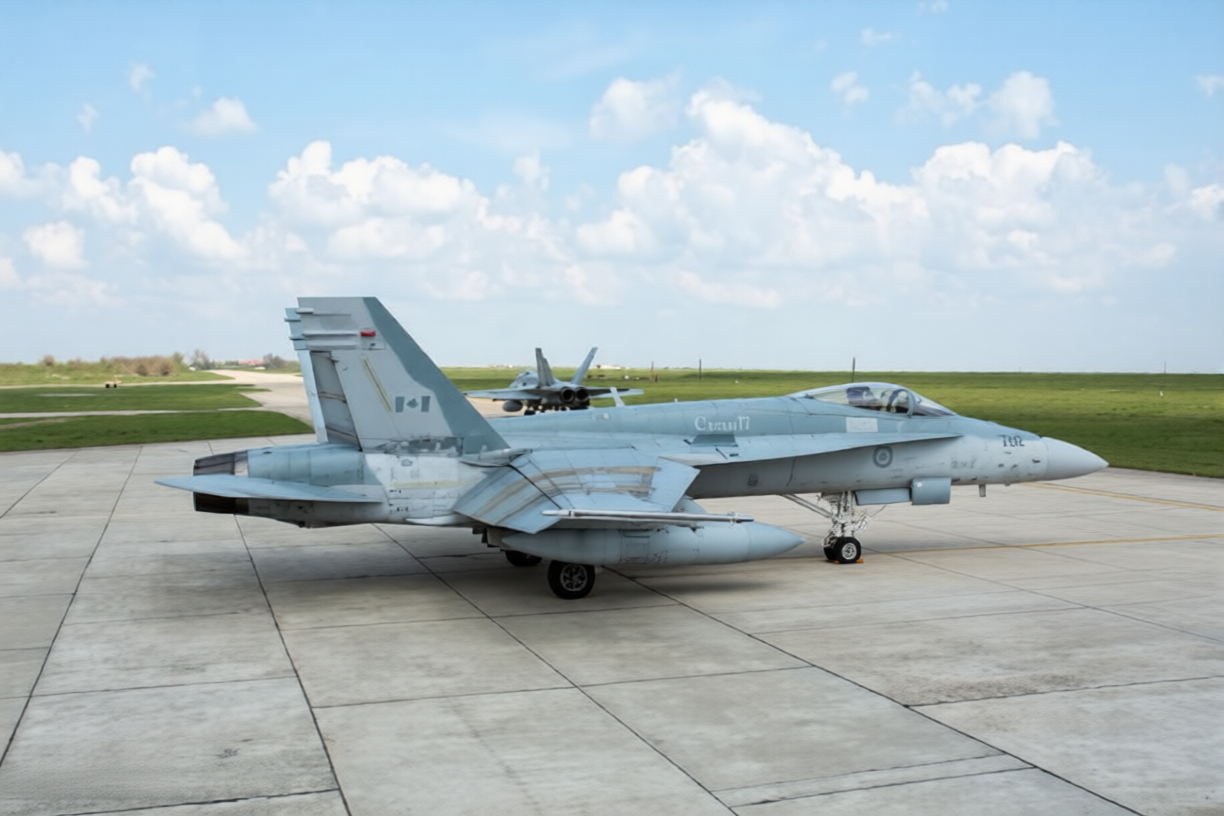
Royal Canadian Air Force commander Lt.-Gen. Jamie Speiser-Blanchet confirmed in an interview published July 26 that increased federal defense funding is providing more spare parts and flying hours for the CC-130 Hercules, CC-177 Globemaster III and CF-188 Hornet fleets. Annual flight time is rising after a decade of decline, she told The Canadian Press. That is a measurable near-term readiness gain, but it does not eliminate the service’s shortage of roughly 2,000 people as Canada prepares to introduce several new aircraft fleets. By having this money, we were able to generate more spare parts and more flying hours, Speiser-Blanchet said. That results in more experienced personnel, more upgrades, more readiness.

The mechanism is straightforward. Aircraft cannot generate useful training sorties merely because crews and fuel are available. They also need serviceable components, scheduled maintenance capacity and enough technicians to return them to the flight line. Better parts availability can support more aircraft use, while additional flight time gives pilots, aircrews, maintainers and operational units more opportunities to build experience together.
The three identified fleets cover substantially different missions. The Hercules supports transport and search-and-rescue work, the Globemaster provides strategic airlift, and the Hornet is Canada’s current fighter. Raising activity across all three therefore benefits more than one narrow mission set. Speiser-Blanchet said the added capacity has enabled necessary exercises and participation in more allied training events, improving interoperability and operational effectiveness.
More hours also create more maintenance demand
Higher utilization is not free readiness. Every added flight hour moves an aircraft closer to inspections, component replacements and other maintenance events. For legacy platforms, the operational benefit consequently depends on whether parts supply, maintenance staffing and depot capacity can keep pace with the increased flying rate.
No fleet-by-fleet totals, aircraft-availability rates or mission-capable percentages were provided, so the size and durability of the improvement cannot yet be independently quantified. Canada’s stated longer-term goal is to raise aerospace fleet serviceability to 85 percent within a decade, according to a March 2026 National Defence disclosure package. The latest update indicates movement in the intended direction, not proof that the target has been reached.
The larger engineering and workforce challenge is concurrency. The RCAF is sustaining current aircraft while moving from modernization planning into execution. Its acquisition workload includes fighters, surveillance aircraft, search-and-rescue planes, refueling tankers and five aircrew-training fleets. Those platforms bring their own hangars, support equipment, simulators, security provisions, technical courses and information-system integration.
That transition can temporarily make personnel demand heavier rather than lighter. Experienced maintainers and instructors may be needed to support an outgoing platform while learning its replacement. The approximately 15,000-member RCAF is expanding, but it remains around 2,000 people short. Recruiting priorities include aerospace telecommunications and information-systems technicians, construction engineers and airborne aerospace sensor operators trades directly connected to operating, supporting and integrating modern aircraft.
The service is also training new security personnel to protect sensitive systems and work with counter-drone equipment at air bases. Internal RCAF documents indicate that more than 1,000 security personnel may eventually be required. That represents another claim on recruiting and training pipelines already supporting flight operations and fleet conversion.
The F-35 transition links Canadian readiness to U.S. training
The first Canadian F-35 is scheduled for delivery to Luke Air Force Base in Arizona by the end of 2026. An RCAF squadron has been established there, and Canadian personnel are being posted to the base for training. For U.S. aerospace readers, that makes Luke an early integration point where Canadian crews will enter an established American training environment while their home-country infrastructure and support organization continue developing.
The eventual Canadian fighter mix remains unresolved. The complete planned order of 88 F-35s is still under government review, although Canada is proceeding with some aircraft. Sustainment, training and infrastructure work must therefore advance without treating the full 88-aircraft plan as final.
The funding boost has addressed an immediate constraint: legacy aircraft need parts and flying time to remain useful while replacements approach. The harder test is converting that improvement into durable readiness without exhausting maintainers, instructors and infrastructure during overlapping fleet transitions. Money can buy components and activity relatively quickly; building the technical workforce and support system to sustain both old and new aircraft takes considerably longer.
By David Whitaker — Associate editor for AMI’s aerospace and drone systems desk, translating flight systems, aircraft programs, spaceflight, and UAV developments into accessible technical stories.