Canada Joins GCAP Without Funding, but 2035 Fighter Misses CF-18 Deadline
Canada became the Global Combat Air Program’s first observer nation on July 21, 2026, under an agreement announced by the Canadian, British, Italian and Japanese governments. The British government said the arrangement gives Canada direct insight into the program but no decision-making role; it also carries no initial financial commitment or aircraft order. That makes observer status a low-commitment route into a future combat-air program, not a solution to Canada’s immediate fighter schedule: GCAP targets service entry in 2035, three years after Canada expects to retire its CF-18 fleet.

The distinction matters because “joining” a multinational aircraft program can cover substantially different levels of responsibility. Britain, Italy and Japan are the founding partners. They fund development, shape requirements and participate in the governance and industrial structure that will determine how the aircraft is designed and produced.
Canada’s observer role is narrower. It provides information about GCAP’s planned capabilities, governance, industrial framework, security requirements, delivery plans and possible routes toward deeper participation. It does not give Canada a vote, guarantee work for Canadian aerospace companies or commit the country to buying the resulting aircraft.
Observer access arrives during consequential design work
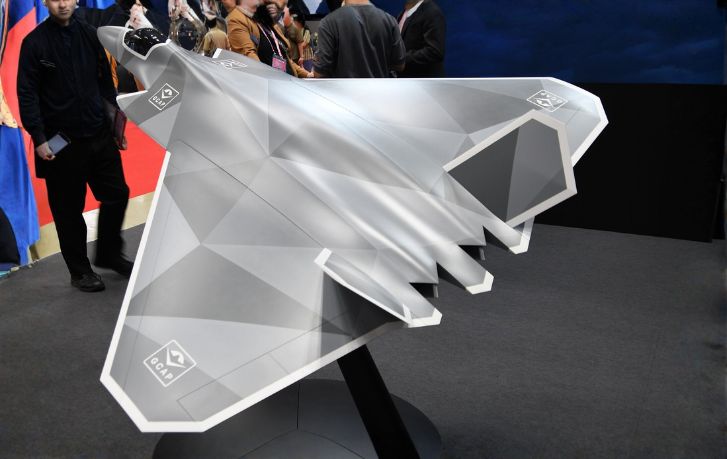
GCAP was launched in 2022 to develop a sixth-generation combat aircraft intended to operate alongside F-35s, uncrewed systems and advanced sensors. Edgewing, a joint venture owned equally by BAE Systems, Leonardo and Japan Aircraft Industrial Enhancement Co., serves as the prime contractor and design authority.
On July 3, the GCAP Agency awarded Edgewing an 18-month contract worth £4.6 billion for advanced concept, assessment and continuing design work. That phase is important because decisions made before a configuration is fixed can shape propulsion, sensors, software, manufacturing methods and the integration of crewed and uncrewed aircraft.
Early visibility therefore has practical value even without voting rights. Canada can evaluate where its aerospace base might fit, what security and data-handling requirements participation would impose, and whether its technical strengths align with work packages that have not yet been fully allocated. Relevant areas could include propulsion, sensor and data systems, software, digital engineering, manufacturing and simulation.
Access, however, is not the same as industrial participation. Canadian companies have no guaranteed contracts under the observer agreement. If Canada seeks a funded design or production role, the governments would need another agreement addressing financial contributions, security rules and the division of industrial work. Those negotiations would determine whether Canada influences the aircraft or merely buys, supports or contributes technology to it later.
The fleet schedule still points to a near-term gap
GCAP also cannot replace Canada’s CF-18s on the currently published timeline. The older fighters are expected to remain in service through 2032, while the multinational program aims to introduce its new aircraft in 2035. Even if that target is met, it falls after Canada’s existing retirement date and offers no near-term bridge for training, infrastructure or operational conversion.
Canada’s separate review of its planned 88-aircraft F-35 acquisition consequently remains unresolved. Funding is committed for the first 16 aircraft, while the balance is under examination. The first eight Canadian F-35s are scheduled for delivery to Luke Air Force Base in 2026 and 2027 for pilot training. The first aircraft is expected to arrive in Canada in 2028, followed by planned initial operational capability in 2029.
Those milestones place the F-35 and GCAP in different planning windows. The F-35 order addresses the transition away from the CF-18 and the associated need to establish trained crews, support equipment and operational infrastructure before 2032. GCAP is a possible post-2035 capability that is being designed to work alongside F-35s rather than simply displace them.
Canada has secured a useful seat near the engineering discussion without accepting the cost and governance obligations of full membership. That buys information and time, but not aircraft, industrial work or voting authority. Until Canada negotiates a larger role and until GCAP advances beyond its present design phase the agreement is best understood as a technology and industrial hedge, not a substitute for the fighter decision already on Ottawa’s schedule.
By David Whitaker — Associate editor for AMI’s aerospace and drone systems desk, translating flight systems, aircraft programs, spaceflight, and UAV developments into accessible technical stories.