Court Weighs Replacement or Refund for Recalled Volkswagen Group Electric Vehicles
A recalled electric vehicle normally goes back to the manufacturer’s service network for inspection or repair. A case before Germany’s Offenburg Regional Court raises a more consequential possibility: replacement of the vehicle or a purchase-price refund when a battery defect cannot be remedied promptly and without significant inconvenience.

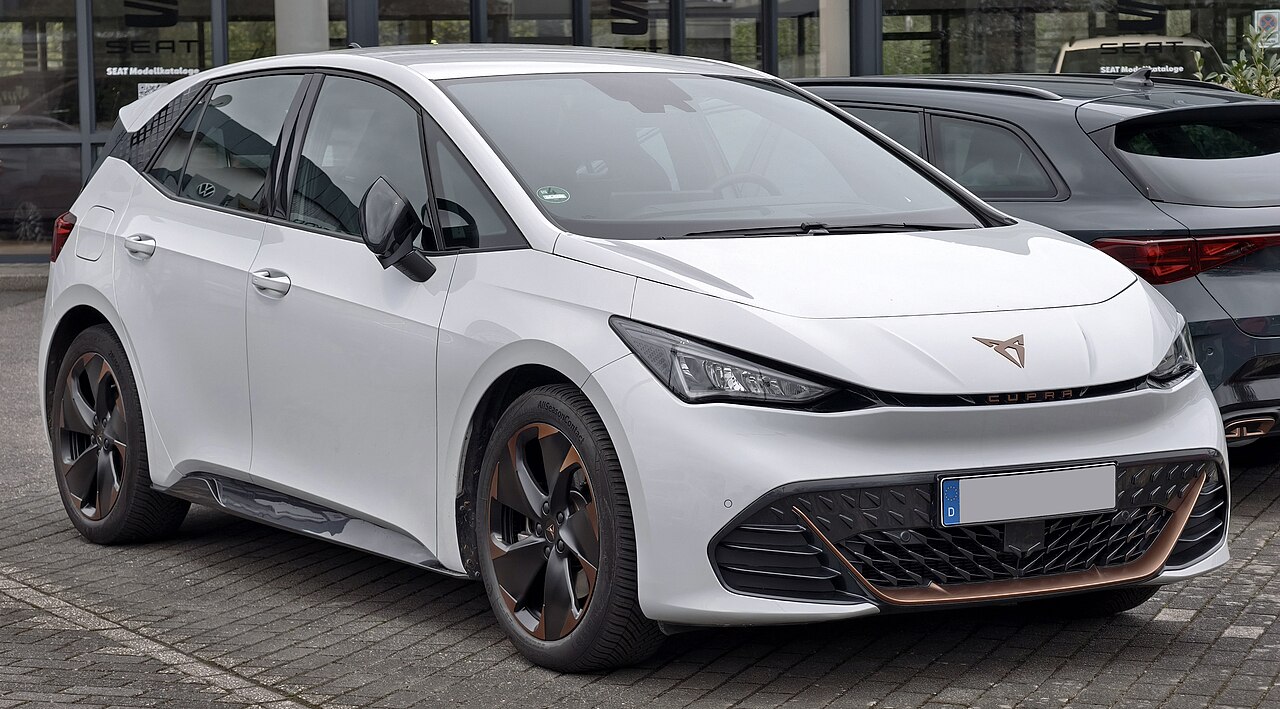
The dispute concerns a Cupra Born included in Volkswagen Group battery recall campaign 93S4. In a preliminary assessment dated October 31, 2026, the court indicated that Article 37 of the European Union’s General Product Safety Regulation could provide a basis for remedies against Seat, Cupra’s parent company and manufacturer. The court has not issued a judgment, and the assessment creates no general right to return every recalled electric vehicle.
The plaintiff in Case No. 2 O 356/25 is seeking to unwind her Cupra Born purchase. Her claims are directed at both the seller and Seat, bringing several legal routes into the same proceeding: the EU recall-remedy framework, conventional sales law and German product-safety law.
The recall extends across nearly 94,000 vehicles
Announced in March 2026, campaign 93S4 covers 19,452 Cupra Born vehicles and 74,579 Volkswagen vehicles worldwide. The Volkswagen list comprises the ID.3, ID.4, ID.5, ID.Buzz and ID.Buzz Cargo.
The recall notice identifies certain battery modules that may reduce driving range, activate a warning light and pose a fire risk. Those effects connect the physical condition of the high-voltage battery to the legal question now before the court: whether the available corrective action qualifies as an effective and timely remedy.
No technical finding in the proceeding establishes that every recalled battery must be replaced, or that campaign 93S4 lacks a workable repair. The applicable remedy depends on the condition of the affected product, the safety and availability of a repair, the time required to complete it and the governing legal framework.
Repair is one option, not necessarily the only one
The EU regulation generally requires the company responsible for a recall to provide an effective, free and timely remedy. Consumers ordinarily must be offered at least two options among repair, replacement with an equivalent safe product and an adequate refund, unless an option is impossible or disproportionate.
The regulation’s explanatory text also says repair should be considered only when the safety of the repaired product can be ensured. For an electric vehicle, that makes technical remedy design central to the consumer outcome. A validated module repair or replacement completed within a reasonable period could support continued use of the original vehicle. An unavailable, excessively delayed or inadequate remedy could strengthen the case for a replacement vehicle or refund, depending on how the court applies the law.
A refund under this framework would generally be at least equal to the established purchase price, while national law can provide separate compensation rules. The plaintiff’s attempt to rescind the sale also puts the seller’s contractual obligations in focus. That route is distinct from a claim against the manufacturer under product-safety rules, even when both arise from the same battery recall.
The regulation’s timing remains unresolved
A major boundary is whether Article 37 governs this Cupra Born and the circumstances of its recall. The General Product Safety Regulation has applied since December 13, 2024, leaving unresolved how its provisions apply to older vehicles. Its interaction with sector-specific EU safety rules must also be determined before the court can settle whether Article 37 directly supports the plaintiff’s requested remedy.
That uncertainty prevents the preliminary assessment from becoming a blanket return policy for the Volkswagen ID family or Cupra Born. A recall by itself does not automatically entitle an owner to surrender a vehicle. The hazard, the effectiveness and timing of the proposed remedy, the vehicle’s legal status and the relevant sales contract all remain material.
The case nevertheless puts a concrete limit on a repair-first approach: under the EU framework being considered, a recall remedy must do more than exist on paper. It must be free, effective and timely, and a repaired product must be safe. The defendants have until November 6, 2026, to respond before the Offenburg court moves closer to deciding whether those requirements support replacement, refund or another outcome for this Cupra Born.
| More aerospace and engineering stories, right in your MSN feed. Follow AMI on MSN |
By Thomas Caldwell — AMI’s senior editor for mechanical and mobility engineering, covering vehicle electronics, systems integration, electrification, chassis systems, propulsion, and safety policy.