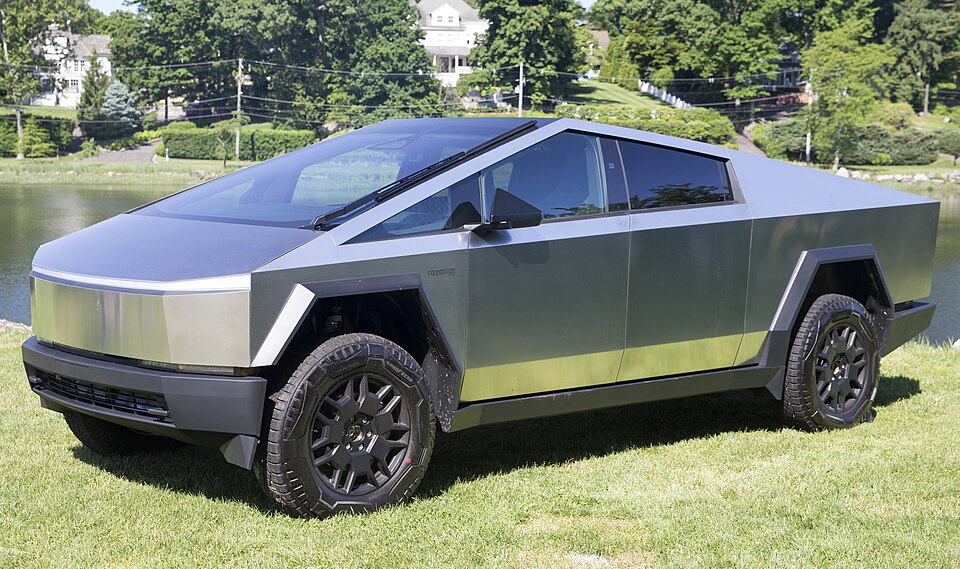
Tesla extends Cybertruck warranty after failures prevent home charging
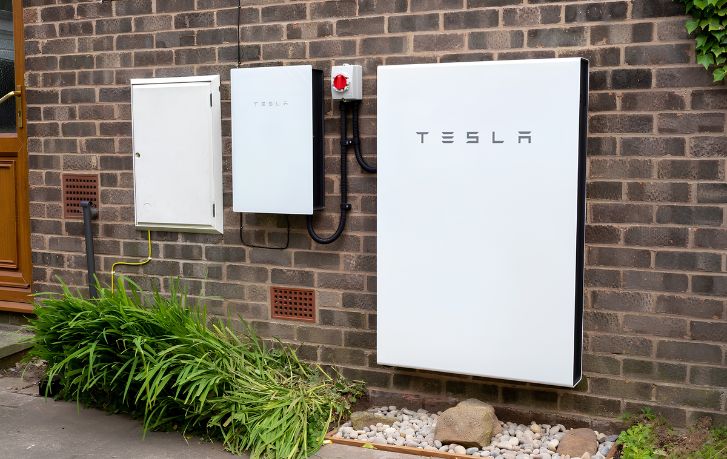
Home charging depends on power electronics inside the Cybertruck to convert alternating-current electricity from a wall charger into the direct current stored by its high-voltage battery. When that Power Conversion System fails, affected owners may lose the ability to charge at home turning the failure of one integrated component into a direct limitation on everyday vehicle use.

Tesla is responding by extending warranty coverage for affected Power Conversion System hardware, also identified as PCS2, to eight years or 150,000 miles. That is substantially longer than the Cybertruck’s four-year or 50,000-mile Basic Vehicle Limited Warranty. Owners who previously paid for repairs related to the covered issue are also set to receive reimbursement, although Tesla’s eligibility rules and reimbursement procedure have not been detailed.
The new term places the affected hardware on the same time-and-mileage schedule as the Cybertruck battery and drive unit. Tesla’s current vehicle-warranty page lists eight years or 150,000 miles for the Cybertruck’s battery and drive unit, compared with four years or 50,000 miles for basic vehicle coverage. The company notes that owners should consult the warranty supplied with their individual vehicle for authoritative terms.
One module serves two electrical domains
The engineering importance of PCS2 extends beyond its role as an onboard charger. In addition to converting AC charging power into DC power for the high-voltage battery, the system helps support the Cybertruck’s 48-volt electrical architecture. It therefore sits at an important interface between external charging equipment, the traction battery and lower-voltage vehicle loads.
This concentration of functions can simplify a vehicle’s electrical architecture by placing related conversion tasks within one system. It also means that loss of the component can have an immediately visible effect: some owners have reportedly been unable to use AC home charging after a failure. The available information does not establish the precise internal failure mechanism, and it does not confirm whether other charging methods remain available in every affected case.
Tesla said it had “identified an opportunity to improve the long-term reliability of the PCS2 on earlier Cybertruck models.” The company also said newer vehicles already use an updated part revision designed to improve performance. Together, the revised hardware and longer coverage indicate that Tesla is addressing the issue through both a production change and extended support for affected units already in service.
A revised component does not, by itself, explain what changed internally or what condition drove the earlier failures. No details have been provided about circuitry, materials, thermal management, manufacturing processes or control logic. Without those details, it would be premature to assign a technical root cause or infer a broader safety issue.
Coverage is clearer than the affected population
The warranty action reduces potential repair exposure for qualifying owners well beyond the basic warranty period. Reimbursement may also address owners who already paid for a related repair. However, several practical boundaries remain unresolved: Tesla has not specified the covered model years, production dates, vehicle-identification-number range, total vehicle count or observed failure rate.
The action has not been identified as a recall, and the available information does not establish that every Cybertruck with an earlier PCS2 revision is affected. It also remains unclear whether service will involve proactive replacement of covered hardware or replacement only after diagnostics identify a problem.
For owners, the most consequential confirmed change is straightforward: qualifying PCS2 hardware now carries eight years or 150,000 miles of coverage rather than relying solely on the shorter basic warranty. For the vehicle’s electrical architecture, the episode also illustrates the service consequence of combining essential charging and voltage-conversion functions in one integrated system. Tesla has updated the part and lengthened its support commitment, but the scope of the affected fleet and the mechanism behind the failures remain undisclosed.
By Thomas Caldwell — AMI’s senior editor for mechanical and mobility engineering, covering vehicle electronics, systems integration, electrification, chassis systems, propulsion, and safety policy.