Tesla Discharges and Replaces Powerwall 2 Batteries After UK Fire Warning
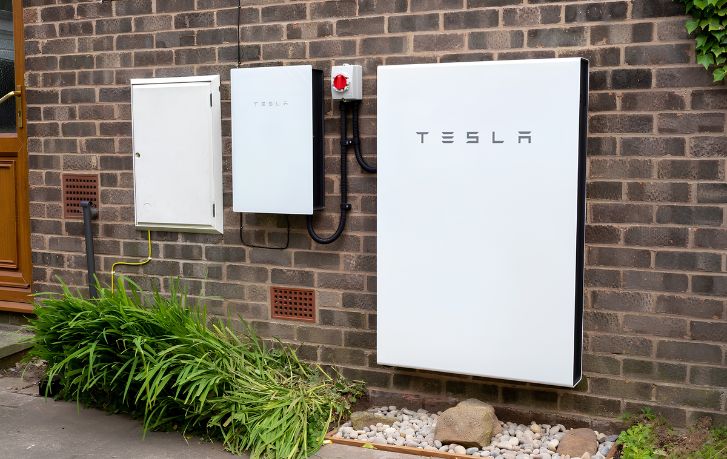
Tesla is remotely discharging and replacing certain Powerwall 2 home batteries after a UK safety investigation identified an internal cell defect that can lead to overheating and fire. The UK Office for Product Safety and Standards warning says affected units will be replaced free of charge.

Most of the affected batteries have already been remotely discharged pending replacement, according to the regulator. Tesla technicians are working through the remaining units. Owners are being told to leave their Powerwall 2 systems online, allowing Tesla to take remote action where necessary, and to check the Tesla app for a notification confirming whether their battery is affected.
Why the cells present a fire risk
The investigation traced the hazard to excessive lithium plating in certain battery cells manufactured by a third party. Lithium plating occurs when metallic lithium accumulates where it should not during battery operation. In the affected Powerwall 2 cells, the condition can lead to cracking of the cell casing, an internal short circuit and then thermal runaway.
An internal short circuit creates a direct electrical path inside the cell, producing concentrated heat. Thermal runaway begins when internal heat generation exceeds the battery’s ability to dissipate that heat. The resulting temperature rise can accelerate further heat-producing reactions, creating a self-reinforcing process that may cause the battery to overheat and catch fire.
This progression is important because it distinguishes the warning from a routine performance or capacity problem. The concern is not simply that an affected battery may store less electricity over time. It is that a developing internal defect can cross into a safety-critical thermal event.
The regulator concluded that the affected Powerwall 2 systems do not meet the requirements of the UK Electrical Equipment (Safety) Regulations 2016. The notice does not specify how many systems are involved, identify the third-party cell manufacturer or provide a manufacturing-date or serial-number range. It also does not give a replacement schedule or state whether any fires or injuries have occurred.
Remote discharge is an interim control, not a repair
Tesla’s ability to discharge connected batteries remotely gives the company an immediate risk-control tool while physical replacements are arranged. Lowering the energy stored in a battery can reduce the potential severity of a thermal event, but it does not remove the underlying cell defect. That is why the corrective program still requires replacement of the affected hardware.
The response illustrates the two distinct roles of a connected battery-management system. Software and communications can change an operating state quickly, limiting exposure while a field campaign is underway. They cannot correct lithium plating, casing damage or an internal material defect once those conditions exist. A technician and replacement unit remain necessary.
Connectivity is therefore part of the safety response rather than merely a feature for energy monitoring. If an affected system is offline, Tesla may be unable to carry out the remote discharge described in the warning or confirm its status through the normal connected process. Owners should not attempt to open, inspect or repair the battery themselves.
What Powerwall 2 owners should check
UK customers with a Powerwall 2 should keep the system online and look in the Tesla app for a notification. If Tesla confirms that replacement is required, the regulator instructs the customer to contact the original Tesla Certified Installer to arrange installation. If that installer is unavailable, the customer should contact Tesla Support.
The replacement is free for affected units. However, the warning provides no general serial-number list that owners can use independently, making the app notification and connected-system status the practical checks currently available.
The unresolved issue is how quickly every identified unit can move from remote risk control to physical replacement. Until that work is complete, the safety process depends on three linked elements functioning as intended: an online Powerwall 2, Tesla’s ability to discharge it, and a technician replacing the affected battery.
| More aerospace and engineering stories, right in your MSN feed. Follow AMI on MSN |
By Thomas Caldwell — AMI’s senior editor for mechanical and mobility engineering, covering vehicle electronics, systems integration, electrification, chassis systems, propulsion, and safety policy.