SpaceX Lands $8.1 Billion Golden Dome Role With 2027 Deadline
Roughly $8.1 billion now defines SpaceX’s expanding role in the U.S. Space Force’s emerging Golden Dome infrastructure. Recent awards cover a low-orbit communications network, a constellation for tracking airborne targets and 18 Falcon 9 launches, with major prototypes and deployments expected through the end of 2027.

The total comes from three actions worth approximately $8.05 billion before rounding. In May, SpaceX received $2.29 billion to build the initial backbone of the Space Data Network, a secure, high-capacity architecture intended to connect military sensors, command systems and weapons. The Space Force expects a fully operational prototype by the end of 2027.
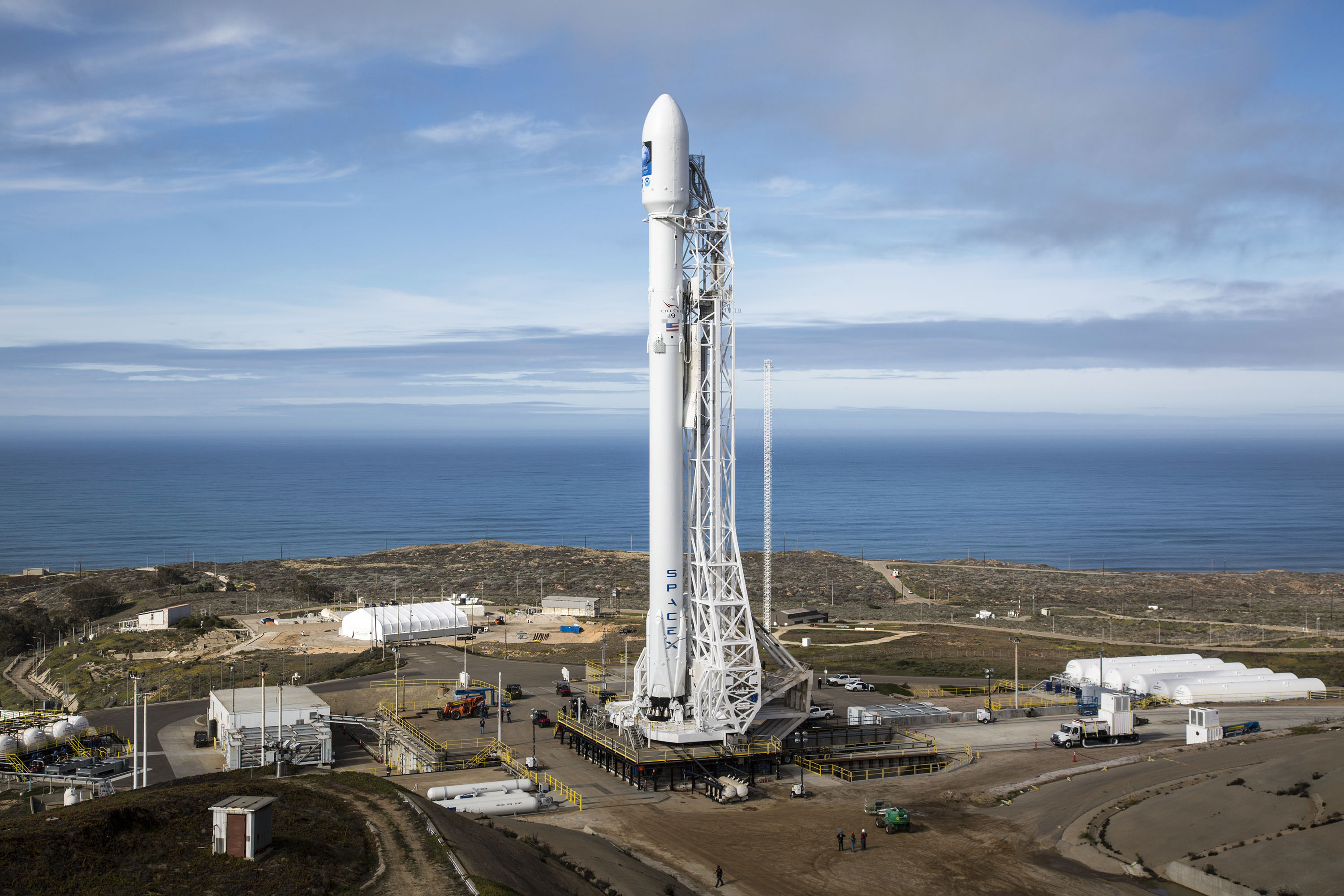
Days later, the company received a separate $4.16 billion contract for the initial space-based Airborne Moving Target Indicator constellation. That network is intended to provide persistent orbital tracking of aircraft and other airborne targets. In late July, the service placed a $1.6 billion order for 18 Falcon 9 missions supporting its broader Space-Based Sensing and Targeting portfolio. The Space Systems Command said the launches are expected to be completed by the end of 2027.
Why SpaceX can cover more than launch
The important change is not simply the contract value. SpaceX is positioned across several layers required to turn a planned constellation into an operating system: satellite-bus production, optical communications terminals, military spacecraft development through Starshield, spacecraft integration and launch aboard Falcon 9.
Keeping those functions within one organization could reduce the number of contractual and technical handoffs that must be coordinated against the 2027 schedule. Satellite production rates have to align with payload availability, integration capacity, launch-site processing and rocket assignments. A provider controlling both spacecraft manufacturing and deployment can potentially adjust those flows internally rather than renegotiating every interface between separate prime contractors.
That does not establish that SpaceX will deliver on time or at lower cost. A vertically integrated structure can simplify coordination, but actual performance still depends on manufacturing throughput, component availability, test results, government acceptance and launch execution. The awards establish scope and schedule; they do not yet demonstrate the cost or delivery benefit of putting those functions together.
The Space Data Network also makes communications infrastructure as consequential as the sensing spacecraft. Satellites that detect or follow objects must move useful information through the wider architecture. Optical terminals can provide high-capacity links between spacecraft, but the network still has to integrate different sensors, command systems and downstream users. That systems-integration burden is one reason SpaceX’s role now extends beyond being a transportation provider.
Speed creates a supplier-concentration tradeoff
For taxpayers and Space Force users, concentrating several near-term functions at one company offers a clear scheduling proposition but also creates industrial risk. Manufacturing, communications hardware, spacecraft integration and launch can advance under a common corporate structure. At the same time, delays or capacity constraints within that structure could affect several connected parts of the deployment plan rather than one isolated contract.
The Space Force is responding by spending beyond the initial SpaceX baseline. On August 4, it announced three additional agreements totaling $615 million for Rocket Lab, Systems & Technology Research and a third company that was not identified for operational-security reasons. Those awards are separate from SpaceX’s roughly $8.1 billion and are intended to evaluate alternative approaches to airborne-target sensing.
Col. Ryan Frazier, the acting portfolio acquisition executive for Space-Based Sensing and Targeting, said the focus was diversifying our capabilities and ensuring we don’t rely on a single technical solution. He said the suppliers would explore “fundamentally different ways” to perform the mission.
That diversification serves two purposes. Different sensing approaches may perform differently across operating conditions, while a broader vendor pool can preserve competition for later production rounds. Smaller prototype awards also give the government evidence for comparing performance before committing future expansion to one architecture.
The resulting procurement strategy is deliberately uneven: SpaceX holds the large initial baseline needed to move quickly, while other suppliers receive smaller awards to mature alternatives. Whether that balance works will become clearer through hardware delivery, integration testing and launch progress. The decisive milestone remains the end of 2027, when the communications prototype is expected to be operational and all 18 Falcon 9 deployment missions are scheduled to be complete.
By David Whitaker — Associate editor for AMI’s aerospace and drone systems desk, translating flight systems, aircraft programs, spaceflight, and UAV developments into accessible technical stories.