Starfighters Plans 2027 F-104 Flights Carrying Reaver Hypersonic Interceptor
A jet that first flew in 1954 could carry a modern hypersonic interceptor under its wing in 2027. Starfighters Space and Horizon Apogee have outlined a campaign using Starfighters’ Mach 2-plus F-104 aircraft to test how Horizon Apogee’s Reaver vehicle behaves when attached to and eventually released from a carrier aircraft.

The plan is not yet a firm test contract. The companies have signed a non-binding memorandum of understanding, with pricing and other commercial terms still to be negotiated. If a definitive agreement follows, captive-carry flights are planned for the second quarter of 2027 and drop tests could begin in the third quarter.
Five phases before powered flight
The proposed campaign contains five phases, beginning on the ground rather than at supersonic speed. Engineers would first conduct aerodynamic-integration analysis and aircraft fit checks, establishing how Reaver and its mounting hardware would be accommodated beneath an F-104 wing. Flight-readiness preparations would follow before the program moves into subsonic and supersonic captive-carry evaluations.
During captive carry, Reaver would remain attached to the aircraft. That configuration lets engineers collect real-world data on the combined aircraft-and-test-article arrangement without immediately accepting the added complexity of release. The work is intended to examine aerodynamic integration and interactions between the interceptor and carrier aircraft, including whether observed flight behavior aligns with the analysis completed beforehand.
NASA has used the same broad progression in earlier high-speed research. Before an X-43A hypersonic research flight, the agency conducted a captive-carry mission as a full-scale rehearsal and evaluated the resulting data before proceeding toward launch. For Reaver, the proposed F-104 flights similarly create an intermediate step between ground work and free flight, although the vehicles and test programs are different.
Drop testing would add the next major transition: separation. Releasing Reaver from beneath the wing would allow the companies to evaluate the vehicle after it leaves the carrier, rather than only studying the coupled configuration. The fifth phase would review the flight data and consider follow-on activity, potentially including powered flight tests.
Why an F-104 fits this role
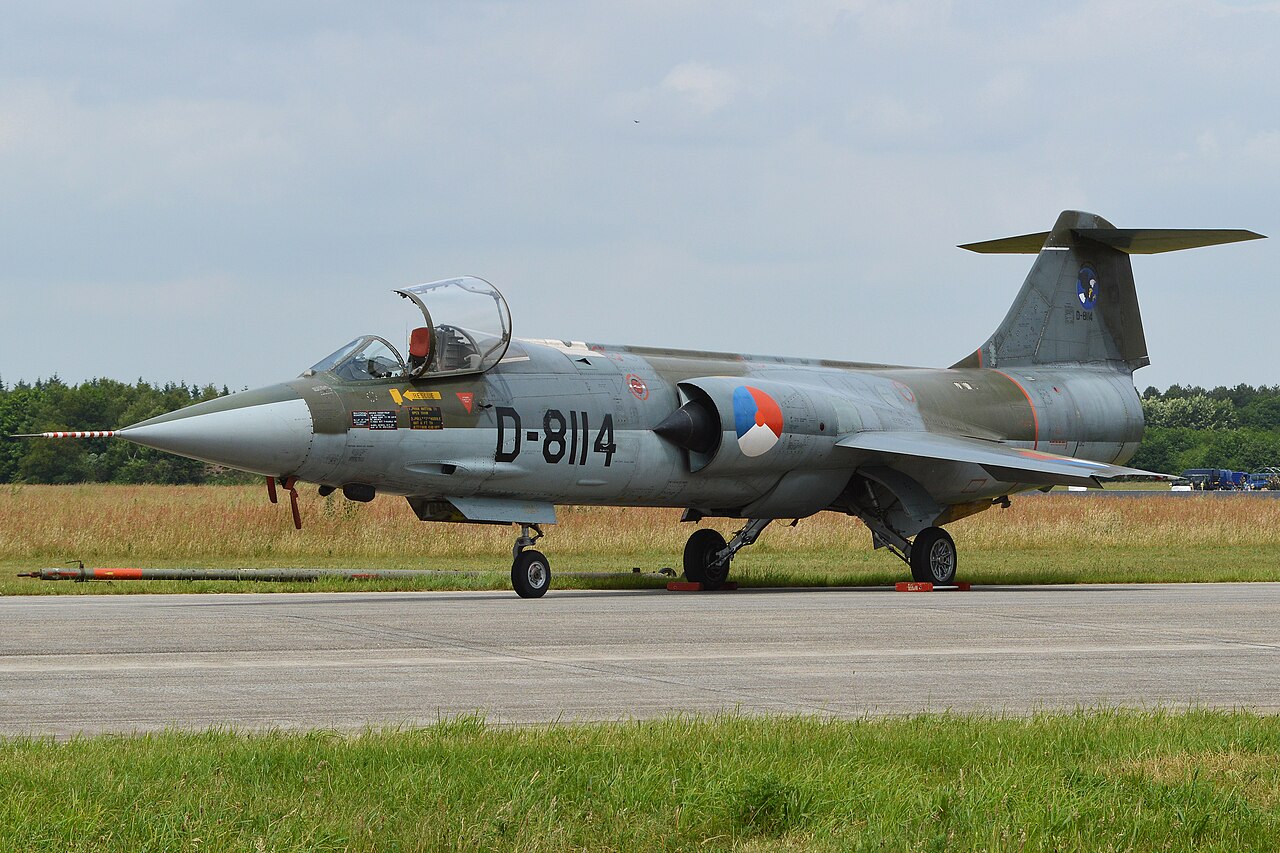
Lockheed developed the F-104 as a supersonic interceptor, and the aircraft first flew in 1954. Its age is the striking part of the proposal, but its present value is more specific than nostalgia. Starfighters operates flight-ready F-104s that it describes as capable of sustained Mach 2-plus flight, giving developers access to a reusable carrier platform for subsonic and supersonic test conditions.
The F-104 would not make Reaver hypersonic during captive carry. Instead, it would provide an airborne environment for checking the physical and aerodynamic integration before the interceptor advances farther into its own flight program. That staged approach separates carrier-integration questions from the later challenges of powered high-speed operation.
Reaver’s propulsion transition
Reaver is designed around Horizon Apogee’s Orthrus combined-cycle, air-breathing propulsion system. Orthrus is intended to transition from ramjet to scramjet operation as vehicle speed rises. In a ramjet, inlet airflow is slowed to subsonic speed before combustion. A scramjet maintains supersonic airflow through the combustion chamber, avoiding some of the inlet shock losses associated with slowing high-speed air further.
That transition is technically significant because the engine must operate across changing airflow conditions rather than at one narrow point. Ramjets and scramjets also depend on the vehicle’s forward motion to compress incoming air; unlike a conventional turbojet, they do not use a compressor to generate the required inlet conditions. The proposed F-104 work is aimed at collecting flight data and reducing aerodynamic, propulsion and integration risks before powered testing advances, not at demonstrating the complete ramjet-to-scramjet transition under the wing.
Horizon Apogee is developing Reaver through the U.S. Army’s xTech|Search 10 competition, a program intended to connect small businesses with Army research and potential follow-on development pathways. The company completed a subscale Orthrus hot-fire test in June 2026 and separately plans to launch a Reaver prototype vertically from White Sands Missile Range in New Mexico in early 2027.
That vertical test is scheduled to precede the proposed F-104 campaign. If the companies finalize their commercial agreement, the progression would move from ground propulsion work and a prototype launch to captive carry, release and data review using a Cold War-era Mach 2 aircraft to close the gap between isolated tests and powered flight.
| More aerospace and engineering stories, right in your MSN feed. Follow AMI on MSN |
By David Whitaker — Associate editor for AMI’s aerospace and drone systems desk, translating flight systems, aircraft programs, spaceflight, and UAV developments into accessible technical stories.