Qantas 787 Lands Safely After Lightning Strike, Stays Grounded Two Weeks
A Qantas Boeing 787-9 safely completed a trans-Pacific flight after being struck by lightning, yet remained grounded in Melbourne two weeks later for what an engineering professor called “a significant repair.” The contrast captures an important feature of modern aircraft design: surviving the event in flight does not make the resulting inspection and restoration work quick or cosmetic.

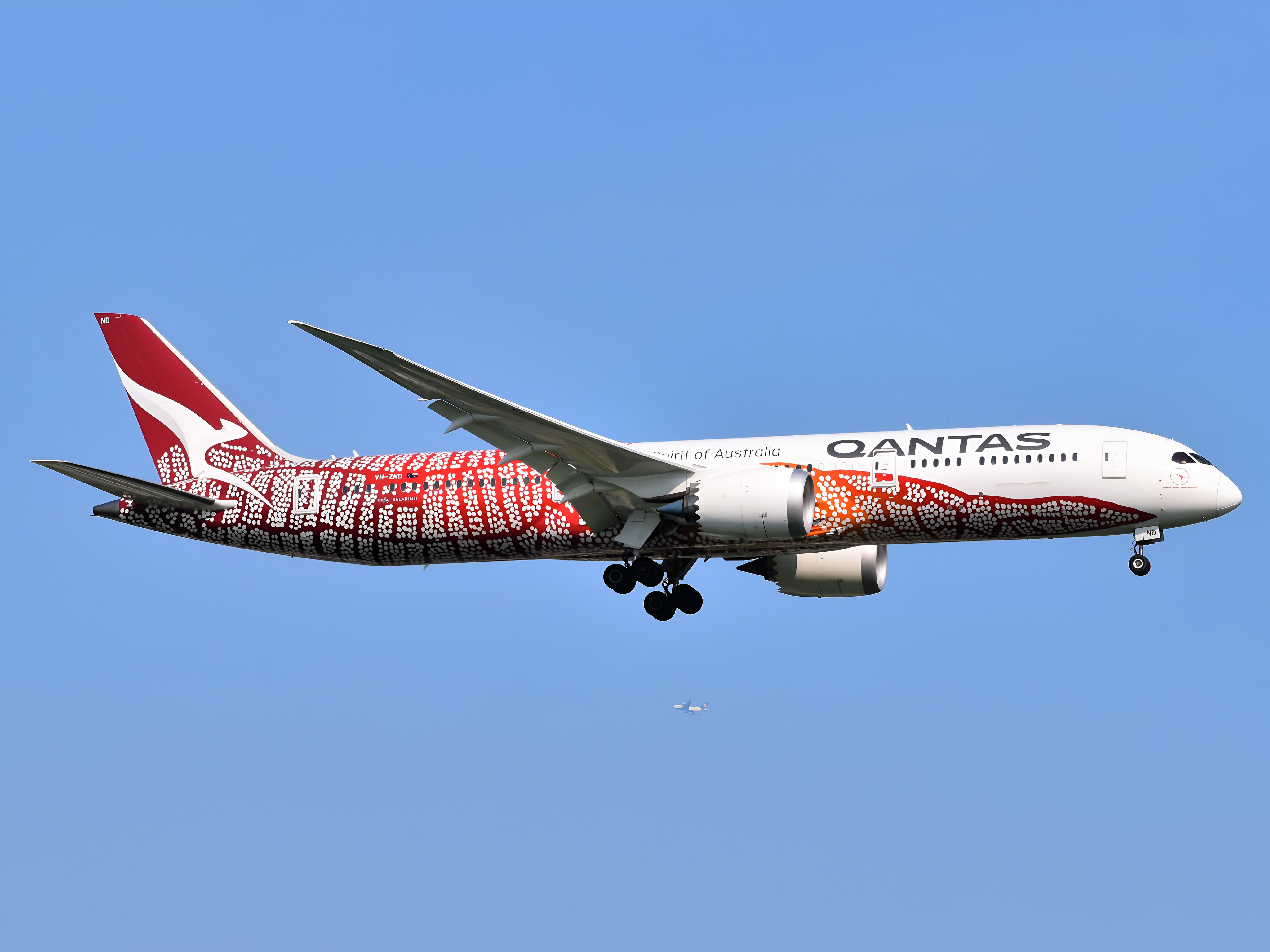
The aircraft, registered VH-ZND, was operating QF94 from Los Angeles to Melbourne on October 30, 2026. It continued to its destination and landed on the morning of October 31 local time. Qantas said its Melbourne engineers were inspecting and repairing the jet, but the airline had not announced a return-to-service date two weeks after the strike.
“Commercial aircraft are designed to withstand lightning strikes, and the aircraft continued its journey to Melbourne without incident,” a Qantas spokesperson told The Sydney Morning Herald. FlightAware records showed no subsequent flights by VH-ZND and marked a Perth-to-Singapore service assigned to the aircraft later on October 31 as cancelled.
The exposed mesh is part of the protection system
Photographs published by the newspaper on November 14 showed charred areas on the aircraft’s belly skin and exposed lightning-protection mesh. Sonya Brown, a professor of mechanical and manufacturing engineering at UNSW, reviewed the images and described the work as “a significant repair.” She said minor strike damage can measure less than one centimeter across, while the visible damage on VH-ZND appeared to extend for tens of centimeters.
An unnamed aircraft safety expert likewise said the bronze mesh “has certainly taken quite a decent hit.” Qantas has not specified the damage’s full depth, its complete area or the final repair scope, so the images alone cannot establish how much composite structure must be restored.
The mesh is not incidental material beneath the paint. More than half of the 787-9’s body is made from carbon-fiber composite, which does not conduct electrical current as effectively as a conventional aluminum aircraft skin. Expanded metal foil incorporated into the composite layup gives lightning current and associated heat a conductive path across the aircraft. Visible disruption to that layer therefore requires more than surface refinishing.
European aviation guidance for composite aircraft structures says repairs must maintain lightning protection and that degradation capable of affecting structural integrity, fuel-tank safety or electrical systems must be detected. It also calls for maintenance documentation covering inspection and repair procedures, including any specialized equipment, materials, tooling and processing needed for composite work.
A normal landing can precede a demanding repair
That inspection burden helps explain how an aircraft can behave normally during and after a strike but remain unavailable well beyond the flight itself. Engineers must characterize the visible damage, check for less obvious effects in the surrounding composite structure and restore the conductive protection layer. The repaired area then has to meet the aircraft’s airworthiness requirements rather than merely look intact.
A Government Accountability Office review of composite-aircraft oversight identified several complications relevant to that process. Composite damage can be less visible than damage in metal structure, nondestructive inspection methods vary with the construction and damage type, and repair quality is highly dependent on the process used. The 2011 review is not an assessment of VH-ZND, but it illustrates why composite repair and verification can impose a substantial maintenance burden.
Commercial passenger aircraft encounter lightning regularly. The U.S. National Weather Service says they are struck an average of once or twice a year, and a suspected strike requires inspection for damage. That frequency is why the aircraft includes a designed current path and why engineers still treat any damaged portion of that path as an airworthiness matter.
VH-ZND’s absence also comes just after Qantas changed its Melbourne–Los Angeles operation from Airbus A380 service to a daily 787-9 schedule on October 25. FlightAware listed the October 31 QF93 and November 1 QF94 as cancelled, but Qantas has not connected those cancellations to the strike. The confirmed operational fact is narrower: the 787 assigned to the October 30 QF94 landed safely, then remained out of service two weeks later with no announced return date.
The strike protection performed its immediate job by allowing the aircraft to continue safely to Melbourne. Restoring that protection and verifying the composite structure around damage measured in tens of centimeters is now the work keeping VH-ZND on the ground.
| More aerospace and engineering stories, right in your MSN feed. Follow AMI on MSN |
By David Whitaker — Associate editor for AMI’s aerospace and drone systems desk, translating flight systems, aircraft programs, spaceflight, and UAV developments into accessible technical stories.