Army’s $53.9 Billion Patriot Plan Tests a Threefold Production Ramp
The U.S. Army has put a potential $53.9 billion behind a seven-year Patriot interceptor plan, but that figure is not a guaranteed missile purchase. The Army’s contract announcement says no funds were obligated when it awarded the Lockheed Martin modification, leaving the eventual quantities, annual funding and delivery schedule to be established.

The July 2026 action replaces a one-year undefinitized contract action with a seven-year arrangement supporting planned fiscal 2026-2032 procurement of Patriot Advanced Capability-3 Missile Segment Enhancement interceptors. The modification is valued at $53.86 billion and raises the broader contract’s not-to-exceed ceiling to $58.62 billion. Those distinctions matter: a ceiling establishes contracting room, while appropriations, negotiated prices and subsequent orders determine what taxpayers ultimately fund and what factories must deliver.
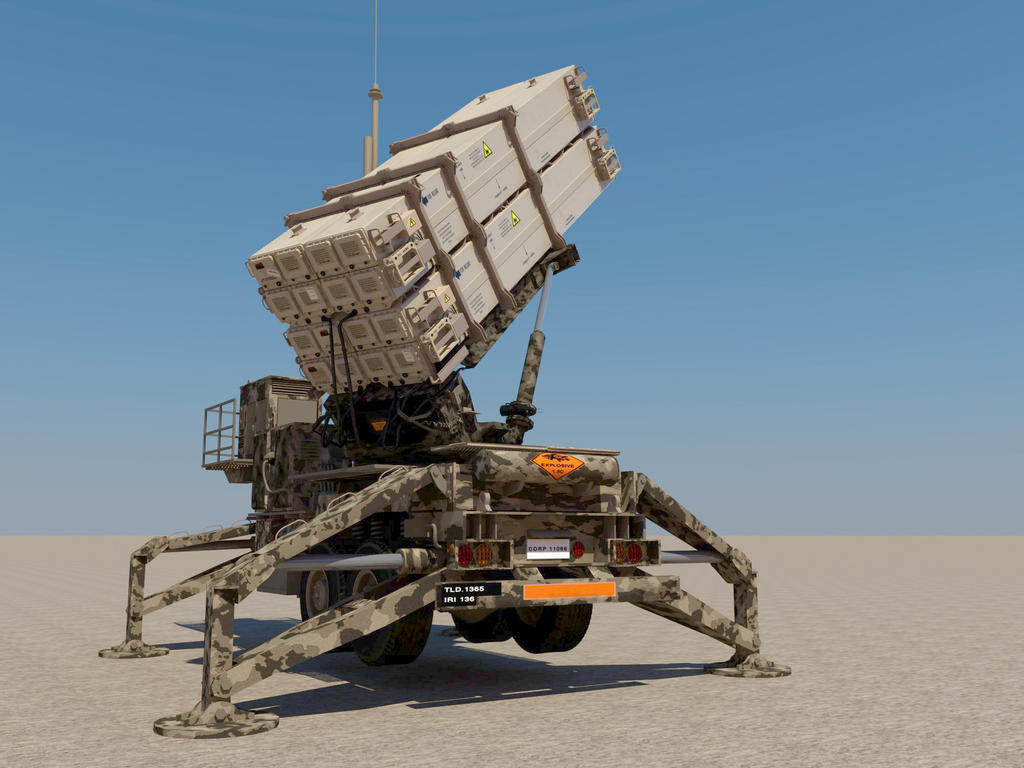
The immediate engineering challenge is manufacturing scale. Lockheed Martin said in January that its seven-year framework with the government was designed to increase annual PAC-3 MSE capacity from approximately 600 to 2,000 interceptors. The company delivered 620 in 2025, more than 20% above the previous year and more than 60% above its output two years earlier.
Reaching 2,000 annually would therefore require more than tripling recent capacity. It would not happen simply by asking an existing assembly line to run faster. The Army says the longer demand signal is intended to let Lockheed Martin and its small-business suppliers hire skilled workers, secure materials and invest in advanced manufacturing facilities. That is the practical value of a multiyear structure: suppliers are more likely to add tooling, personnel and floor space when demand extends beyond a single budget year.
The plan’s headline value still does not reveal how many missiles will be bought. Using an approximate unit price of $4 million, dividing $53.9 billion by that price produces about 13,475 interceptors. But that is only a mathematical illustration, not an official order quantity. The contract could include costs beyond completed missiles, and unit pricing can change with production volume, contract terms, inflation and associated support.
Even the illustrative number shows why the production question cannot be ignored. Building 13,475 missiles across seven years would average roughly 1,925 annually, close to Lockheed Martin’s stated goal of approximately 2,000 in annual capacity. The more useful comparison, then, is not between $53.9 billion and a simple replacement bill. It is between the planned procurement framework and the industrial output needed to sustain it.
Inventory pressure provides the policy rationale, although public estimates should not be mistaken for confirmed Army counts. The Center for Strategic and International Studies has estimated that the United States entered the Iran war with 2,330 Patriot missiles and used about 65% of that inventory, leaving fewer than 800. CSIS separately assessed the remaining Patriot inventory at under 1,000. These are attributed estimates, not official service disclosures, but they illustrate why production measured in hundreds per year can become a readiness constraint when expenditure rises quickly.
They also show why a replacement-only calculation is incomplete. At $4 million apiece, replacing roughly 1,500 interceptors would cost about $6 billion using rounded figures, not the full potential contract value. The much larger ceiling could cover a broader inventory expansion, sustained production for U.S. and allied demand, or other contract costs. Until funded quantities and pricing are disclosed, it cannot be assigned cleanly to any one of those purposes.
A lower-cost Patriot-family interceptor may eventually help distribute demand, but it does not erase the MSE requirement. Lockheed Martin has introduced the PAC-3 Adapted Capability Effector, or ACE, which could cost as little as $2.5 million. The company describes ACE as “complementary” to MSE rather than a replacement, reflecting different intended performance levels. Its first test is expected in early 2028, so it remains a development effort rather than an immediate substitute for current production.
For taxpayers, the unresolved issue is not merely whether the Army can place a very large contract. It is whether annual appropriations, negotiated orders and supplier investments remain aligned long enough to turn a paper ceiling into dependable output. The next meaningful milestones will be funded missile quantities and delivery terms and proof that a production base recently delivering 620 interceptors a year can approach 2,000 without the schedule or cost structure breaking away from the plan.
By David Whitaker — Associate editor for AMI’s aerospace and drone systems desk, translating flight systems, aircraft programs, spaceflight, and UAV developments into accessible technical stories.