Pentagon Gives Industry 21 Days as Estimated Patriot Missile Inventory Falls 65%
The Pentagon has imposed a 21-day planning deadline on defense companies, but the missiles it wants cannot be replenished on a 21-day manufacturing cycle. Deputy Defense Secretary Steve Feinberg directed industry leaders on Aug. 5 to propose faster delivery schedules, higher production and the investments needed to expand capacity. The order comes as the Center for Strategic and International Studies estimates the U.S. Patriot interceptor inventory has fallen at least 65% from its pre-conflict level.

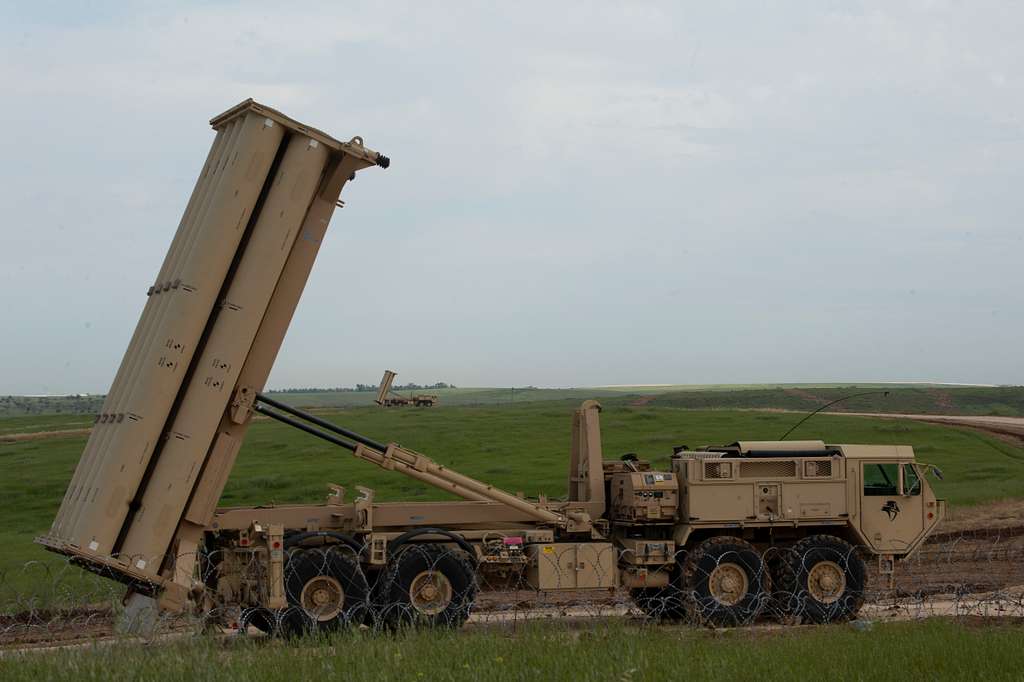
That estimate is not a Pentagon-confirmed inventory count. CSIS calculated that Patriot holdings declined from 2,330 interceptors before the conflict with Iran to between 759 and 827 after recent fighting. It estimated the Terminal High Altitude Area Defense, or THAAD, inventory fell from 452 to between 232 and 262 by the start of the April ceasefire, then recovered slightly to between 234 and 278. Even after that partial replenishment, the estimated THAAD inventory remained at least 38% below its earlier level.
The immediate event is a request for plans, not proof that industry can deliver a rapid production surge. Feinberg asked companies to identify capital investments, facility expansions and other measures needed to produce critical weapons faster. Pentagon spokesman Sean Parnell confirmed the initiative and said the responses would help shape the department’s fiscal 2028 budget submission to Congress. The memo also covers 16 programs under consideration, extending the review beyond Patriot and THAAD.
A deadline cannot compress every production step
Missile production is a chain of specialized processes rather than a single final-assembly problem. Propulsion, seekers, structural hardware, thermal protection and safety devices all have to reach higher output at roughly compatible rates. Adding floor space at a prime contractor will not produce more completed interceptors if a component supplier remains the limiting station.
Solid rocket motors are one documented constraint. Under recently announced seven-year framework agreements, Northrop Grumman is positioned to become a second Patriot motor supplier and expand structural and thermal-protection component output for THAAD. The combined framework is valued at about $3 billion. L3Harris is also expanding propulsion capacity, while Lockheed Martin remains central to final interceptor production and integration.
Those moves matter because a qualified second source can reduce dependence on one production stream and create room for greater output. But qualification, tooling, workforce growth and supplier expansion still take time. CSIS estimates delivery timelines of about 42 months for advanced Patriot interceptors and roughly 53 months for THAAD interceptors. Those estimates illustrate the central mismatch: the Pentagon can collect industrial proposals in three weeks, while completed hardware may take years to move through funded orders, manufacturing and delivery.
Frameworks need contracts and appropriations
The new industrial arrangements provide manufacturers with a longer planning horizon, but a framework agreement is not the same as a fully funded production award. Suppliers generally need durable demand before committing to factories, specialized equipment and larger workforces. A short surge followed by falling orders can leave the government paying for underused capacity or companies carrying facilities that no longer have enough work.
That puts Congress directly in the production loop. A defense spending bill remains stalled while the administration seeks to increase Pentagon spending to $1.5 trillion from about $900 billion the previous year. The available information does not establish how much additional funding the interceptor expansion requires, which companies received the 21-day instruction or what production increases they can credibly offer.
The allocation consequences extend beyond factory accounting. CSIS warned that reduced Patriot and THAAD holdings could require U.S. forces and allied users to conserve interceptors and accept greater defensive risk if hostilities resume. These systems also perform different roles within layered missile defense, so a cheaper or shorter-range weapon cannot automatically replace every Patriot or THAAD mission.
President Donald Trump has disputed public reports of a shortage, saying the United States has “massive amounts” and that more are being manufactured and delivered as needed. That position and the CSIS estimates should not be treated as equivalent types of claims: one is an administration assertion about overall availability, while the other is an outside estimate for two interceptor families.
The industry submissions should begin to clarify where acceleration is physically possible, where suppliers remain constrained and what the Pentagon would have to fund. Until those plans become funded orders with measurable delivery schedules, the 21-day directive is best understood as a capacity test not a 21-day solution.
By David Whitaker — Associate editor for AMI’s aerospace and drone systems desk, translating flight systems, aircraft programs, spaceflight, and UAV developments into accessible technical stories.