Blue Origin Starts Second Pad for Larger New Glenn During Explosion Rebuild
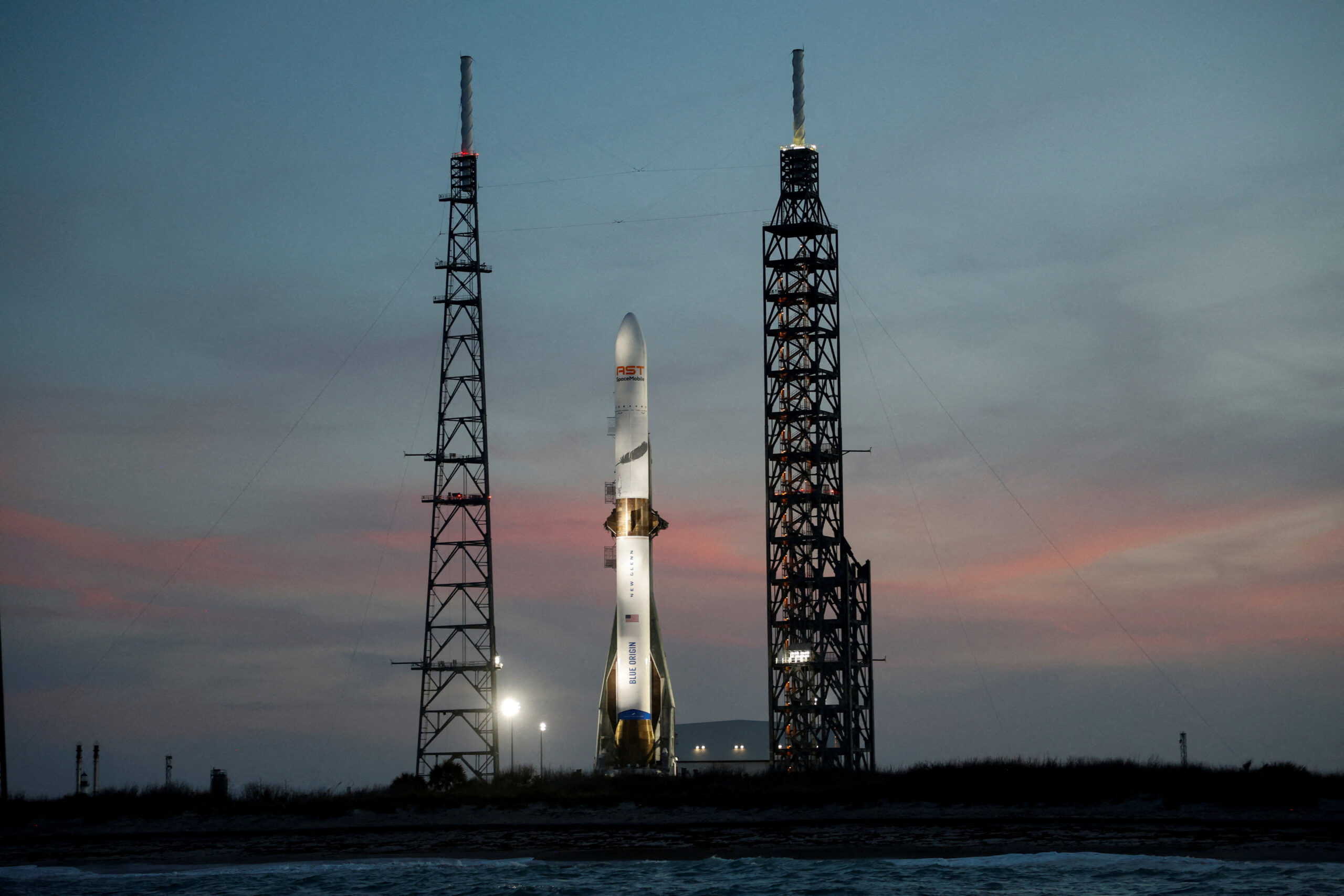
Blue Origin is starting a second New Glenn launch pad at Cape Canaveral Space Force Station while repairing the company’s only operational orbital-launch site after a May explosion. The parallel effort puts two very different infrastructure demands on Launch Complex 36: restoring near-term flights at LC-36A and building the much larger structures required for a proposed higher-capacity rocket at LC-36B.

CEO Dave Limp said on August 12 that returning LC-36A to flight before the end of 2026 remains the priority, while a separate team begins the second pad. Blue Origin’s published plan for LC-36B identifies it as the future operational home of New Glenn 9×4, with LC-36A remaining assigned to the current 7×2 configuration.
That division matters because the existing pad sustained major damage during a May 28 integrated-vehicle hot-fire test in which the New Glenn rocket exploded. Blue Origin has attributed the anomaly’s origin to the main oxygen valve on one BE-4 engine, based on recovered hardware and inspections. The company said it was making valve modifications and continuing fault-tree analysis. Its targeted return before year-end remains a company goal rather than a confirmed launch date.
A tower taller than 700 feet
The scale of LC-36B reflects the physical growth planned for New Glenn. Blue Origin says the new launch tower will exceed 700 feet and require about 2,500 tons of steel columns. Those columns are to be combined with beams and bracing to create roughly 50-foot cube modules, which would then be stacked into the tower.
Modular construction can shift some structural assembly away from the final tower position, but the figures also show that this is not simply a second copy of LC-36A. A taller rocket, broader payload enclosure and different engine arrangement affect access, servicing, interfaces and the equipment needed to prepare the vehicle. None of that supporting infrastructure is operational yet.
The current New Glenn stands 322 feet tall and uses a 23-foot-diameter payload fairing. Its first stage has seven BE-4 engines, while its upper stage uses two BE-3U engines the source of the 7×2 designation. Blue Origin lists the vehicle at 3.9 million pounds of liftoff thrust.
The proposed 9×4 version would stand close to 400 feet, use an 8.7-meter fairing, and combine nine BE-4 first-stage engines with four BE-3U upper-stage engines. Blue Origin gives it a planned liftoff thrust of 4.5 million pounds. More engines alone do not define the expansion: the larger upper stage and payload volume drive corresponding changes in processing, integration and ground handling.
Blue Origin is targeting capacities of 70 metric tons to low-Earth orbit, 14 metric tons to geosynchronous orbit and more than 20 metric tons to trans-lunar injection for the 9×4. Those are proposed performance figures, not results demonstrated in flight.
The second pad is only part of the capacity buildout
Blue Origin also plans a vertical-integration facility where 9×4 rockets would be prepared before rollout. Vertical integration is particularly relevant to national-security missions because some payloads and customers require processing arrangements that differ from those used for more conventional commercial launches.
A separate payload-processing project adds another layer. Space Systems Command awarded Blue Origin a $78.25 million contract to construct a space-vehicle processing facility within Launch Complex 36 by 2028. It is intended to handle Defense Department payloads launched by Blue Origin as well as other national-security launch providers. That broader availability matters because limited satellite-processing capacity on Florida’s Space Coast can create scheduling logjams even when rockets and launch pads are otherwise ready.
Blue Origin says it has invested more than $3 billion in Space Coast operations, employs more than 4,500 people in Florida and works with over 500 suppliers in the state. The tower’s steel requirement now turns part of that expansion into a specific industrial procurement effort, but sourcing material is an early step rather than proof of completed launch capacity.
The immediate test remains LC-36A: repairs, engine-related corrective work and a safe return to flight must come together before New Glenn resumes operations. At the same time, LC-36B’s planned 700-plus-foot tower, larger vehicle interfaces and new processing buildings show that Blue Origin is designing for a launch system substantially beyond the rocket it is now working to return to service.
By David Whitaker — Associate editor for AMI’s aerospace and drone systems desk, translating flight systems, aircraft programs, spaceflight, and UAV developments into accessible technical stories.