Jet-Powered Gerans Reach Two-Thirds of Some Attacks, Forcing Faster Defenses
As much as two-thirds of the drones used in some recent Russian attacks were jet-powered models, Ukrainian Air Force spokesperson Col. Yurii Ihnat said on August 13. That attributed estimate marks a substantial change in the threat mix: Ukraine is increasingly confronting Geran attack drones that can fly far faster than the propeller-driven versions around which many lower-cost interception systems were developed.
The two-thirds figure is not an independently verified fleet-wide rate, and Ihnat applied it only to some attacks. Even with that boundary, it is considerably higher than earlier estimates of up to 20%. It also exceeds the 50% proportion that Gen. Oleksandr Syrskyi said in early June Russia planned to reach. Separately, a Ukrainian drone commander recently told The Associated Press that the concentration of jet-powered Shahed-family drones had increased two and a half times in recent weeks.
Propulsion changes the interception problem
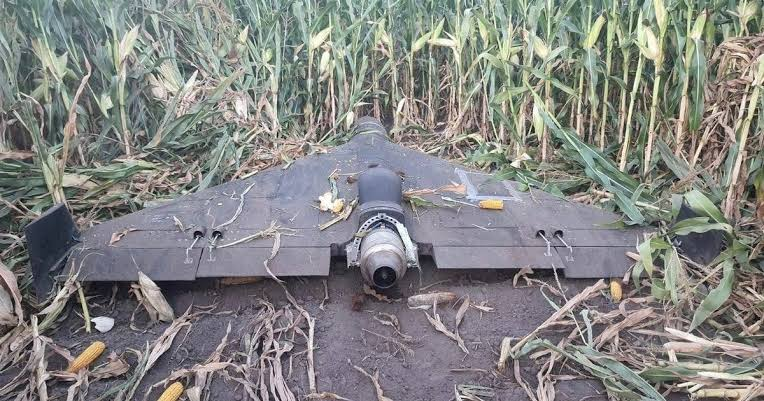
The familiar Geran-2, Russia’s version of an aircraft modeled on Iran’s Shahed-136, uses propeller propulsion and flies at roughly 115 mph. Newer members of the family replace that arrangement with miniature turbojets. The Geran-3 can cruise above 200 mph, while reported maximum speeds rise to 310 mph for the Geran-4 and about 375 mph for the Geran-5.
Those figures describe several aircraft rather than one standardized jet Geran. The Geran-3 is a derivative of the earlier airframe, while the Geran-4 is described as a design more thoroughly adapted around a stronger jet engine. The Geran-5 departs further from the Geran-2’s delta-wing form and has a profile closer to a cruise missile.
For defenders, speed compresses the available time between detection and interception. It also raises the performance demanded from defensive drones, which must establish a useful closing rate rather than merely match a target’s nominal speed. Sensors, communications, flight controls and propulsion must continue working as that engagement window becomes shorter. This is therefore not simply an engine upgrade on the attacking side; it can force changes across the defensive system.
Ukraine’s air-defense network already uses multiple layers, including mobile units, electronic-warfare systems, fighter aircraft and missiles. Interceptor drones have offered another, potentially more scalable layer against slower Geran-2s. As jet-powered models become more common, however, interceptors designed for the earlier speed range may no longer cover the full target set.
Ukraine is pursuing a faster interceptor class
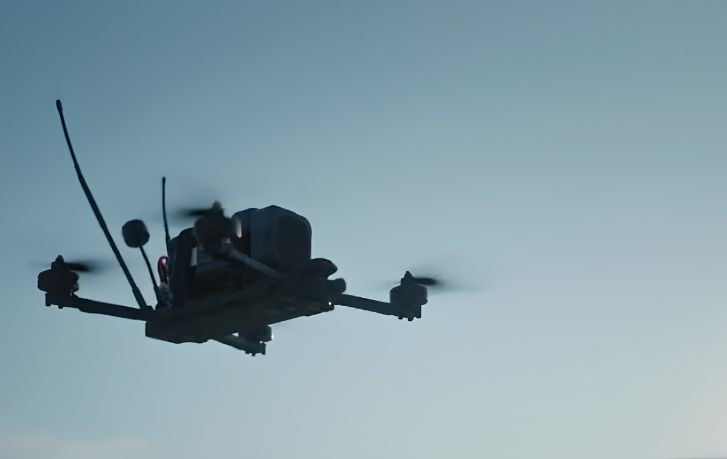
Ukrainian manufacturers are responding with higher-speed defensive drones. Skyfall’s P1-SUN JetKiller, introduced publicly in July, is reported by the company to reach about 230 mph. Skyfall said the system had intercepted more than a dozen jet-powered threats by late July and that mass production was scheduled to begin in August. Those performance results and the production timetable remain manufacturer claims rather than independently established findings.
The published speed also shows why one interceptor cannot be assumed to cover every jet-powered Geran. At 230 mph, the JetKiller is substantially faster than a conventional Geran-2 and within the reported range of some jet variants, but slower than the stated maximum speeds of the Geran-4 and Geran-5. Actual interception feasibility depends on more than a simple comparison of top speeds, but the figures establish a clear operating boundary: defensive drones need enough performance margin for the target and circumstances they are intended to address.
Production now matters as much as prototype performance. A faster airframe has limited defensive value if it cannot be manufactured, supplied and supported in quantities aligned with the changing attack mix. Skyfall has said it aims for production capacity of up to 50,000 interceptors per month, but capacity is not the same as completed output, field availability or confirmed interception performance.
The industrial pressure is intensified by depleted stocks of Western-made interceptors and worsening ballistic-missile pressure. Using scarce, higher-end missiles against large numbers of attack drones can create an unfavorable sustainment burden, while assigning fighters to routine drone interception consumes flying hours and airframe life. For Ukraine and its Western suppliers, a scalable drone layer could help preserve those finite systems for threats that cheaper interceptors cannot address.
The two-thirds estimate is consequently more than a count of engines. If the reported share persists across future attacks, Ukraine’s defensive-drone industry will have to move from adapting individual designs to reliably producing a faster interceptor class with enough speed, control performance and manufacturing volume to follow a Geran family that is still evolving.
By Stephen Wallace — Editor for AMI’s aerospace integration and unmanned mobility coverage, focused on drone manufacturing, VTOL systems, autonomous networks, and air-ground mobility links.