


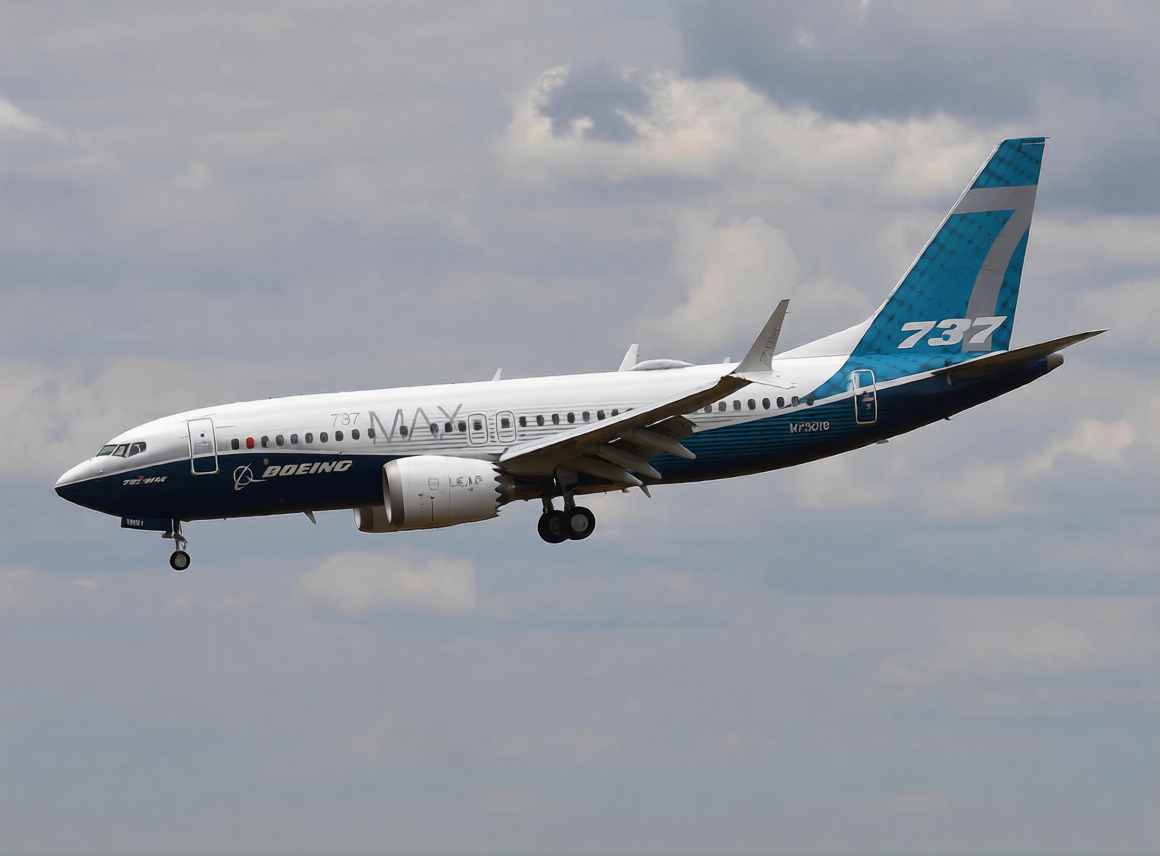
Boeing MAX 7 Gains Federal Approval as MAX 10 Finishes Flight Tests
Boeing has cleared two different certification milestones at opposite ends of the 737 MAX family. The Federal Aviation Administration issued an amended type certificate for the 737 MAX 7 on August 3, while the larger MAX 10 has completed all planned certification flight testing but still awaits the agency’s approval.

The distinction matters. Flight-test completion removes a major technical hurdle for the MAX 10, but it is not certification. Boeing must finish remaining system-safety assessments and Development Assurance Review 4, complete the supporting documentation, and take that material through FAA review before the agency can amend the aircraft’s type certificate. Boeing expects MAX 10 certification and initial deliveries in 2027.
The MAX 10 flew its final planned certification mission on July 28 from King County International Airport at Boeing Field in Seattle. The United Airlines-liveried test aircraft returned to the same airport after an interiors evaluation that included checking the audibility of the lavatory smoke detector and cabin public-address system.
That final mission illustrates why certification testing extends beyond aerodynamic performance. An airliner’s compliance package also covers how cabin warning and communication systems perform in their installed configuration. These evaluations become part of the engineering record that regulators use alongside analyses, ground tests and design documentation.
More than 2,000 test hours now feed the MAX 10 review
Boeing reports that the MAX 10 program has accumulated more than 2,000 flight-test hours and nearly 1,000 certification flights. It has also completed Development Assurance Review 3. The fourth review and the remaining system-safety work are continuing.
Those figures establish the scale of the test campaign, but they do not determine when approval will arrive. Certification depends on whether the complete design and compliance record satisfies applicable requirements, not simply on reaching a target number of flights or hours. The FAA can require additional analysis, testing or design work during its review.
The recently completed MAX 7 process shows the breadth of that scrutiny. The FAA said its review covered flight controls, system-safety assessments, human factors and flight-crew alerting, among other safety-critical areas. Before approval, the smaller variant received updated flight-control software, changes to its crew-alerting system and a redesigned engine anti-ice system intended to prevent the engine inlet from overheating and potentially weakening nearby structure.
Certification now allows Boeing and launch customer Southwest Airlines to prepare the first MAX 7 aircraft for delivery. Southwest has 256 of the variant on firm order. Aircraft already produced still must be brought to their approved final configuration, receive the necessary production and airworthiness signoffs, and be incorporated into the airline’s operating plans before carrying passengers.
Approval connects engineering closure to factory output
The MAX 10 carries a separate fleet-planning consequence. It is the largest member of the MAX family and can accommodate about 230 passengers in a high-density layout. United Airlines has ordered 167, giving the carrier a substantial operational interest in the remaining certification schedule.
Boeing has said the MAX 10 will follow the MAX 7 into certification and that deliveries remain planned for 2027. That timeline is still a company expectation rather than a regulatory commitment. The FAA controls the approval decision, while airline entry into service also depends on aircraft preparation and each operator’s implementation work.
The certification progress arrives as Boeing increases 737 production toward 47 aircraft per month following a capstone review completed in May. The FAA separately allowed Boeing to resume issuing airworthiness certificates for all new 737 MAX and 787 aircraft effective July 20 after eight months of production-quality review. The agency said it will continue inspections, audits and monitoring of Boeing’s production system.
Type certification and production oversight therefore remain related but distinct gates. The MAX 7 has crossed the design-approval gate, while the MAX 10 has finished its planned flying and entered the documentation- and review-heavy final stretch. For Boeing’s production system and United’s fleet plan, the decisive next event is not another test-hour milestone but the FAA’s determination that the MAX 10’s complete compliance package supports certification.
By David Whitaker — Associate editor for AMI’s aerospace and drone systems desk, translating flight systems, aircraft programs, spaceflight, and UAV developments into accessible technical stories.



