National Highway Traffic Safety Administration Issued 17 Park-Outside Fire Recalls Covering 1.5 Million Vehicles
More than 1.5 million U.S. vehicles were covered by 17 “park outside” recall campaigns issued by the National Highway Traffic Safety Administration during the first seven months of 2026. The warning reflects an unusual but important safety condition: an affected vehicle may retain an ignition risk after it has been switched off.

Owners covered by these campaigns can be instructed to park away from buildings and other vehicles until the applicable repair is completed. That creates a practical constraint around homes, garages, apartment complexes and crowded parking areas particularly when a manufacturer issues a warning before a remedy is available.
Why switching off a vehicle may not remove the risk
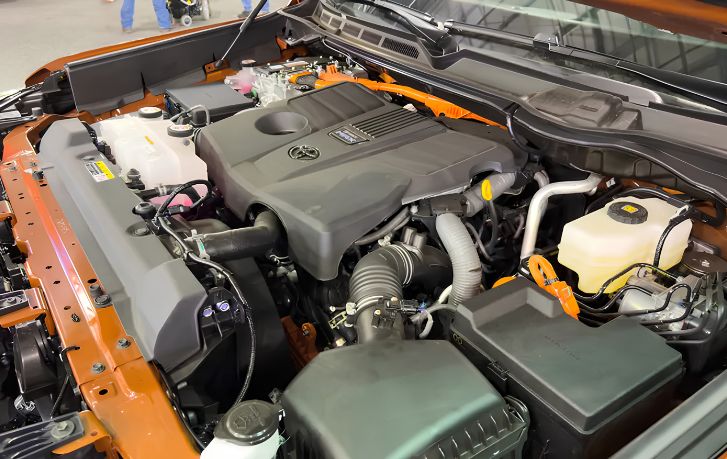
A parked vehicle is not necessarily an electrically dormant vehicle. Certain circuits remain energized to support functions that must operate without the engine running, while components beneath the hood and inside the cabin can retain heat after a trip.
Former NHTSA investigator Frank Borris described the resulting events as “key-off fires.” As he explained, “The engine is off, but the circuits are still hot, and they stay hot all the time.” He also attributed the broader concern to more electronics being packaged into vehicles operating at elevated temperatures. That is an expert explanation, not a finding that all 17 campaigns share one cause.
The distinction matters because “park outside” is a safety instruction, not a diagnosis. It describes the precaution owners should take when a documented defect could start a fire in an unattended vehicle. Individual campaigns can involve different components, electrical paths and thermal conditions, so they require model-specific repairs rather than one universal engineering solution.
Jeep wiring drove the largest cited campaign
The largest action cited in the 2026 total was Stellantis’ June recall of 1,076,999 Jeep Gladiators and Wranglers from model years 2021 through 2025. Stellantis attributed the fire risk to an electrical-wiring problem associated with the hydraulic power-steering pump.
At least 51 fires, including one that resulted in an injury, had been reported in connection with the recalled Jeeps. Stellantis said it expected to develop a solution by July, but there is no confirmed update here establishing that the remedy was completed or made available. Owners therefore need the current instructions for their particular vehicle rather than relying on the earlier anticipated timing.
This defect illustrates why an electromechanical subsystem can matter after shutdown. A hydraulic steering pump with electrical power and control connections combines wiring, a motor-driven load and fluid-system hardware in a tightly packaged area. In this recall, Stellantis specifically identified the wiring problem; that finding should not be extended to other steering systems or other park-outside campaigns.
Kia identified an overheating seat motor
Kia’s July campaign covered 462,869 Tellurides from model years 2020 through 2024. The identified problem was different: the front-seat motor could overheat. Kia was aware of at least seven seat-fire incidents and 11 cases in which the motor melted.
The Jeep and Kia actions show why the warning cannot be reduced to a single narrative about batteries or electric vehicles. One involved wiring associated with a hydraulic power-steering pump, while the other involved a powered seat motor. Both concern electrical or electromechanical hardware, but their locations, loads and corrective actions are distinct.
Warnings are approaching the previous full-year pace
A Washington Post analysis of NHTSA data counted approximately 10 park-outside recalls in 2024 and 19 during all of 2025. The 17 campaigns issued from January 1 through July 31, 2026 therefore brought the seven-month count close to the previous full-year total.
Campaign count and vehicle count measure different things. The 1.5 million-plus vehicle total was heavily influenced by two large actions: roughly 1.08 million Jeeps and nearly 463,000 Kia Tellurides. Seventeen campaigns do not mean 17 identical defects, nor does the increase establish that every modern vehicle faces a comparable post-shutdown fire risk.
Issuing a park-outside warning before repairs are necessarily available shifts part of the interim risk control to owners. Michael Brooks, executive director of the Center for Auto Safety, called it encouraging that manufacturers were notifying owners of potentially dangerous conditions before remedies became available. The benefit is earlier awareness; the cost is that some owners must find a suitable place to keep a vehicle while awaiting or arranging the model-specific repair.
For the affected population, the regulator’s instruction is concrete: keep the vehicle away from structures and other cars until the applicable remedy has been completed. The unresolved engineering and logistical issue is how quickly each manufacturer can convert that temporary parking precaution into a verified, available repair.
By Thomas Caldwell — AMI’s senior editor for mechanical and mobility engineering, covering vehicle electronics, systems integration, electrification, chassis systems, propulsion, and safety policy.