


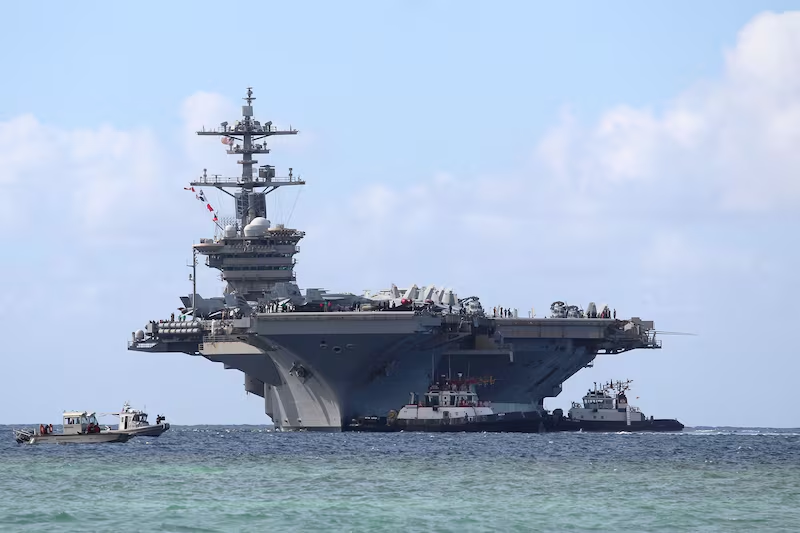
USS Abraham Lincoln’s 200 Days at Sea Prompt Pentagon Review Request
More than 200 consecutive days at sea without a port call have triggered a request for independent scrutiny of the USS Abraham Lincoln’s extended deployment. On August 17, six California lawmakers asked the Department of Defense Office of Inspector General to examine the decisions behind the deployment, reported living-condition problems and possible consequences for future readiness.
The San Diego-area carrier and its strike group have been deployed for more than 240 days. The request seeks examination of reported food and supply shortages, plumbing problems, training demands, mental-health support, logistics vulnerabilities and morale. Those issues are allegations and questions for investigators not established Inspector General findings and the request does not mean the office has opened a review.
The central technical tension is easy to miss. Abraham Lincoln is a Nimitz-class nuclear-powered aircraft carrier, but nuclear propulsion does not make the entire carrier strike group operationally self-sufficient. Reactors provide exceptional propulsion endurance. They do not eliminate the continuing need for food, aviation supplies, spare parts, mail, hygiene products, maintenance capacity or relief for more than 5,000 sailors and Marines.
Propulsion endurance is not crew endurance
A carrier is both a warship and a floating aviation base. Keeping that base productive requires far more than moving it through the water. Aircraft must be inspected, serviced and prepared; flight operations require extensive planning; and shipboard systems must support a large population around the clock. In a 2025 account of a nine-day exercise, the Navy said Lincoln’s air wing logged more than 3,000 flight hours and 1,100 sorties, while stressing the aircraft maintenance and preparation behind those flights.
That workload illustrates why time at sea is a system-wide measure rather than merely a calendar figure. Every additional operating day consumes provisions and maintenance effort while exposing machinery, aircraft and living spaces to continuous use in a saltwater environment. At-sea replenishment can restore many supplies, but it is not a complete substitute for a port visit, where crews can receive rest and services while more extensive work and loading are performed.
The reported food, plumbing and supply conditions therefore matter for more than comfort, if independently verified. Habitability systems support the people who operate, inspect and repair the carrier and its aircraft. Likewise, access to mental-health professionals and deployment-resilience resources is part of sustaining a workforce under prolonged separation and demanding schedules. The relevant oversight question is not whether warship service is difficult; it is whether deployment planning supplied adequate margins for predictable human and logistical needs as the mission extended.
A readiness bill can arrive later
The requested review also reaches beyond Lincoln’s current mission. A carrier strike group operates within a cycle of training, deployment and maintenance. Lincoln’s November 2025 departure came less than a year after its previous deployment, and USNI News reported at the time that the new deployment departed from the Navy’s planned 36-month maintenance, training and deployment framework.
Extending one deployment can preserve naval presence now, but it may shift costs into the next phase. Deferred maintenance can increase the work awaiting the ship, while exhausted personnel may need recovery time before training resumes. If experienced aviators, maintainers or other specialists decide prolonged uncertainty is incompatible with family life, retention becomes another readiness constraint. None of those outcomes has been established for Lincoln; they are among the downstream effects an independent examination could test against records and personnel data.
There is also a fleet-level tradeoff. Aircraft carriers are finite assets, and ships undergoing maintenance or reactor work are unavailable for immediate deployment. Replacing one carrier with another preserves presence but transfers the burden to a new ship, air wing, escorts and set of families. NPR reported that the Pentagon was replacing Lincoln following its historic deployment, underscoring that rotation not reactor endurance alone is what sustains long-term carrier availability.
An Inspector General review could separate verified shortages and support gaps from conflicting public accounts, then establish whether planning assumptions matched what the crew experienced. Until the office accepts the request and publishes findings, the reported conditions and their causes remain unresolved. The confirmed benchmark is already consequential: a nuclear carrier stayed at sea for more than 200 consecutive days, and lawmakers now want an independent accounting of what that endurance cost its people, logistics system and next period of readiness.
By David Whitaker — Associate editor for AMI’s aerospace and drone systems desk, translating flight systems, aircraft programs, spaceflight, and UAV developments into accessible technical stories.



