James Webb Finds Star-Like Object 100 Billion Times Brighter Than Any Star
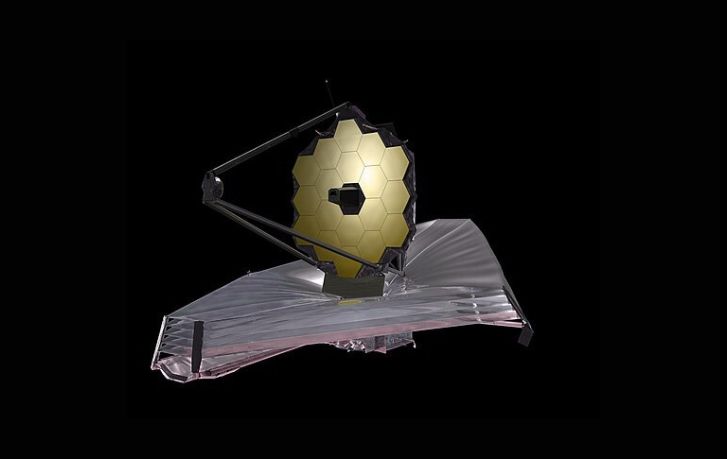
The James Webb Space Telescope has detected an early-universe object that looks partly like a star but reportedly emitted 100 billion times more energy than any known star. Researchers argue that ordinary nuclear fusion cannot produce that output. Their leading explanation is stranger: a growing black hole buried inside an enormous, dense envelope of hydrogen.

The object, named MoM-BH*-1, appears as a compact red source whose light was emitted only about 660 million years after the Big Bang. The international team detailed the finding in a Nature study published August 12, 2026. The interpretation remains a model rather than definitive proof of a new class, but it gives astronomers a testable way to examine some of Webb’s most persistent early-universe mysteries.
A stellar signature with a nonstellar power source
The investigation began with an unusual spectrum. MoM-BH*-1 has an exceptionally deep Balmer break, a sharp reduction in light below a characteristic wavelength. That feature is normally associated with hydrogen in stellar atmospheres absorbing particular photons. Vega, for example, displays a Balmer break, but the one measured in MoM-BH*-1 is substantially stronger.
The spectrum also contained little indication of elements beyond hydrogen and helium. Those observations prompted the researchers to test whether an extremely dense hydrogen screen could produce the object’s red color without the heavy dust commonly invoked to explain red astronomical sources.
Simulations showed that dense hydrogen could reproduce important parts of the spectrum. In the team’s preferred broad physical picture, the gas is not a wispy nebula but a turbulent, nearly dust-free envelope around an actively accreting black hole. Hydrogen opacity suppresses the shorter-wavelength emission, making the object look red and giving its radiation some star-like characteristics.
That model still needed an engine powerful enough to explain the luminosity. “You have something that looks a bit like a star but is 100 billion times brighter,” researcher Rohan Naidu said. “That means you can’t be powering this by nuclear fusion, which is the energy source that sits at the heart of all the stars we have.”
Researchers therefore incorporated an accreting black hole into their simulations. The scenario described by the team places a black hole roughly 100,000 times as massive as the Sun inside a hydrogen cocoon approximately the size of the solar system. For scale, the Milky Way’s central black hole, Sagittarius A*, has a mass of about 4 million Suns.
Why the interpretation requires caution
The label “black hole star” describes the proposed structure, not a conventional star with a black hole replacing its core. The light would ultimately be powered by matter feeding the black hole, while surrounding gas processes and re-emits that energy in a way that produces stellar-looking spectral features.
The modeling also has important boundaries. The relevant conditions involve extreme gas density, opacity and turbulence, while several parameters can produce overlapping observational effects. The researchers caution that the calculations establish the feasibility of an accretion disk embedded in dense gas more securely than they establish every detailed property of the system. Mass estimates in such an unusual environment are especially sensitive to assumptions about how radiation moves through the gas.
Webb observed MoM-BH*-1 through three programs using its near-infrared camera, near-infrared spectrograph and mid-infrared instrument. Combining imaging with spectroscopy allowed the team to establish that the source is compact and to recover broad hydrogen emission alongside deep absorption. That combination is central to the gas-cocoon interpretation.
A possible template for Webb’s little red dots
MoM-BH*-1 matters beyond one unusual object because Webb images contain numerous compact sources known as “little red dots.” They are common in observations of the early universe but largely disappear by the present day, and astronomers continue to debate what powers them.
MoM-BH*-1 is the brightest example discussed by the researchers, with its central source apparently overwhelming most light from its host galaxy. That relative isolation gives astronomers a cleaner view of the proposed black-hole component than they receive from red dots whose central emission is mixed with starlight from a surrounding galaxy.
It does not establish that every little red dot has the same architecture. Instead, its spectrum can serve as a comparison template: astronomers can look for similarly deep hydrogen absorption, weak dust signatures and other matching features in Webb’s archive.
Future monitoring offers another check. Existing measurements tentatively indicate that MoM-BH*-1 brightened by 30 percent, with an uncertainty of 7 percent, across observations separated by roughly two months in the object’s rest frame. Because those measurements came from different observing modes with distinct calibration effects, the variation is not conclusive. Repeated observations with a controlled setup could determine whether the source varies as expected for an actively feeding black hole and whether Webb has found a workable key to the little red dots scattered across cosmic dawn.
| More aerospace and engineering stories, right in your MSN feed. Follow AMI on MSN |
By David Whitaker — Associate editor for AMI’s aerospace and drone systems desk, translating flight systems, aircraft programs, spaceflight, and UAV developments into accessible technical stories.