Air Force Seeks Six DJI Drones for Nuclear-Base Security Training
The U.S. Air Force is seeking six refurbished, Chinese-made DJI quadcopters for realistic security training at F.E. Warren Air Force Base in Wyoming. The proposed purchase would support the 90th Missile Security Operations Squadron, whose personnel protect an installation associated with up to 150 Minuteman III launch facilities. It is still a solicitation, not a completed purchase or a fielded training program.
The apparent contradiction is central to the requirement. Federal policy generally pushes agencies away from drones made by covered foreign entities because of data and supply-chain risks. Yet the Air Force argues that government-vetted substitutes cannot necessarily reproduce the radio signatures, proprietary protocols and operating characteristics that nuclear-security teams and their defensive equipment may encounter from widely available DJI aircraft.
Why an approved substitute may not be an adequate stand-in
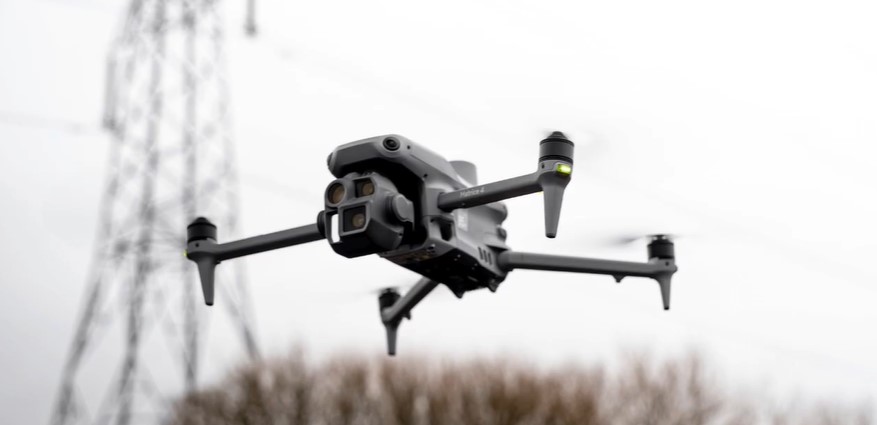
DJI is based in Shenzhen, China, and its products occupy a substantial portion of the commercial drone market. The Air Force procurement justification puts the company’s global market share above 80% and describes its aircraft as among the platforms security personnel are most likely to encounter. That prevalence makes the specific manufacturer relevant to training even when the government would prefer approved domestic or vetted aircraft for ordinary operations.
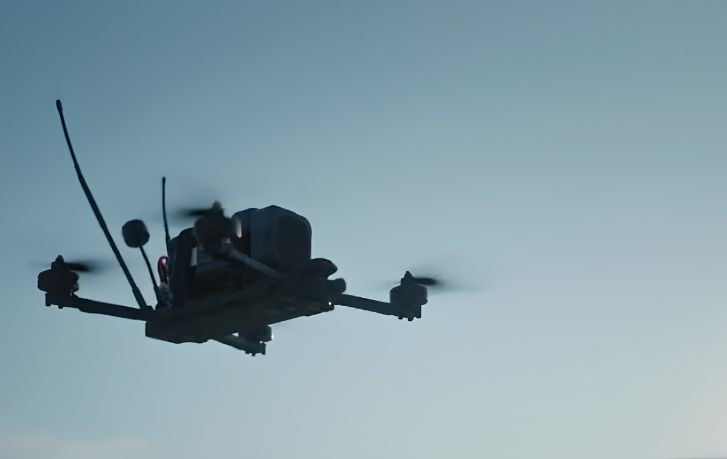
Counter-drone training is not solely a matter of placing any small quadcopter in the air. A defensive system may use several sensing methods, but radio-frequency detection depends on recognizing communications between an aircraft and its controller. Different product families can use different signal structures, identification messages and proprietary data links. A substitute may look and fly like a DJI drone while presenting a different electronic identity to the equipment being evaluated.
This is why model-specific signal libraries and representative hardware matter. Published research on radio-frequency drone detection and tracking explains that passive detection can identify drone communications without requiring a direct line of sight. It also identifies an important limitation: reliable classification requires data covering different radio sources, models and operating environments. Performance may change when a system encounters an unknown or newer signal.
The Air Force’s justification applies that principle to readiness. It says simulations or alternative “Blue” drones would leave personnel and systems untested against DJI’s actual radio-frequency signatures and protocols. Blue-list aircraft are vetted for compliance with Defense Department policy, but that approval addresses whether the government can use a platform safely; it does not mean the aircraft reproduces another manufacturer’s communications architecture.
The policy exception does not erase the security tradeoff
The proposed acquisition sits inside a deliberately restrictive federal framework. An interim Federal Acquisition Regulation rule implements prohibitions on procuring and operating drones made or assembled by covered foreign entities. The rule also recognizes exemptions, exceptions and case-by-case waivers, including circumstances in which Defense Department use is determined to serve the national interest and meets the applicable criteria.
The reported authority for this solicitation is a directive issued by Defense Secretary Pete Hegseth last year, although the detailed conditions governing that authority have not been described. The narrow purpose matters: these aircraft are being sought as representative training targets, not as replacements for vetted government drones performing routine missions.
Air Force Global Strike Command says the DJI systems would be “completely isolated” from secure Defense Department networks. Network separation directly addresses the concern that a commercial aircraft, controller or associated software could exchange data with sensitive systems. It does not make the platform government-vetted, but it draws a boundary between exposing defensive sensors to a representative radio source and granting that source access to operational networks.
That boundary also creates a maintenance and configuration challenge. Realistic training requires the aircraft to retain the relevant characteristics that justified buying it, while security controls require tight limits on connectivity and data handling. Refurbished hardware adds another variable because configuration, software state and component condition must be understood well enough for trainers to know that the test article still represents the intended platform. The solicitation establishes the requirement, but it does not provide those implementation details.
A broader test of counter-drone readiness
Officials at Malmstrom Air Force Base in Montana are also seeking DJI systems for small-drone defense training, according to the procurement justification. That indicates the issue is not limited to one Wyoming unit: nuclear-security organizations may face the same gap between acquisition policy, which favors vetted systems, and test realism, which requires exposure to prevalent commercial designs.
No current breach at either base is established by the solicitation. What it does establish is a measurable training problem. If defensive equipment is expected to recognize a widely used family of drones, testing only against approved alternatives can validate the training environment rather than the threat representation. The next meaningful milestone will be whether the proposed purchase is completed and whether the Air Force can preserve DJI-specific training value while maintaining the promised isolation from secure networks.
| More aerospace and engineering stories, right in your MSN feed. Follow AMI on MSN |
By Stephen Wallace — Editor for AMI’s aerospace integration and unmanned mobility coverage, focused on drone manufacturing, VTOL systems, autonomous networks, and air-ground mobility links.