


UL Tests Find Similar Fire Output, but EV Packs Obstruct Cooling Access
Electric vehicles and conventional vehicles produced broadly similar fire output in full-scale UL testing, but the comparison changed once crews needed to cool cells inside an electric vehicle’s battery pack. The measured time to burnout, peak heat-release rate and total energy release were similar across the two powertrain types. The harder engineering problem was gaining cooling access through a structure intentionally designed to protect the battery from crash intrusion.

UL Research Institutes’ Fire Safety Research Institute conducted 18 full-scale vehicle burns: nine free-burn experiments used to compare baseline behavior and nine additional electric-vehicle burns used to evaluate suppression methods. Its fire-response findings and tactical considerations found no test evidence that EVs burned hotter or longer than internal-combustion vehicles. That conclusion describes these experiments; it does not establish how frequently either vehicle type catches fire.
Cabin materials narrowed the difference
The free-burn phase involved six electric vehicles and three internal-combustion vehicles selected from popular models by U.S. sales volume. Researchers induced thermal runaway in fully charged lithium-ion battery packs and measured fire growth, heat release, burn duration and thermal exposure. Once ignited, each vehicle typically burned out in approximately 90 minutes.
Despite their different energy-storage systems, both vehicle types shared a large source of combustible material: the passenger compartment. Interior materials primarily drove the overall fire dynamics and associated chemical hazards in the tests. That common fuel load helps explain why peak heat release, total energy release and burnout time were similar.
The comparison does not mean battery involvement is mechanically equivalent to a fuel-fed fire. The tested EVs showed greater variation in fire-growth rate. Analysis associated that variation with the interval between the first recognition of battery thermal runaway and the appearance of flames that ignited the rest of the vehicle. In other words, the battery event could take different amounts of time to transition into a broader vehicle fire, even when the eventual overall output resembled that of a conventional vehicle.
Crash protection creates a suppression tradeoff
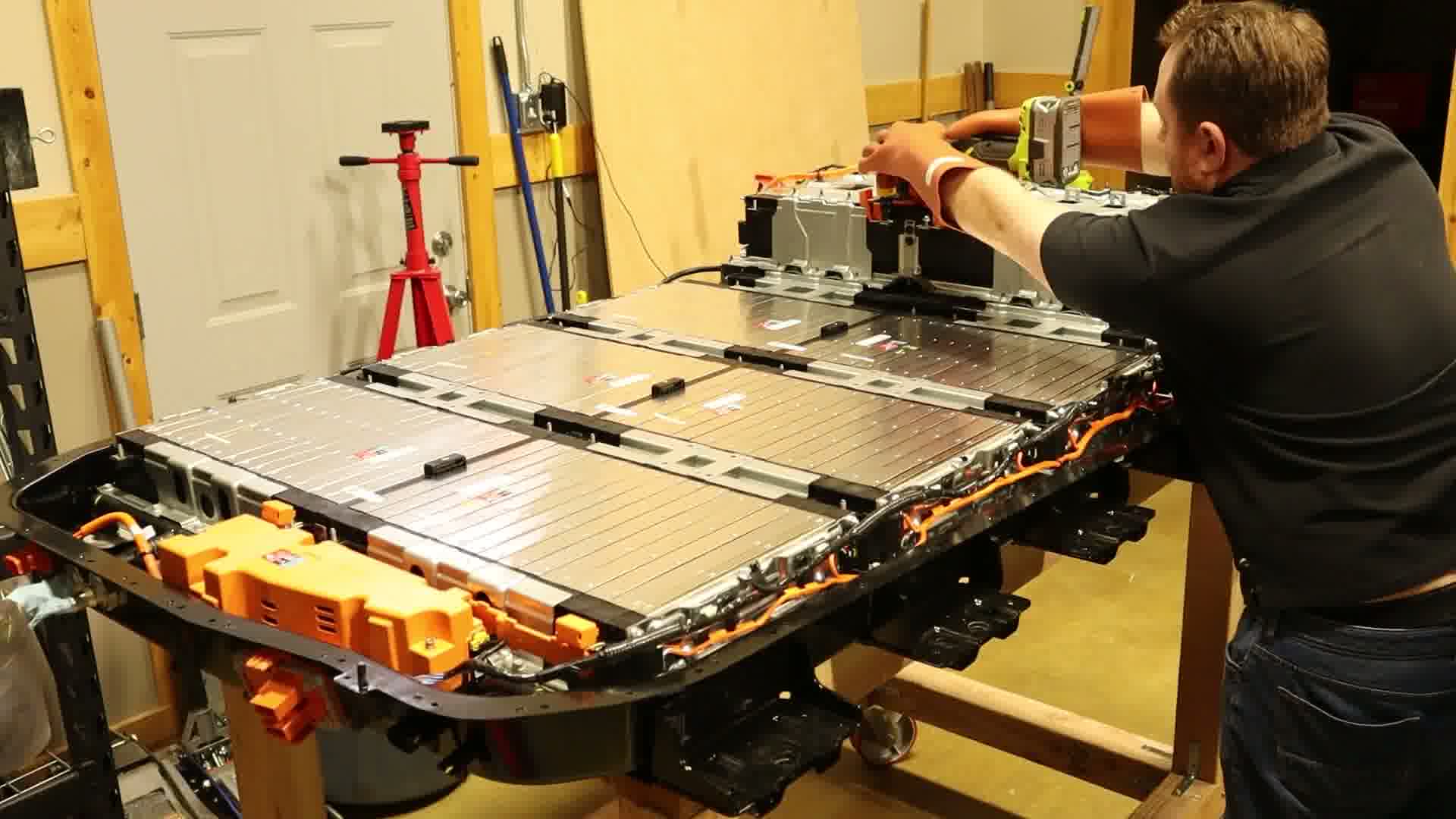
In the suppression experiments, delivering sufficient cooling water to cells undergoing thermal runaway proved to be one of the toughest challenges. Battery enclosures must resist external intrusion during a crash, support a large mass and isolate high-voltage components. Those protective structures can also prevent water from reaching the cells that need cooling during a severe fire.
That creates a direct automotive-engineering tradeoff. A pack made more accessible to emergency crews could improve water delivery, but any added opening must preserve crashworthiness, sealing and control of battery gases and effluent. The discontinued Renault Zoe illustrates the concept: its battery case included a port through which firefighters could introduce water. Researchers cautioned, however, that an access feature could create a pathway for battery effluent to enter the passenger compartment and potentially increase explosion risk.
The finding therefore does not amount to a simple recommendation to drill an access point into every pack. It supports evaluating responder access as another requirement alongside impact protection, water and debris sealing, structural integration, manufacturing cost and serviceability. Improvements in cell chemistry and pack design that resist thermal-runaway propagation could reduce the amount of cooling and other resources required without relying solely on an external access feature.
Common interfaces could reduce model-by-model uncertainty
The work follows a 2025 U.S. Fire Administration assessment that identified substantial gaps in scientific guidance for fire departments, emergency medical services, law enforcement, towing operators and recovery personnel. One complication is the variation in battery chemistry, size and location among brands, models and model years.
UL researchers identified possible value in standardizing responder-facing elements such as high-voltage disconnects, battery vent locations and safety markings. For U.S. automakers, common placement or identification conventions could reduce the need for crews to interpret a different architecture at every incident. These ideas remain design considerations, not adopted federal requirements or established industry standards.
The tests shift the technical question away from whether every EV fire is categorically hotter or longer. The more specific challenge is whether a protected battery pack can resist thermal-runaway propagation and, when that protection is exceeded, give responders a safe and recognizable way to manage the remaining heat. Solving the second problem without weakening the first is the design boundary now facing vehicle engineers.
| More aerospace and engineering stories, right in your MSN feed. Follow AMI on MSN |
By Robert McKinney — Editor-in-Chief for AMI’s automotive and mobility coverage, with a mechanical engineering background and a decade reporting on powertrain systems, EV innovation, and global vehicle manufacturing.


