USS Doris Miller Steam Plan Could Cost Millions, Risk 2034 Delivery
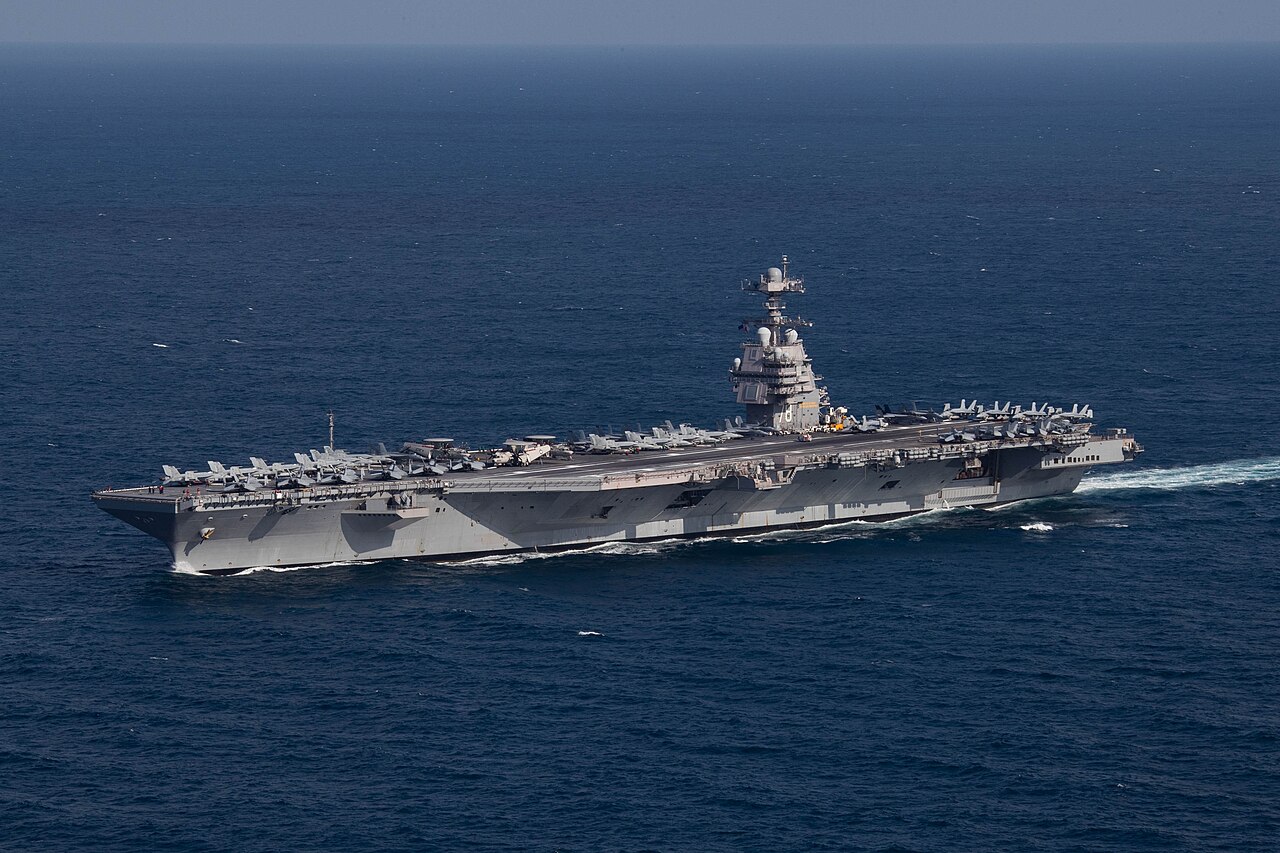
USS Doris Miller is already being built around electromagnetic aircraft-launch equipment, but the Pentagon must now develop a plan to replace it with steam machinery. That reversal could require hundreds of millions of dollars for the catapult redesign alone and add pressure to a February 2034 delivery date that is already two years later than previously planned.

An August 13 presidential memorandum gives the Pentagon 60 days to identify the timelines and resources required to replace the carrier’s electromagnetic catapults with steam systems. It also calls for planning to substitute hydraulic equipment for the electrically driven Advanced Weapons Elevators. This is not an approved or funded conversion: Congress would still have to appropriate implementation money, and the Navy has not changed the ship’s delivery date.
Steam is proven, but it is not a drop-in replacement
The central engineering problem is not whether steam catapults can launch aircraft. They continue to do that aboard the Navy’s Nimitz-class carriers. The problem is installing them in a Ford-class hull whose machinery arrangements, controls, electrical architecture and construction sequence were designed around a different launch system.
A catapult may present a similar slot and shuttle at flight-deck level, but its supporting equipment reaches much deeper into the ship. Changing the launch method would require the Navy and shipbuilder to review machinery spaces, system interfaces, controls and equipment already designed or installed around the electromagnetic configuration. Construction plans would also have to be revised so new work occurs in the correct sequence rather than obstructing completed sections or forcing later rework.
That makes the timing consequential. General Atomics says nearly 50% of its electromagnetic launch and arresting-gear production for Doris Miller is complete. A Pentagon plan will need to determine how much of that work remains usable, what must be modified or canceled and how the resulting contract changes would affect suppliers. Reuters estimated that redesigning the catapult system alone could cost hundreds of millions of dollars.
The carrier’s current cost-limitation baseline is $14.016 billion. That figure does not establish what a conversion would cost, but it shows the scale of the existing program before redesign, replacement hardware or schedule effects are calculated.
A one-ship configuration creates a support tradeoff
USS Gerald R. Ford, the future USS John F. Kennedy and the future USS Enterprise are not covered by the directive and will retain electromagnetic launch equipment. If Doris Miller switches to steam, the Navy could therefore operate two launch configurations within the same carrier class.
That split would have consequences beyond construction. Training pipelines, maintenance procedures, spare-parts inventories and technical support could have to cover both configurations. The Navy already supports steam systems on Nimitz-class ships, but adding steam to one Ford-class hull would not automatically make its parts, installation or maintenance requirements identical to those of an older carrier design.
Staffing is another unresolved cost. The reported operating crew is about two sailors for an electromagnetic catapult, compared with roughly a dozen for a steam catapult. That comparison does not establish the final shipwide personnel increase, because staffing depends on watch organization, maintenance practices and the complete redesigned arrangement. It does show why the Pentagon’s analysis must extend beyond the acquisition price to recurring labor and support costs over the carrier’s service life.
The Navy credits electromagnetic launch with smoother acceleration, reduced maintenance and lower manpower requirements. The technology had a difficult development history, but it is no longer represented only by test projections: as of March 2026, Gerald R. Ford had completed 36,863 electromagnetic launches. A return to steam would consequently exchange an operating system with accumulated fleet experience for a proven older technology that has not yet been integrated into this hull design.
The 2034 date is the immediate test
Doris Miller’s delivery has already moved from 2032 to February 2034. Any redesign would have to fit within a construction program managing existing shipyard-space and sequencing constraints. The eventual schedule effect cannot be treated as settled until the Navy defines the engineering scope and identifies which completed or contracted work must change.
The Navy is separately evaluating whether to move Doris Miller’s command island, but no implementation decision has been established. That review is distinct from the launch-system directive, and its potential cost should not be folded into the reported estimate for redesigning the catapults.
The Pentagon’s 60-day plan now has to answer the questions the memorandum itself does not: the cost of replacement equipment and discarded work, effects on suppliers, additional staffing and support requirements, and whether a carrier already running two years late can still reach its February 2034 delivery date.
| More aerospace and engineering stories, right in your MSN feed. Follow AMI on MSN |
By David Whitaker — Associate editor for AMI’s aerospace and drone systems desk, translating flight systems, aircraft programs, spaceflight, and UAV developments into accessible technical stories.