Ford Replaced Two-Thirds of Key Leaders After $1 Billion Super Duty Launch Breakdown
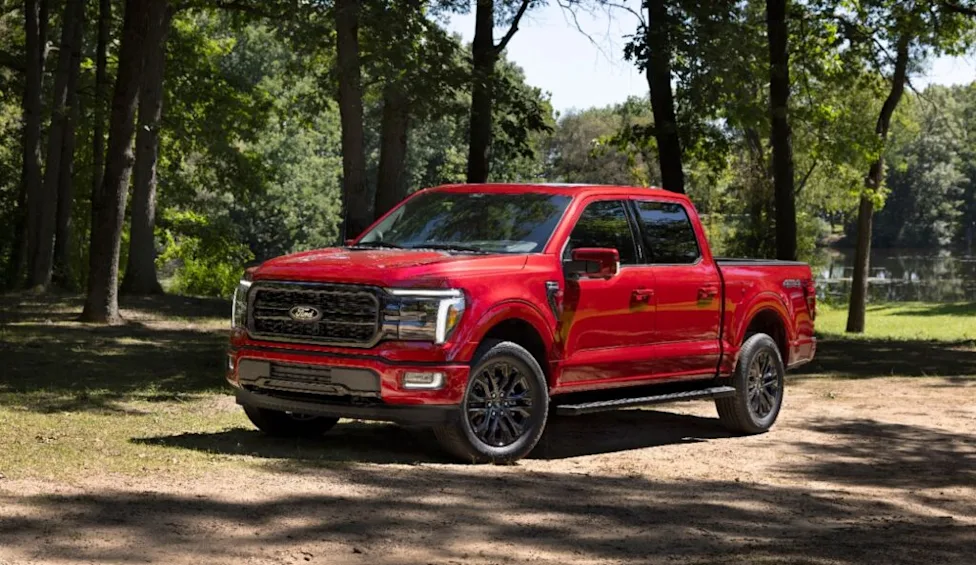
Ford’s strongest recent quality result sits beside a much harder number: 63 recalls so far in 2026, the highest total in the industry. That tension defines the automaker’s continuing overhaul after the troubled 2023 F-Series Super Duty launch cost $1 billion and prompted Ford to replace two-thirds of the leaders across key engineering, manufacturing, supply-chain and industrial operations.
CEO Jim Farley detailed the changes in an August 13 interview, describing the Super Duty breakdown as a catalyst rather than an isolated production problem. Hundreds of issues including software glitches, semiconductor shortages and larger production defects forced Ford to hold tens of thousands of trucks in marshaling yards for inspection, repair and completion instead of sending them to dealerships. Some were parked at Kentucky Speedway near the Kentucky Truck Plant in Louisville.
Holding the trucks protected customers from known launch defects, but transferred the cost and disruption back to Ford. Farley previously told analysts that slowing the launch reduced the company’s 2023 earnings before interest and taxes by $1 billion. It was not painful for our customers. It was painful for us, he said.
Ford changed who controls quality and when
The response went beyond replacing individual managers. Ford used outside hires and internal promotions to refresh two-thirds of the leadership in its industrial system, supply chain, manufacturing and engineering. It also hired hundreds of leaders and technical specialists, reorganized teams and sought closer coordination among manufacturing, vehicle engineering, software integration, powertrain development and suppliers.
That organizational structure matters because modern launch defects rarely remain within one conventional department. A software fault can interact with an electronic module, supplier release, factory test procedure or vehicle configuration. A semiconductor shortage can require substitutions or production sequencing changes that create additional validation work. Managing those interfaces requires authority across the complete vehicle system, not separate teams optimizing their own schedules.
Ford says it has increased the rigor and frequency of engine and transmission testing while bringing specialized engineering experience into earlier design reviews. Its published account of the quality program says roughly 300 veteran engineers conduct mandatory weekly reviews intended to find potential failure points before designs reach factories. Suppliers are also being brought into validation earlier.
The factory incentive is changing as well. Workers are encouraged to identify defects even if stopping or slowing production hurts short-term output. Teams are expected to determine root causes and install safeguards against recurrence rather than accept work as “good enough” or focus on assigning blame. Executive compensation has also been tied more closely to quality metrics.
This is an important systems change: production speed and defect prevention can conflict during a launch. If schedule adherence dominates every decision, unresolved problems can move downstream, where they become harder and more expensive to correct. Ford’s stated policy accepts delayed launches and lower immediate output to contain known defects before delivery.
A 90-day result is not a long-term verdict
The overhaul has produced a visible early result. Ford ranked first among mainstream brands in the 2026 J.D. Power Initial Quality Study, rising from No. 15 in 2023. The F-150, Mustang and Super Duty each led their respective segments, and Ford improved by 41 reported problems per 100 vehicles from the previous year.
But initial quality measures owner-reported problems during the first 90 days. It can reflect better assembly, software operation, infotainment behavior and delivery condition, but it does not establish how components, electronics or powertrains will perform after years of use. Ford and Lincoln ranked 18th and 19th, respectively, in J.D. Power’s longer-term Vehicle Dependability Study released in February.
The recall record reinforces that boundary. Ford issued 152 recalls affecting 12.96 million vehicles in 2025 and has recorded 63 recalls so far this year. Ford says many current campaigns concern older vehicles developed before the latest controls, while newer launches are receiving better quality ratings. That distinction is plausible, but it also means the effectiveness of the revised development system will take years to become fully visible across the vehicle population.
Warranty spending offers another delayed indicator. Ford paid $1.5 billion in warranty claims during the first quarter of 2025 and $1.3 billion in the second, although the company says annual warranty costs fell by $500 million compared with 2024. Sustained reductions would provide evidence that defects are being prevented rather than merely detected earlier.
Ford’s 90-day ranking shows that its new controls can improve the customer’s first months with a vehicle. The more demanding test begins after that window closes: whether repeated launches, aging components and millions of miles of customer use turn a costly Super Duty correction into durable dependability.
| More aerospace and engineering stories, right in your MSN feed. Follow AMI on MSN |
By Thomas Caldwell — AMI’s senior editor for mechanical and mobility engineering, covering vehicle electronics, systems integration, electrification, chassis systems, propulsion, and safety policy.