Lockheed’s $58.6 Billion Patriot Expansion Cannot Quickly Refill Inventories
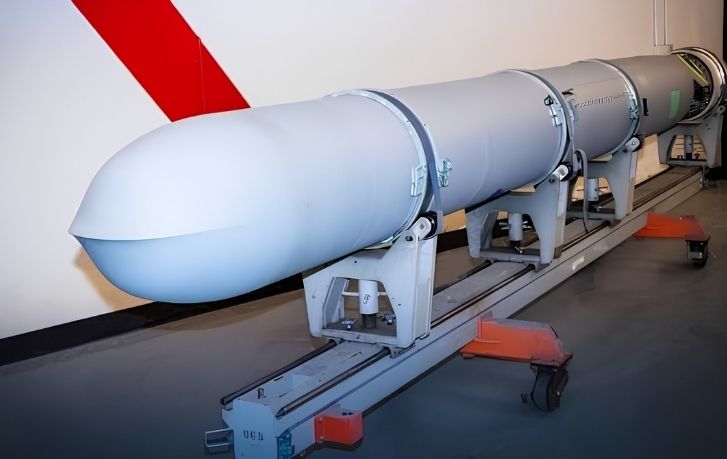
The central problem in the reported $58.6 billion Patriot production framework is time. U.S. inventories have reportedly fallen to 25% of minimum military requirements, while Lockheed Martin currently has capacity for only about 600 of the most advanced Patriot interceptors a year. The company’s planned expansion would raise annual capacity to 2,000 but not until 2030.
Lockheed Martin says its seven-year framework agreement with the U.S. government will more than triple capacity for the PAC-3 Missile Segment Enhancement interceptor. The arrangement is the industrial response to heavy demand from the United States and allied operators, but it cannot erase the gap between consumption and replacement in the near term.
The 25% inventory figure is not an official, real-time Pentagon count. Exact U.S. missile inventories are classified, and the Pentagon has disputed public descriptions of its interceptor supplies as critically depleted. Estimates cited by analysts and news organizations nevertheless point to substantial use, including roughly 1,500 Patriot interceptors during the Middle East conflict and hundreds supplied to Ukraine over four years.
Current output shows the scale of the mismatch
At the stated production rate of roughly 600 interceptors annually, replacing 1,500 expended missiles alone would represent about two and a half years of factory output. That simplified comparison does not account for existing orders, allied customers, testing, training requirements or missiles needed to maintain other commitments. It illustrates why new production cannot be treated as a direct refill line for one inventory.
Lockheed delivered more than 600 PAC-3 MSE interceptors in 2025, according to the company, after raising production by more than 60% over two years. That is meaningful growth from an industrial standpoint. It is still far below the planned 2,000-unit annual capacity and below the reported scale of recent expenditure.
Capacity also is not the same as delivered inventory. Raising the ceiling requires specialized suppliers to expand alongside final assembly. Solid rocket motors have been identified as a continuing constraint, while propulsion systems, seekers, structures and other qualified components must arrive at compatible rates. If one critical supplier cannot keep pace, additional floor space at the prime contractor does not produce a completed interceptor.
The government is trying to reduce that risk by providing longer-term demand signals and developing additional sources. Northrop Grumman, for example, has a separate seven-year framework positioning it as a second source for PAC-3 MSE solid rocket motors. That can add resilience and competition, but qualifying a supplier for missile hardware is necessarily more demanding than purchasing a commercial substitute. Production equipment, processes and finished components must meet program requirements before higher output becomes dependable.
A framework buys capacity, not instant missiles
The reported $58.6 billion figure is large, but the structure matters. A multiyear framework is intended to give Lockheed and its suppliers enough visibility to hire workers, order equipment and expand facilities. It does not mean tens of billions of dollars instantly convert into completed interceptors, nor does it eliminate the federal budget process. Some production awards and supplier investments still depend on future appropriations.
Cost compounds the allocation problem. The reported manufacturing cost is approximately $3.87 million for each PAC-3 MSE interceptor. At that price and at constrained production rates, every delivery assigned to rebuild one customer’s inventory is unavailable to another operator awaiting replenishment. U.S. forces, European allies, Ukraine and other partners therefore face a shared production queue rather than separate factories capable of responding independently.
Army leaders have also argued that increasing high-end interceptor output is only part of the policy response. A broader defensive architecture could combine sophisticated missiles with lower-cost interceptors, guns, electronic warfare and eventually directed-energy systems. Those alternatives are not interchangeable: a cheaper, shorter-range system cannot simply assume every mission assigned to PAC-3 MSE. Some emerging technologies also remain years from widespread operational use.
That leaves the government balancing immediate replenishment against longer-term changes in defensive design. More PAC-3 MSE capacity is necessary for a system serving multiple U.S. and allied requirements, but the 2030 target defines the boundary of what the agreement can accomplish. Even if Lockheed reaches 2,000 interceptors per year on schedule, the intervening years remain governed by an output rate that recent reported consumption could overwhelm in a fraction of the time needed to replace it.
| More aerospace and engineering stories, right in your MSN feed. Follow AMI on MSN |
By David Whitaker — Associate editor for AMI’s aerospace and drone systems desk, translating flight systems, aircraft programs, spaceflight, and UAV developments into accessible technical stories.