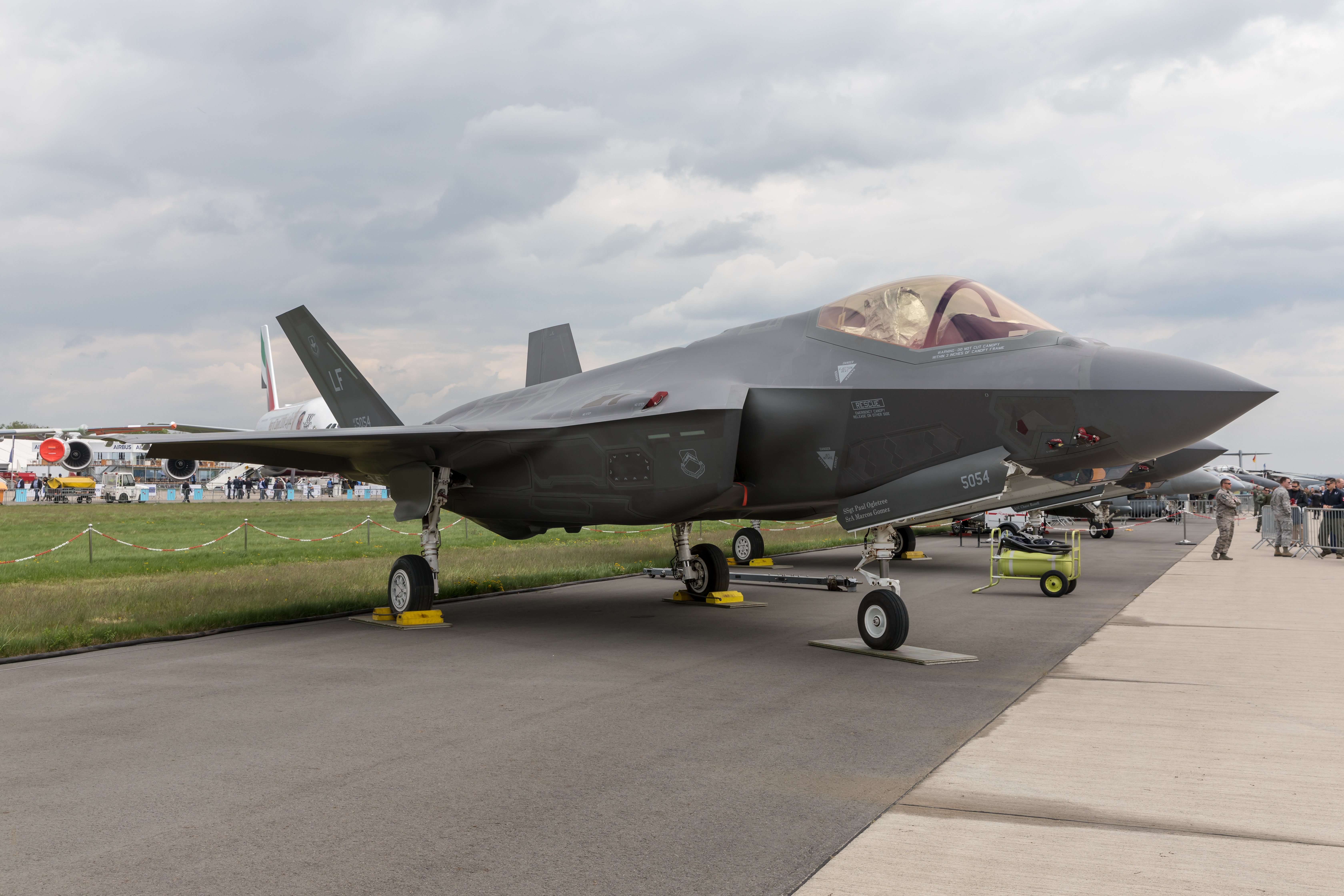
Pentagon Raises F-35 Acquisition Estimate $51 Billion to $536.2 Billion
The Pentagon has raised the estimated cost of acquiring the planned U.S. F-35 fleet and its engines by $51 billion, taking the total from $485.2 billion in the previous 2023 assessment to $536.2 billion. That increase of more than 10 percent is a direct public-cost concern and it comes after the fighter entered full-rate production in March 2024.

The increase is not one isolated overrun. It divides into approximately $19 billion in additional research, development, test and evaluation spending and nearly $32 billion in procurement growth. Together, those figures show a program paying simultaneously for continued production, more firmly established contract and material costs, and the engineering needed to support major upgrades.
Modernization accounts for about $19 billion
Estimated research, development, test and evaluation costs rose to $106.6 billion. The F-35 Joint Program Office primarily attributed that growth to revised requirements, assumptions and schedules for Block 4 modernization, the engine core upgrade, and the Power Thermal Management Upgrade.
Block 4 is not a single hardware installation. It is a collection of planned improvements involving sensors, weapons and mission systems, with the program prioritizing 55 critical capabilities. Refined estimates for those capabilities account for about $900 million of the research and development increase, according to the program office. Revised schedules for Block 4, the engine work, and power-and-cooling modernization added further time and cost.
The engineering connection is straightforward: more capable electronics require supporting changes elsewhere in the aircraft. Technology Refresh 3 hardware is being fielded as the computing foundation for Block 4, while the engine and thermal-management work must support the resulting power and cooling demands. Those supporting systems are therefore part of the modernization bill, not peripheral equipment that can be priced independently of the new avionics.
This also explains why full-rate production does not freeze the design or end development spending. That designation allows production at the approved rate; it does not mean every planned capability has completed development, testing and integration. For taxpayers and the military services buying the aircraft, the tradeoff is continued spending to modernize a mature production platform rather than replacing its basic design.
Procurement growth adds nearly $32 billion
The larger portion of the increase sits in procurement. The Joint Program Office identified production of the new APG-85 radar, higher production-support costs, the power-and-cooling requirement, contractors’ actual costs, and negotiated prices for production Lots 18 and 19 among the contributing factors. Inflation and material costs added further pressure.
In September 2025, the Pentagon announced that Lots 18 and 19 covered 296 aircraft for $24.29 billion. Separate engine agreements with Pratt & Whitney were worth a combined $6.6 billion. Taken together, those aircraft and engine values imply an average of approximately $104.4 million across variants, although that blended figure is not a price for any one F-35 version.
The latest report instead presents unit recurring flyaway estimates in constant 2012 dollars. The conventional F-35A increased 7.3 percent from $72.7 million to $78 million. The carrier-capable F-35C increased 6.6 percent from $87.65 million to $93.4 million, while the short-takeoff-and-vertical-landing F-35B rose 10.5 percent from $99.78 million to $110.3 million. The program office declined to disclose current-year prices by variant for the latest lots, describing that information as controlled unclassified information.
Purchase timing matters as well. Moving aircraft orders into later years exposes those purchases to additional expected inflation. The Marine Corps’ planned shift of some purchases from F-35Bs to later F-35Cs also contributes inflation and maintenance costs. Delaying an order may ease pressure in one budget cycle, but it does not necessarily reduce the eventual acquisition bill.
What the $536.2 billion figure does and does not cover
The revised figure covers acquisition of the planned U.S. aircraft and engines. It should not be confused with the substantially larger cost of operating and supporting the fleet over decades. That distinction matters because acquisition growth and readiness spending compete for public funding through different requirements, even when both ultimately affect the same aircraft program.
The F-35 is already a mature international production program, with the Pentagon reporting more than 1,200 aircraft operating across 20 nations. Scale can support production efficiency, but it also magnifies the cost of changes that must be engineered, tested, purchased or supported across a large fleet.
The central tension is therefore not whether the F-35 has reached production maturity. It has. The unresolved cost question is how much the United States will pay to add computing, radar, engine, power and cooling capability while continuing to buy aircraft under updated contracts. The new $536.2 billion estimate places a documented price on that overlap and later purchases, material costs and inflation can keep moving it.
| More aerospace and engineering stories, right in your MSN feed. Follow AMI on MSN |
By David Whitaker — Associate editor for AMI’s aerospace and drone systems desk, translating flight systems, aircraft programs, spaceflight, and UAV developments into accessible technical stories.