National Highway Traffic Safety Administration’s 1.7 Million Fire-Risk Recalls Mostly Hit Gas Vehicles
Gasoline and diesel vehicles not electric vehicles account for most vehicles in the recent surge of federal recalls instructing owners to park outside because of fire risk. During the first seven months of 2026, federal authorities announced 17 such recalls covering 1.7 million vehicles, already the category’s second-highest annual vehicle count since it began more than a decade ago.
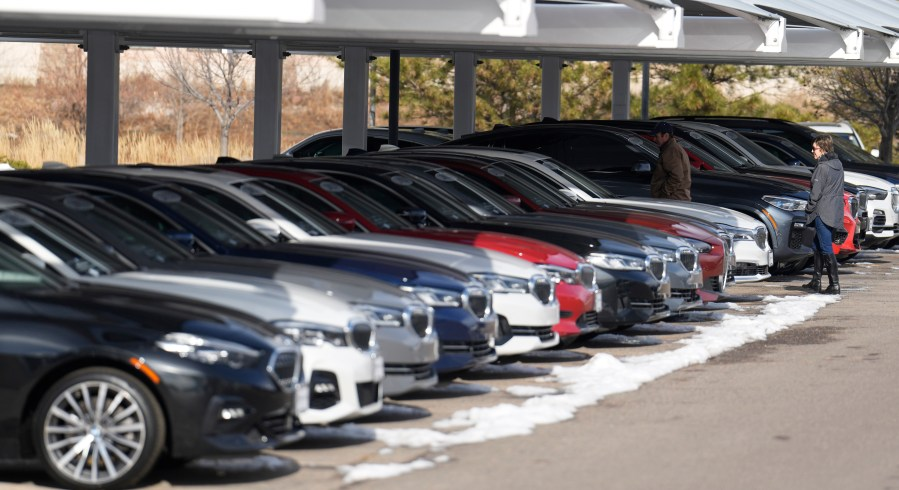
The warning has an unusually direct consequence: Affected vehicles may need to remain outside and away from homes, garages and other vehicles until repaired. CarFax estimated that approximately 3.4 million vehicles had outstanding “park outside” recalls. A recent National Highway Traffic Safety Administration alert, for example, instructed owners of nearly 200,000 BMW vehicles to park outside because a corroded engine-starter relay could overheat and short-circuit.
Recall volumes complicate the focus on electric-vehicle batteries
An analysis of NHTSA notices identified 93 park-outside recalls from 2021 through the period covered in 2026. Of those campaigns, 44 applied exclusively to conventional internal-combustion vehicles, while 38 exclusively covered electric vehicles or hybrids. The number of campaigns was therefore relatively close, but the number of affected vehicles was not.
Gas-only campaigns covered a combined 4.6 million vehicles, compared with about 662,000 vehicles in electric- or hybrid-only campaigns. Mixed-powertrain campaigns covered still more vehicles, but gasoline and diesel models dominated that group as well.
One major example came in September 2023, when recalls covered nearly 1.65 million Hyundai vehicles and more than 1.73 million Kia vehicles. Although the campaigns included different powertrains, most of the affected models used gasoline engines. The identified defect involved brake fluid leaking from the anti-lock brake system and causing an electrical short. The automakers warned that fires could occur while driving or while the vehicle was parked and switched off.
These totals do not establish that gasoline vehicles have a higher underlying fire rate. Conventional internal-combustion models make up approximately 94% of the U.S. light-duty fleet, while hybrids and fully electric vehicles account for about 6%. Recall volumes reflect fleet size, the scale of individual campaigns and which defects trigger parking instructions; they are not normalized fire-incidence rates.
Turning off the engine does not de-energize every circuit
The failure mechanisms also show why “engine off” does not necessarily mean “electrically inactive.” Modern vehicles retain energized circuits for security systems, communications, access functions and other features. As former NHTSA investigator Frank Borris put it, The engine is off, but the circuits are still hot and they stay hot all the time.
That architecture creates potential ignition paths far removed from a propulsion battery. Kia recalled 463,000 Tellurides because a front power-seat switch could overheat and ignite the seat. It was Kia’s second recall for the defect after the 2024 action did not fully resolve the problem.
More than 66,000 model-year 2021 Ford Expeditions and Lincoln Navigators were recalled because circuit boards in the battery junction box could short. At least 16 fires were attributed to that defect, which often ignited while the vehicles were parked and turned off. The BMW campaign similarly centers on a starter relay rather than an electric-drive battery.
The common systems issue is not one component or one powertrain. It is the growing number of switches, controllers, junctions and fluid-adjacent electrical assemblies distributed throughout modern vehicles. Safety specialist Sean Kane described the trend as a “mix of things,” connecting it broadly to expanding electronic systems and component counts rather than a single defect class.
Better U.S. fire data are only beginning to arrive
The recall record can show which vehicles were recalled and why manufacturers instructed owners to park outside. It cannot yet answer whether an electric, hybrid, gasoline or diesel vehicle is inherently more likely to catch fire in U.S. service. Regulators historically did not collect vehicle-fire data by powertrain, leaving fleet-adjusted comparisons incomplete.
That limitation may begin to narrow in 2026. Fire agencies nationwide started using a new federal reporting system that records vehicle powertrain information. Over time, those reports could support comparisons based on actual fire incidence rather than headlines, raw recall totals or assumptions about battery chemistry.
Until then, the immediate safety distinction is between recalled and unrepaired vehicles not simply electric and gasoline models. Owners subject to a park-outside instruction face the same systems-level problem regardless of propulsion type: A circuit capable of remaining energized after shutdown can preserve an ignition path even when the vehicle appears dormant.
| More aerospace and engineering stories, right in your MSN feed. Follow AMI on MSN |
By Thomas Caldwell — AMI’s senior editor for mechanical and mobility engineering, covering vehicle electronics, systems integration, electrification, chassis systems, propulsion, and safety policy.