Air Force Says Boeing F-47 Is Ahead, Targets 2028 First Flight
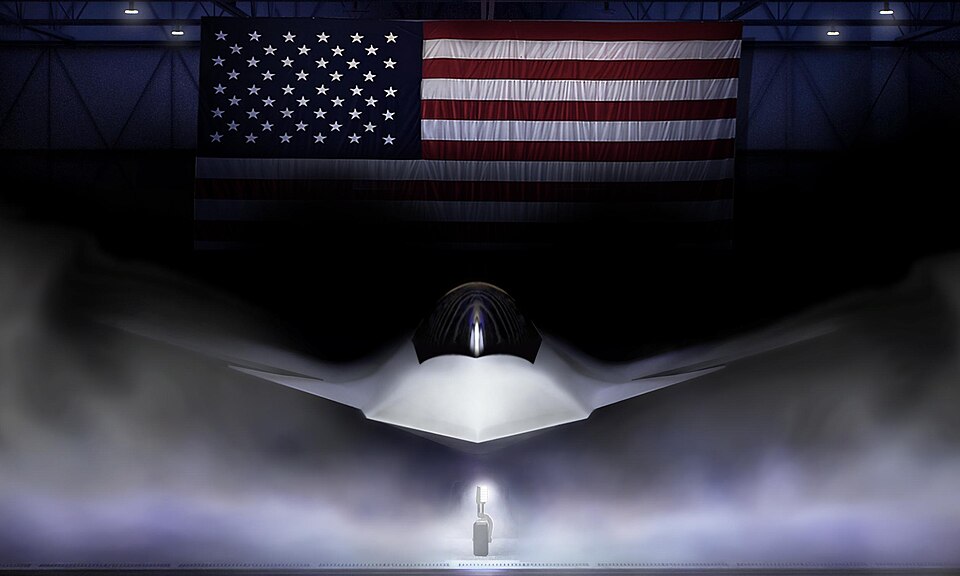
The Boeing-built F-47 is ahead of schedule, according to the U.S. Air Force, but the fighter has yet to clear the milestone that will begin proving that claim in the air. Its first flight remains targeted for 2028, leaving a clear distinction between mature program planning and a tested aircraft.

Gen. Dale White, the Air Force director of Critical Major Weapon Systems, delivered the schedule assessment at Life Cycle Industry Days in Dayton, Ohio, on July 29, 2026. White described F-47 planning as having “unprecedented maturity” and said, “The F-47 will fly in this administration.” That is an unusually confident public position for a fighter intended to replace the F-22 Raptor, but the 2028 date is still a target rather than a completed milestone.
What “ahead of schedule” means today
At this stage, the claim concerns development progress and planning not early delivery of operational fighters. The aircraft has not flown, and no F-47s have been delivered. Boeing must still move the design into flight testing, where engineers can evaluate how the complete aircraft behaves outside modeling, ground tests and subsystem work.
That boundary matters because first flight is a program transition, not a declaration that the fighter is ready for service. It opens a test campaign that must expand the aircraft’s demonstrated operating envelope and assess its integrated systems. The supplied schedule does not establish when operational testing, production approval or fielding will occur.
The fiscal 2027 budget request includes $5.03 billion for the F-47 program. That proposed funding gives the Air Force and Boeing substantial resources to maintain development momentum, although a budget request is not the same as enacted funding or proof that schedule risks have been eliminated. The broader Department of the Air Force budget request totals $338.8 billion, a proposed 34% increase from the previous year, with modernization among its stated priorities.
The Air Force plans to acquire 185 F-47s and operate them alongside Collaborative Combat Aircraft, a planned class of semiautonomous aircraft often described as “loyal wingman” drones. Those figures describe the intended force structure, not aircraft already under contract, produced or delivered. They also make the F-47 more than a one-for-one airframe replacement: its eventual role is tied to a broader crewed-and-uncrewed system.
First flight begins the harder proof
The history of the aircraft the F-47 is meant to replace shows why a maiden flight cannot settle the schedule question. According to the Air Force’s F-22 program history, the YF-22 prototype first flew in 1990, the engineering and manufacturing development aircraft flew in 1997, low-rate production received approval in 2001 and initial operational testing concluded in 2004. The Raptor reached initial operating capability in December 2005.
The F-47 is not required to repeat that exact timeline, and its planning, development methods and acquisition structure differ. The comparison instead illustrates the amount of work separating an aircraft’s first flight from operational service. Flight-test findings can require software revisions, hardware changes or additional validation, while production introduces separate questions involving suppliers, manufacturing repeatability and maintenance support.
White also cited the Northrop Grumman B-21 Raider as an ahead-of-schedule program, but it offers a useful contrast rather than a direct template for the fighter. The B-21 is already in advanced flight testing at Edwards Air Force Base: its first test aircraft flew in November 2023, and a second joined the campaign in September 2025. A one-time $4.5 billion funding increase was credited with accelerating that bomber program by roughly 25%, with the first operational Raider targeted to reach Ellsworth Air Force Base in 2027.
The F-47 has not reached that evidence-rich stage. For now, its schedule advantage rests on the Air Force’s assessment of unusually mature planning, backed by a sizable funding request and a defined 2028 objective. The first flight will be the point when “ahead of schedule” begins to face measurable aerodynamic, systems-integration and test-performance results and when the path toward replacing the F-22 becomes more than a forecast.
| More aerospace and engineering stories, right in your MSN feed. Follow AMI on MSN |
By David Whitaker — Associate editor for AMI’s aerospace and drone systems desk, translating flight systems, aircraft programs, spaceflight, and UAV developments into accessible technical stories.