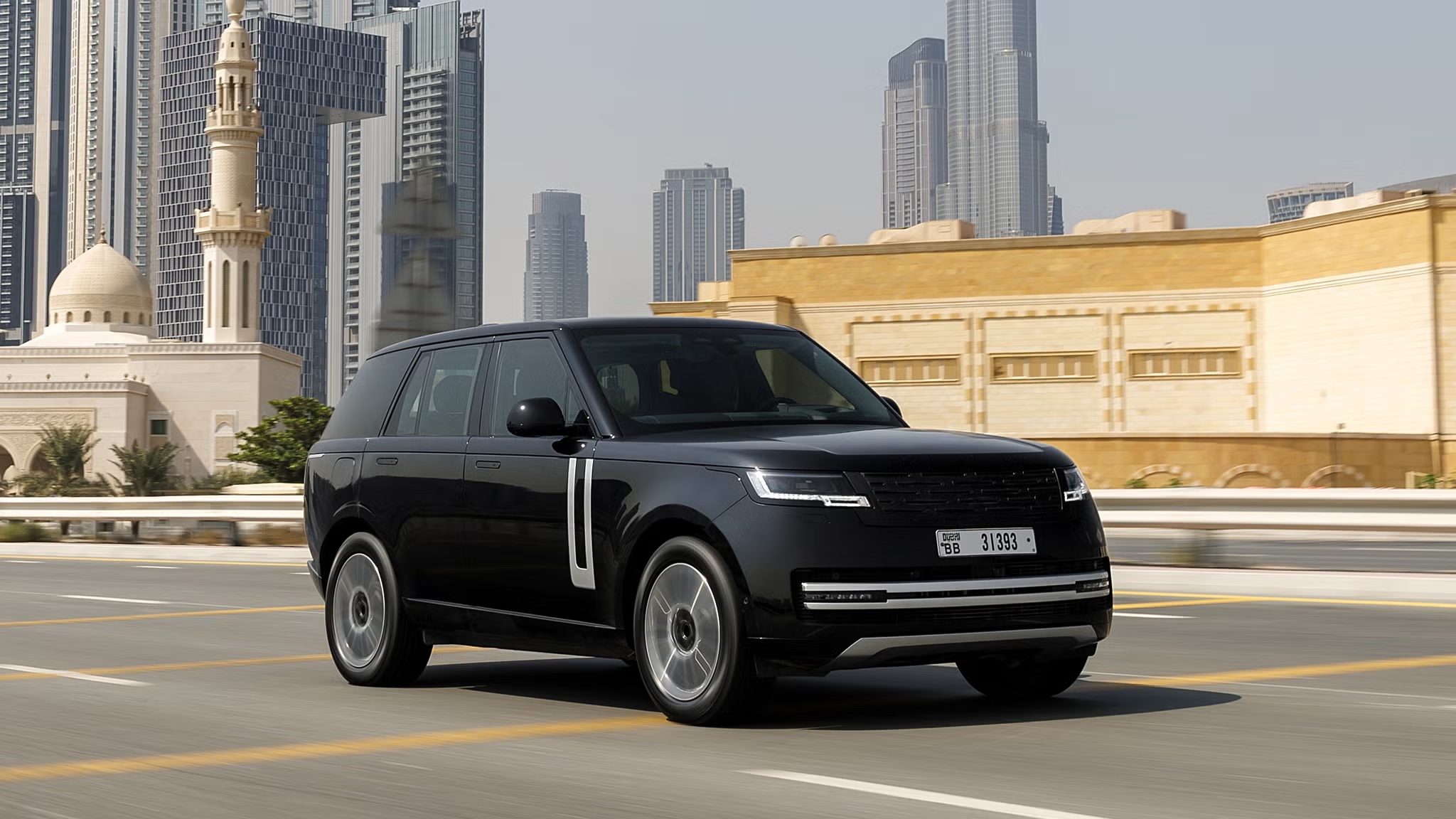
Range Rover Electric Opens UK Orders at £154,070 With 372-Mile Claim
Range Rover is asking buyers to put £154,070 against a set of ambitious electric-vehicle claims: as much as 372 miles of range, a roughly 22-minute rapid charge and off-road performance intended to match the brand’s combustion models. UK orders are now open for the Solihull-built Range Rover Electric, including standard- and long-wheelbase versions.
The price makes the engineering details particularly consequential. Range Rover’s first battery-electric flagship uses a large 118.5-kilowatt-hour usable battery with 344 prismatic cells, an 800-volt electrical architecture and two permanent-magnet motors. Each motor is rated at 260 kilowatts, while combined output is listed as 550 metric horsepower and 850 newton-meters of torque.
Range and charging remain conditional claims
The headline 372-mile figure comes from the European WLTP test cycle, not an assurance of what every driver will achieve. Range Rover separately cites a real-world estimate of up to 333 miles. Actual distance will depend on speed, temperature, terrain, wheel and tire specification, cabin heating and other operating conditions.
The company says a compatible 350-kilowatt DC charger can raise the battery from 10% to 80% in approximately 22 minutes. That session would add about 83 kilowatt-hours based on the stated usable capacity, requiring an average battery-side rate of roughly 226 kilowatts before accounting for losses. In other words, the 350-kilowatt charger rating is the infrastructure requirement for the claimed result, not necessarily a rate the vehicle holds throughout the session.
Range Rover also claims 10 minutes at the maximum charging rate can add about 137 miles of WLTP range. Both figures depend on favorable battery temperature, starting charge and charger performance. They describe rapid-charging potential rather than a universal stop time.
Thermal management is central to delivering that potential. Range Rover says its ThermAssist system can reduce heating-energy consumption by up to 40% and add as much as 25 miles of range. The system is also intended to manage charging performance and battery longevity across temperature extremes. JLR tested battery packs from minus 40 to 90 degrees Celsius, a broad range that matters because cell temperature affects available power, charging rate and energy consumption.
Electric motors enable more precise traction control
Preserving off-road capability is not simply a matter of fitting two powerful motors. The control system must coordinate wheel slip, accelerator response, regenerative braking and axle torque without surprising the driver on loose or steep surfaces.
Range Rover’s Intelligent Driveline Dynamics varies torque distribution between the front and rear axles. Its Integrated Traction Management system can adjust motor speed within 50 milliseconds, according to the company. A dedicated Single Pedal mode is designed to let the driver manage acceleration and deceleration on steep terrain without repeatedly moving between pedals.
The manufacturer says the SUV can pull away on gradients of up to 33 degrees and complete rolling climbs of up to 45 degrees. Those are capability claims, not substitutes for assessing surface grip, route conditions or driver skill. Their technical significance is that electric motors can alter delivered torque rapidly and independently, giving the control software a direct tool for limiting slip.
Development included more than 1.5 million kilometers of vehicle testing and over 250,000 hours of virtual and physical work. Each vehicle will also have a Battery Digital Twin monitoring more than 900 diagnostic data points, coupled with software updates intended to support maintenance. The electric propulsion system carries an eight-year or 100,000-mile warranty, subject to applicable terms.
Production required more than a powertrain swap
JLR trained about 9,000 Solihull manufacturing employees for electrification. The first factory-transformation phase covers approximately 40,000 square meters and adds 13 battery and electric drive-unit manufacturing lines. Those changes reflect the integration challenge: battery testing, high-voltage handling, motor assembly and software-based quality checks must coexist with production of other propulsion types on the broader manufacturing network.
For North America, Range Rover describes the vehicle as having built-in compatibility with the charging connector used by Tesla’s Supercharger network. Its U.S. site lists an estimated range of up to 333 miles, but the supplied launch details do not establish U.S. pricing or delivery timing. Those remaining figures will determine whether the UK model’s six-figure price, large battery and rapid-charging capability translate into a similarly defined proposition for American buyers.
| More aerospace and engineering stories, right in your MSN feed. Follow AMI on MSN |
By Thomas Caldwell — AMI’s senior editor for mechanical and mobility engineering, covering vehicle electronics, systems integration, electrification, chassis systems, propulsion, and safety policy.