Ukraine’s €2 Billion Patriot Request Could Mean 190 to 580 Interceptors
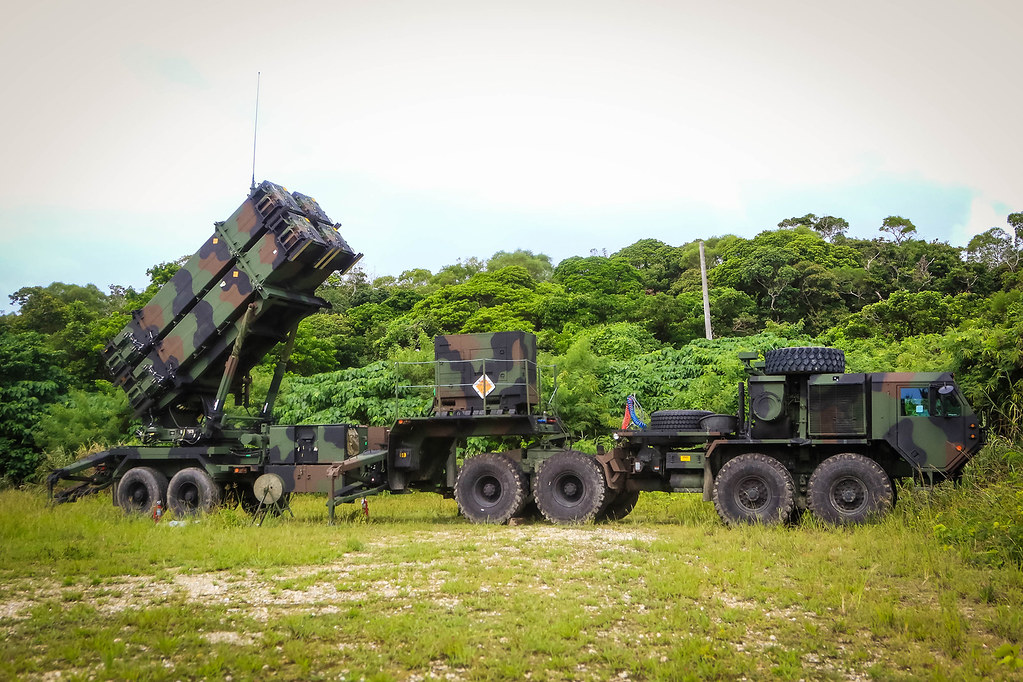
Ukraine’s proposed €2 billion Patriot budget carries an unusually wide range of possible outcomes: roughly 190 to 580 PAC-3 Missile Segment Enhancement interceptors, depending on which pricing comparison is used. That spread is not a confirmed order quantity. It shows how export terms, package scope and access to constrained U.S. production can matter as much as the amount allocated.

Ukraine requested European Commission permission on September 1 to use €2 billion from a €90 billion European Union loan for Patriot missiles, according to Suspilne reporting. Another €4 billion from the weapons-procurement portion would be directed toward equipment manufactured in the EU and Ukraine. The request has not been described as an approved allocation, finalized sale or signed missile contract.
Three prices produce three very different quantities
The high estimate comes from comparing the requested money with U.S. procurement pricing. A September 2025 Pentagon order covered 1,970 PAC-3 MSE interceptors for $9.8 billion, an average of about $4.97 million each. At that rate, €2 billion converted in the estimate to approximately $2.32 billion would cover about 460 interceptors. Using a broader baseline of $4 million per missile raises the theoretical count to about 580.
Germany provides a different comparison. Its late-2024 order valued 120 interceptors at €763.5 million, equivalent to approximately €6.36 million apiece. Applying that average to the requested funding produces a figure of roughly 315 missiles.
The low estimate uses a February 2026 U.S. authorization for a possible Saudi purchase of as many as 730 PAC-3 MSE interceptors in a package valued at up to $9 billion. Dividing that entire ceiling by the maximum missile count yields approximately $12.3 million per interceptor, making the Ukrainian funding equivalent to about 190 missiles.
That last calculation has the most important limitation: an export authorization ceiling is not a final contract price. It establishes the maximum approved package value, not necessarily the amount ultimately spent or a clean unit price for the missile itself. Treating it as a production-contract price can therefore understate how many interceptors the money might purchase.
Unit-price comparisons do not describe identical transactions
Even the firmer U.S. and German figures are averages from different customers and contracts. A headline contract value can reflect the quantity ordered, delivery schedule, customer-specific requirements and the wider scope negotiated around the missiles. Currency conversion and the timing of an agreement add further variation.
The U.S. Army’s larger order also carries a scale advantage that Ukraine cannot assume would transfer to an export purchase. Domestic procurement rates are useful as an industrial benchmark, but they do not establish what a foreign customer will pay. Conversely, the German transaction is a closer European comparison without proving that Ukraine would receive the same terms.
This is why the 190-to-580 range is best read as a sensitivity test. It shows how strongly the result changes when different public price references are applied. It does not identify a likely contract quantity, delivery schedule or export allocation.
Production access may become the harder limit
The midpoint estimate of approximately 315 interceptors would represent a substantial claim on current output. Northrop Grumman said in August that the U.S. Army’s annual PAC-3 MSE production is growing from roughly 600 missiles today toward thousands in the near term. On that stated baseline, 315 interceptors would equal slightly more than half of one year’s production not a minor add-on to an unconstrained assembly line.
The United States is now trying to expand that line. An August 2026 production framework calls for tripling PAC-3 output, including a second source for solid rocket motors and increased production of ignition-safety devices. Those measures address supplier resilience and component throughput, but a framework to add capacity does not make the additional missiles immediately available.
Ukraine’s request consequently poses two separate procurement questions. The first is how many interceptors €2 billion could finance under the terms eventually offered. The second is how many could be allocated and delivered while U.S. forces and other allied customers are drawing from the same expanding production base.
Until the European Commission acts and a detailed purchasing arrangement emerges, neither question has a confirmed answer. The budget may be large enough for hundreds of interceptors, but the final number will be set where financing, export approval, contract scope and factory capacity meet.
| More aerospace and engineering stories, right in your MSN feed. Follow AMI on MSN |
By David Whitaker — Associate editor for AMI’s aerospace and drone systems desk, translating flight systems, aircraft programs, spaceflight, and UAV developments into accessible technical stories.