China’s 4.3 Million-Car Recall Could Reshape Tesla’s Electronic Door Design
Some 4.3 million vehicles in China are set to receive emergency-door safety fixes from Tesla and eight other automakers. The action, described as China’s largest vehicle recall to date, addresses a basic human-factors problem: occupants may struggle to find a manual release precisely when an electrical failure makes the normal door controls unavailable.

The remedies include clearer labels for emergency buttons or levers and remote software updates intended to lower windows during an emergency. The recall covers electronic door systems used by Tesla and several Chinese manufacturers, including Xiaomi and Leapmotor.
The number points to a wider design constraint
At this scale, the action is more than a labeling campaign. It separates two requirements that have sometimes been treated as one: the convenience of an electronically controlled door in normal operation and the ability to open that door mechanically when power is lost.
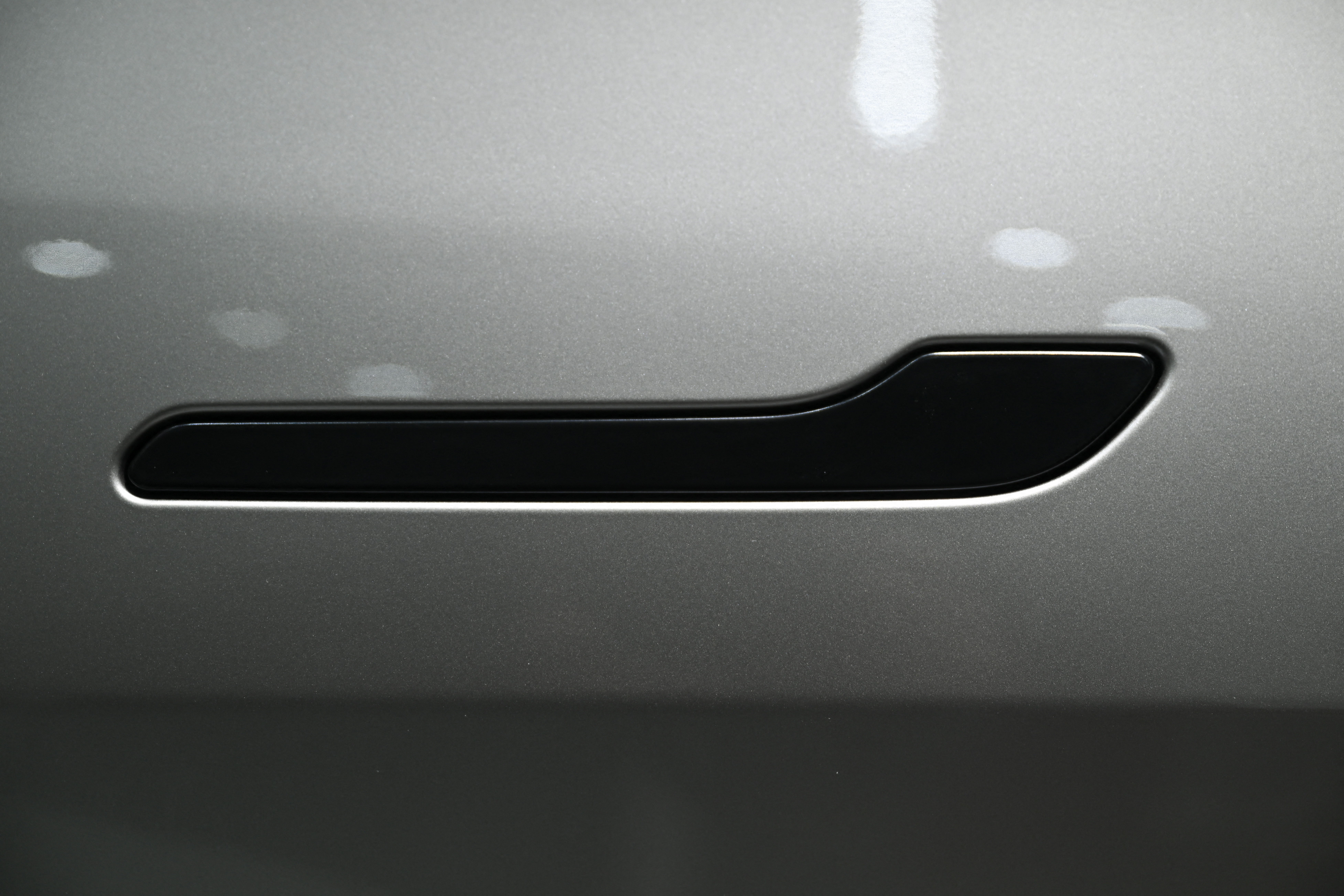
Flush exterior handles can provide minimalist styling and reduce aerodynamic drag. Electronic latches also support access through phones, key fobs and press-operated controls. But those benefits depend on powered components and software. A mechanical release is the fallback, and its safety value depends not merely on whether it exists, but whether an unfamiliar occupant can recognize, reach and operate it under pressure.
That distinction is central to the Chinese response. Labels and window-control software can improve the existing fleet without replacing door hardware. They may make the backup release easier to identify and create another access path during an emergency. They do not, however, turn every current electronic handle into a conventional mechanical one.
China’s separate requirement for future models goes further. Beginning next year, new vehicles using electronic exterior handles must retain a traditional manual opening mechanism. That makes mechanical access a controlling design input rather than an emergency feature added late in development.
Why Tesla’s global architecture could be affected
No worldwide Tesla redesign has been confirmed, and a recall in China does not automatically apply in the United States or Europe. Tesla also did not comment on its plans. The potential global effect instead comes from manufacturing scale and the cost of maintaining different door architectures for different markets.
Electric vehicles represent almost 55% of new-car sales in China, making the country a major production and sales market for Tesla and its domestic competitors. Automobility CEO Bill Russo said he expects Tesla to design toward the Chinese requirement rather than maintain a completely separate solution for China.
That is an attributed forecast, not a company commitment. Still, commonality can matter in vehicle engineering. A shared handle, latch, door structure and control strategy can reduce the number of components, validation programs and assembly variations a manufacturer must manage. A China-only mechanical design would preserve regional differentiation, but it could also create another configuration requiring its own testing, documentation, service parts and production controls.
The tradeoff is not simply electronic versus mechanical. Manufacturers can retain powered convenience while making the independent release more visible and intuitive. The engineering question is whether the fallback remains understandable when an occupant has never read the owner’s manual and cannot rely on the vehicle’s normal electrical functions.
The United States is considering a broader standard
Door-release designs have also received regulatory attention in the United States and Europe, although neither has taken action comparable to China’s. In July, the National Highway Traffic Safety Administration determined that a petition concerning emergency mechanical releases in about 180,000 Tesla Model 3 vehicles was better handled through an ongoing rulemaking process than through the requested recall action.
That approach could eventually produce a requirement applying across manufacturers rather than a finding limited to one model. European regulators identified electronic door-handle risks as a priority last year, while work has also been underway on standards intended to ensure that electronic handles can be opened from inside and outside after electrical power is cut.
Reported incidents and U.S. lawsuits have increased scrutiny, but allegations that particular designs contributed to injuries or deaths are not official defect findings. The confirmed development is regulatory: China is addressing current vehicles with labels and software while requiring a traditional manual exterior-opening mechanism on future models.
For Tesla and other manufacturers, the 4.3 million-vehicle action establishes a clear design boundary. Electronic doors may continue to deliver aerodynamic and convenience benefits, but in China their emergency mechanical path can no longer be treated as something occupants must search for when the powered system stops working.
| More aerospace and engineering stories, right in your MSN feed. Follow AMI on MSN |
By Thomas Caldwell — AMI’s senior editor for mechanical and mobility engineering, covering vehicle electronics, systems integration, electrification, chassis systems, propulsion, and safety policy.