Northwood Opens 185,000-Square-Foot Factory With Two Dedicated Antenna Lines
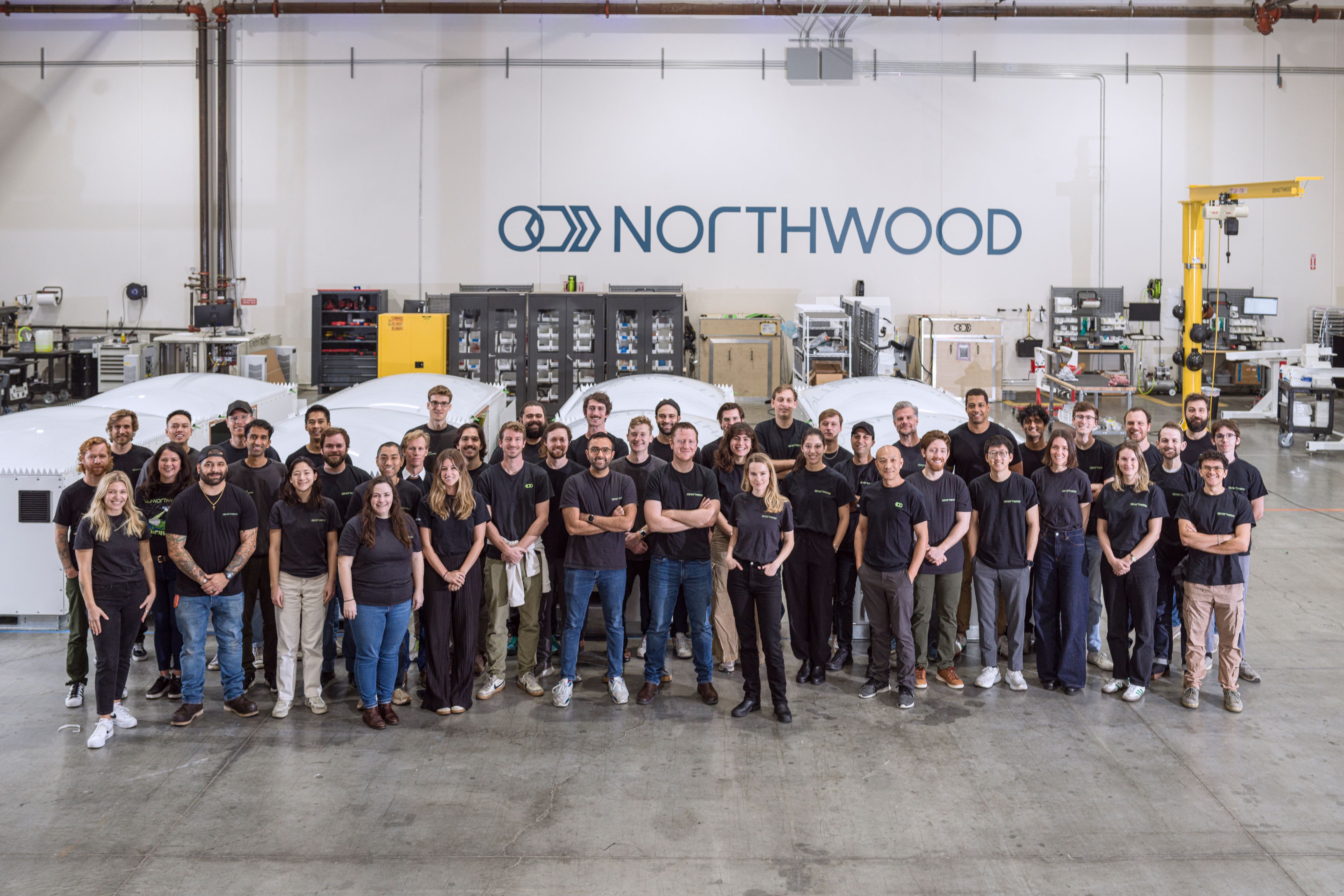
Northwood Space has opened a 185,000-square-foot headquarters and factory in Torrance, California, designed to move its satellite ground-terminal business from product development toward higher-volume U.S. production. Announced Aug. 31, the facility gives the young company separate manufacturing lines for two substantially different antenna systems, plus in-house capacity for radio-frequency electronics and machined components.
That manufacturing split is important because Northwood’s Portal and Prism products solve the ground-connection problem through different architectures. Portal is a phased-array system that points its beams electronically, without mechanically turning a parabolic reflector. It can establish multiple satellite links simultaneously, a capability aligned with Northwood’s plan to operate a shared ground network serving operators with larger fleets.
Prism, introduced in June, is a 2.4-meter parabolic antenna. It supports communications in the S-, X- and Ka-bands and is intended for satellite communications, spacecraft telemetry and payload-data downlinks. Unlike Portal’s electronically steered panels, Prism follows the more conventional dish format. Its dedicated production line therefore addresses different assembly, alignment and radio-frequency integration requirements.
Northwood projects that the Prism line will build four antennas per week once it reaches full production. The Portal line is expected to produce more than a full ground site’s complement of phased-array panels each month. Those figures describe planned capacity, not output the Torrance factory has already demonstrated.
Vertical integration extends beyond antenna assembly
The plant is also set up to bring more of the electronics workload inside Northwood. Planned capabilities include printed circuit board assembly and machining for antenna feeds, amplifiers and other radio-frequency components. That is more than a supply-chain change: it could let engineering teams revise boards and related hardware without waiting for as many external manufacturing cycles.
Northwood estimates that internal circuit-board production could shorten development schedules for new phased-array designs by roughly three months. The potential gain remains a company projection, but the mechanism is straightforward. Phased arrays depend on repeated electronic elements, and design iterations can involve both the board layout and the radio-frequency hardware surrounding it. Keeping assembly close to engineering can compress the loop between design, build and test.
Vertical integration also introduces its own production obligations. Circuit-board assembly and precision machining require controlled processes, inspection capacity and repeatable test procedures. The Torrance opening establishes the physical infrastructure; sustained throughput will depend on how effectively Northwood qualifies those processes and converts projected line rates into consistent finished hardware.
A factory built around a shared-network model
Northwood, founded in 2024, makes antennas and software used to communicate with satellites from the ground. Its broader model is not simply to sell individual terminals. The company is pursuing a shared network built around standardized antennas, allowing multiple satellite operators to obtain ground connectivity without each assembling an entirely bespoke station footprint.
Portal’s ability to maintain multiple links is particularly relevant to that model. A conventional mechanically pointed dish generally commits its physical pointing direction to a specific track at a given moment. Electronic beam steering changes that operating constraint and can support denser link activity, although the available evidence does not establish the realized capacity, coverage or economics of Northwood’s deployed network.
The expansion follows a $100 million funding round and a $49.8 million U.S. Space Force contract to add capacity to the Satellite Control Network. Those awards provide context for the production push, but the industrial milestone is the installation of dedicated lines and internal component capabilities rather than the financing itself.
The facility is expected to add more than 400 jobs over the next three years, another target that has not yet been achieved. Northwood’s next test is therefore measurable: whether the Torrance operation can turn two antenna architectures and added electronics work into the weekly and monthly production rates the company has projected. Opening the factory provides the floor space; repeatable manufacturing performance will determine whether its shared ground-network concept can scale with it.
| More aerospace and engineering stories, right in your MSN feed. Follow AMI on MSN |
By David Whitaker — Associate editor for AMI’s aerospace and drone systems desk, translating flight systems, aircraft programs, spaceflight, and UAV developments into accessible technical stories.