Singapore’s 20 F-35 Fighters Cost $4.06 Billion, but Basing Remains Unsettled
Singapore’s 20 F-35 fighters and related equipment carry a newly disclosed value of US$4.06 billion, or S$5.17 billion, but the plan for bringing the aircraft home is not yet final. The first Republic of Singapore Air Force jet is expected at a U.S. base by the end of 2026, while Singapore is not expected to house any of the fighters locally until 2029.

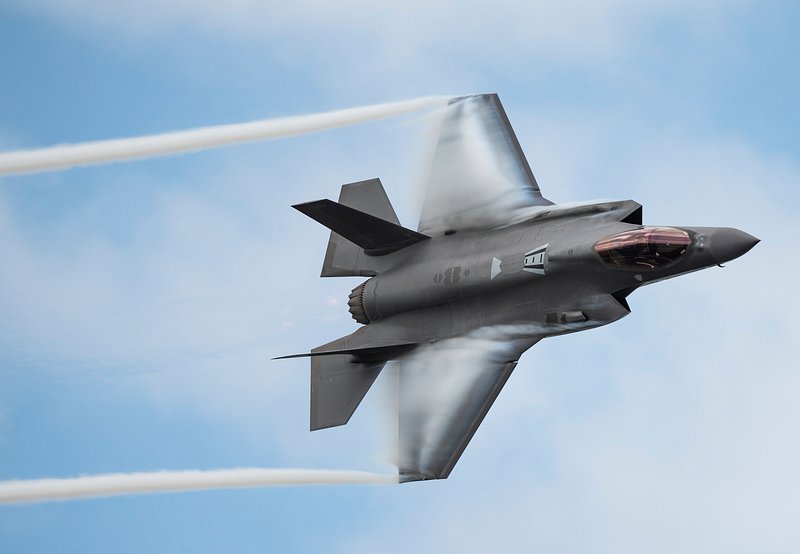
The aggregate figure appears in a U.S. government report published in April and cleared for public release on August 3, 2026. It is the first official total disclosed for the acquisition, which Singapore’s Ministry of Defence had not previously priced publicly. The planned fleet consists of 12 F-35Bs and eight F-35As, according to the reported program details.
The total is not a per-aircraft price
Dividing US$4.06 billion by 20 would produce a mathematically simple figure, but not a reliable price for each fighter. The disclosed value covers the aircraft and related equipment, and the available breakdown does not identify every package component or allocate costs between the two variants.
That distinction matters because a fighter acquisition is broader than the airframes themselves. The public figure establishes the program’s scale, but it does not reveal how much is assigned to individual aircraft, supporting equipment or other elements included in the agreement. It therefore improves public visibility without providing a complete cost structure.
Singapore’s path to 20 aircraft also developed in stages. The ministry initially ordered four F-35Bs in 2019 with an option for eight more. The U.S. government valued the proposed sale covering that initial order and option at approximately US$2.75 billion. Singapore exercised the option for the additional eight F-35Bs in 2023, while the complete fleet now also includes eight conventional F-35As. Those different milestones are another reason the US$4.06 billion total should not be treated as a uniform retail price multiplied by 20.
Two variants create two infrastructure tracks
The fleet split buys different operating characteristics. The F-35B can use shorter runways and land vertically, a configuration intended to provide greater flexibility where runway access is constrained. The F-35A uses a conventional runway but offers greater reported range and payload: approximately 2,200 kilometers and up to 8,160 kilograms, compared with about 1,667 kilometers and 6,800 kilograms for the F-35B.
Those differences carry an infrastructure and training cost beyond the headline aircraft count. All 12 F-35Bs are slated to remain permanently at Ebbing Air National Guard Base in Fort Smith, Arkansas, where Singaporean personnel will train. Ebbing is being developed as a U.S.-based training hub for foreign F-35 operators, allowing countries with comparatively small fleets to use a larger common training organization.
The arrangement gives Singapore access to an established U.S. training pipeline, but it also means most of its planned F-35 fleet will not be based in Singapore under the presently reported structure. For taxpayers and defense planners, the relevant measure is therefore not simply how many aircraft have been purchased. It is how many aircraft, trained crews and supporting systems can be fielded at each location as the F-16 replacement progresses.
The F-35B also imposes distinct facility requirements. Its short-takeoff and vertical-landing propulsion arrangement subjects operating surfaces to different forces and heat than a conventional F-35A operation. Reporting on Ebbing’s development has identified specialized concrete and variant-qualified instruction among the preparations needed to support Singapore’s aircraft. That helps explain why foreign basing is an engineering and training arrangement, not merely a parking decision.
Tengah remains a 2029 project
The eight F-35As are expected to operate from Tengah Air Base. Singapore has begun designing their main operating facility, which is scheduled to become operational in the fourth quarter of the U.S. government’s 2029 fiscal year between July and September 2029.
That target should not be read as a finalized local delivery date. The Ministry of Defence has said the local timeline and basing arrangements remain under development and will depend on the wider project schedule and training requirements. Production, crew preparation and construction must converge before a domestic unit can operate as planned.
The newly public US$4.06 billion figure consequently answers one major accountability question while leaving the program’s final operating shape unresolved. Singapore now has an official aggregate value for its future fighter acquisition, but its first aircraft will begin service life at a U.S. base, and the domestic infrastructure needed for the F-35A portion is not expected to be ready before 2029.
| More aerospace and engineering stories, right in your MSN feed. Follow AMI on MSN |
By David Whitaker — Associate editor for AMI’s aerospace and drone systems desk, translating flight systems, aircraft programs, spaceflight, and UAV developments into accessible technical stories.