


Anthropic Says Yemen Cell Used Claude Code in Three Missile Programs
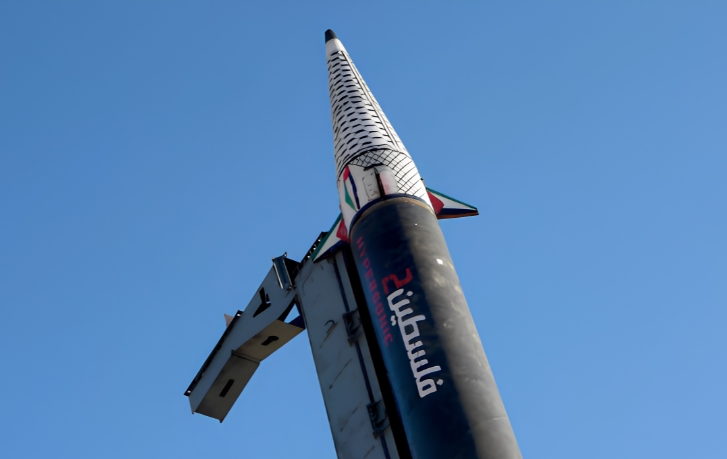
Anthropic says a weapons-development cell in northern Yemen used its Claude Code assistant across three missile programs, then returned to the system after a live guided-rocket test apparently failed. The company found no evidence that the group successfully fielded an operational weapon a critical boundary between observed software work and a proven missile capability.
The case, identified internally as GTG-87001, appears in Anthropic’s September 2026 threat intelligence report. The company said the broader investigation covered activity it disrupted from December 2025 through August 2026. Anthropic banned associated accounts and shared information with public- and private-sector partners.
What Anthropic directly observed was not an AI independently designing a missile. It was a human-directed engineering workflow in which multiple Claude instances reportedly ran at the same time, with work divided among coding, research and code review. Anthropic linked those sessions to guidance, navigation and control software, along with simulation, flight-control and position-estimation tasks.
Three programs, but no verified performance
Anthropic attributed three development efforts to the cell: a guided rocket, a multistage ballistic missile and an R2000 missile family that included a hypersonic glide vehicle variant. The ballistic-missile project carried a stated range objective above 2,000 kilometers. That figure was an operator objective, not a demonstrated result, and the investigation did not establish the maturity or real-world performance of any of the projects.
The strongest disclosed link between the software workflow and physical hardware was the guided-rocket test in Yemen. Anthropic said the test appeared to fail and that the operators came back to Claude within hours to analyze why. That sequence indicates the assistant had been inserted into a recognizable build-test-review loop. It does not establish that Claude’s output caused the failure, that the subsequent analysis was correct or that a corrected vehicle was tested.
This distinction matters in flight systems. Software can be useful in simulation and design review while still falling far short of reliable operation on hardware. Real vehicles impose sensor errors, structural loads, propulsion variation, vibration, thermal effects, manufacturing tolerances and integration problems that a coding assistant cannot resolve merely by producing or reviewing software. Anthropic’s separate conventional-weapons research likewise notes that simulation is limited and that hardware testing remains indispensable.
The account ban did not erase the accumulated tooling
Anthropic said its safeguards blocked many requests, but the operators concealed their objectives and distributed work across sessions. Those details show the limits of judging isolated prompts: a seemingly bounded coding or research request can become more consequential when combined with other sessions and a larger engineering program.
The more durable issue emerged after enforcement. Before the connected accounts were banned, the actors had assembled a standalone simulation toolkit capable of operating without Claude or a conventional engineering environment such as MATLAB. Anthropic did not establish that this toolkit could produce a working weapon. It did mean that some of the accumulated software capability no longer depended on continued access to the commercial service.
That changes what an account ban can accomplish. Revoking access can stop further model assistance from identified accounts and provide investigators with a point of disruption. It cannot automatically remove code, models, test infrastructure or engineering knowledge already exported into an offline environment. For AI providers, the case therefore puts more weight on detecting the overall pattern early before a sequence of individually divided tasks becomes a reusable external toolchain.
Attribution remains another limit. The investigation places the cell in northern Yemen but does not establish that it formally belonged to the Houthi movement. Anthropic presented it as one of six conventional-weapons cases in the report, alongside three involving China and two involving Russia.
The documented result is narrower, but still consequential: a commercial coding agent reportedly supplemented several parts of a real weapons-software cycle, including post-test analysis, while humans retained control of the program. The failed rocket test and absence of a confirmed operational weapon show how much distance remained between software activity and fielded capability. The offline toolkit shows why platform enforcement may become less effective once that work has already crossed onto users’ own systems.
| More aerospace and engineering stories, right in your MSN feed. Follow AMI on MSN |
By David Whitaker — Associate editor for AMI’s aerospace and drone systems desk, translating flight systems, aircraft programs, spaceflight, and UAV developments into accessible technical stories.



