Argentina’s $140 Million Plan Would Add Four Refurbished Black Hawks
Four refurbished helicopters sit at the center of a proposed $140 million U.S. package for Argentina. That price is substantial, but it is not simply a four-aircraft purchase: the possible sale also covers spare engines, mission equipment, training and logistical support. Until the final configuration, refurbishment scope, contract value and delivery schedule are established, the package’s practical readiness value remains difficult to measure.

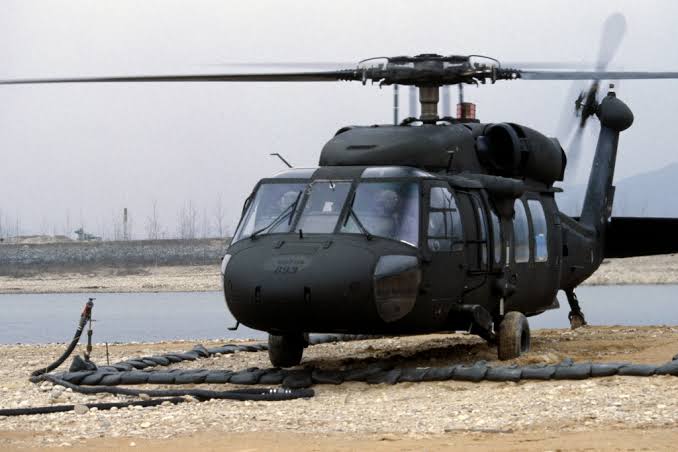
The U.S. Department of State approved the possible Foreign Military Sale on September 10, 2026. The plan covers four Sikorsky UH-60L Black Hawk utility helicopters and two T700-GE-701D engines, with Sikorsky parent Lockheed Martin identified as the principal contractor. U.S. Ambassador Peter Lamelas said deliveries would be staggered, beginning with four aircraft, but no delivery dates have been announced.
U.S. officials frame the helicopters as additional capacity for border security, operations against transnational crime, and humanitarian assistance or disaster response. The State Department described Argentina as a major non-NATO ally and said the proposed sale would neither alter the region’s basic military balance nor adversely affect U.S. defense readiness.
The emergency-response role is supported by equipment included in the proposed package. A published description of the approved equipment lists rescue hoists, cargo hooks and a Bambi Bucket for aerial firefighting, along with radios and Garmin GTN-750 navigation units. Those items would allow the aircraft to serve as more than basic transports, particularly during fires, floods or rescue operations where external loads and hoisting capability matter.
Still, a foreign-sale ceiling should not be read as a per-helicopter price. Dividing $140 million by four produces $35 million per aircraft, but that calculation folds in two engines, communications and navigation hardware, support equipment, spares, training and logistics. The notified amount is an estimated maximum for the proposed package; negotiations can change its final value and contents.
The more consequential unknown is the condition of the airframes. The UH-60L is an earlier Black Hawk generation introduced decades before the UH-60M now in production. “Refurbished” can cover materially different work scopes, from inspections and component replacement to deeper airframe renewal and avionics changes. No aircraft ages, serial numbers, previous operators, accumulated flight time, refurbishment standard or expected remaining service life have been disclosed.
Those details directly affect availability and ownership cost. A used helicopter can provide capable lift without the acquisition cost of a new-production model, but its operational value depends on component life, corrosion condition, parts provisioning and how consistently the fleet is configured. Four aircraft also constitute a small fleet, so scheduled maintenance or an extended repair could remove a significant share of the available capacity at once.
Common configuration matters for the same reason. The notification broadly identifies communications, navigation, identification, auxiliary-fuel and mission equipment, as well as maintenance and aircrew training provisions. It does not establish the quantities installed on each helicopter, the final cockpit standard, the training syllabus, contractor-support duration or the stock of replacement components that would accompany delivery.
These are not minor contractual footnotes. Rescue hoists and firefighting buckets create useful mission options, but readiness depends on trained crews, qualified maintainers, inspected lifting equipment and a supply chain able to return an aircraft to service. Delivery of an airframe is therefore only one milestone in creating sustainable emergency-response capacity.
The Black Hawk’s established utility-helicopter design gives Argentina a credible platform basis for transport, rescue and disaster missions. The State Department has also said Argentina should have no difficulty absorbing the articles and services. That official assessment, however, does not disclose how quickly the aircraft could become operational or what availability level the small fleet could sustain.
The proposal is an authorization, not confirmation that aircraft have arrived or that a final contract has been signed. The next meaningful markers will be a negotiated agreement, identified refurbishment and equipment standards, and a firm delivery schedule. Until then, the clearest number is also the package’s central limitation: $140 million has been attached to four refurbished Black Hawks, but the work and support purchased by that amount are not yet fully defined.
| More aerospace and engineering stories, right in your MSN feed. Follow AMI on MSN |
By David Whitaker — Associate editor for AMI’s aerospace and drone systems desk, translating flight systems, aircraft programs, spaceflight, and UAV developments into accessible technical stories.