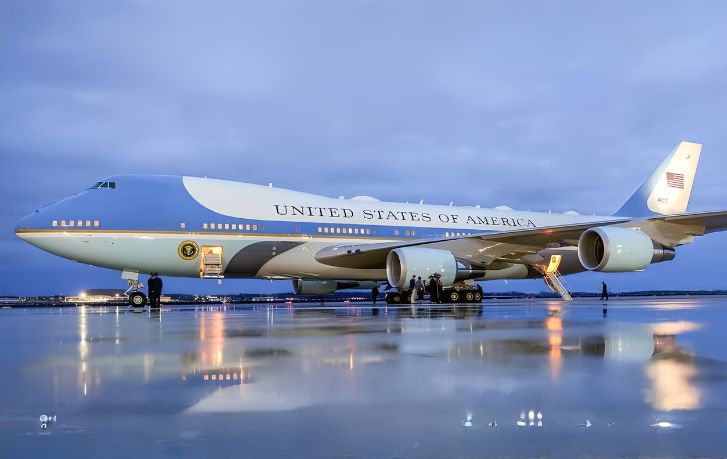
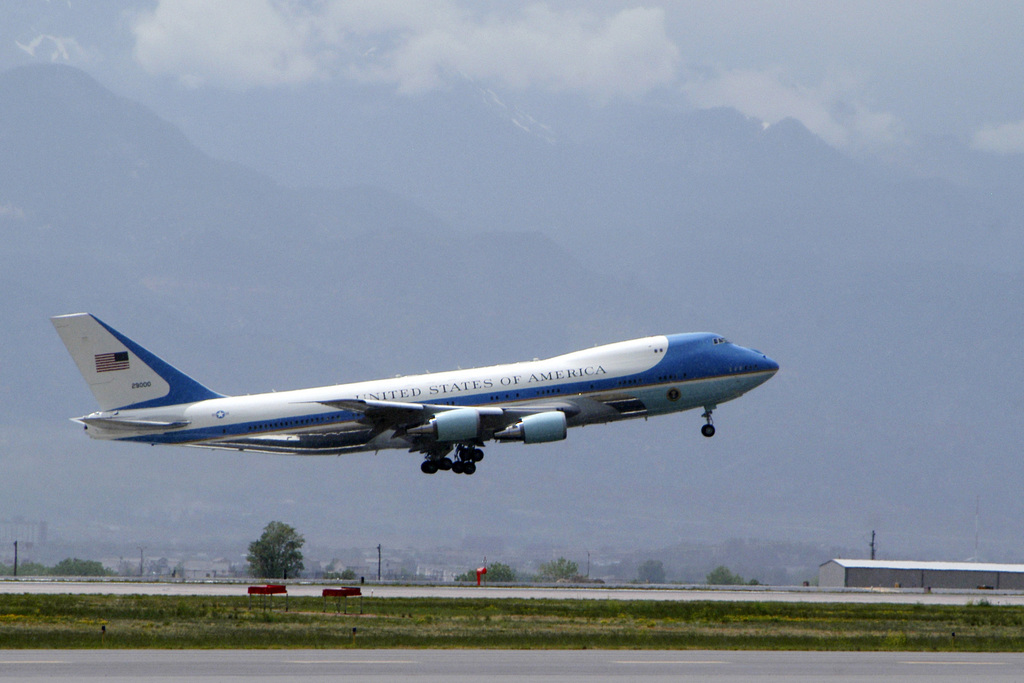
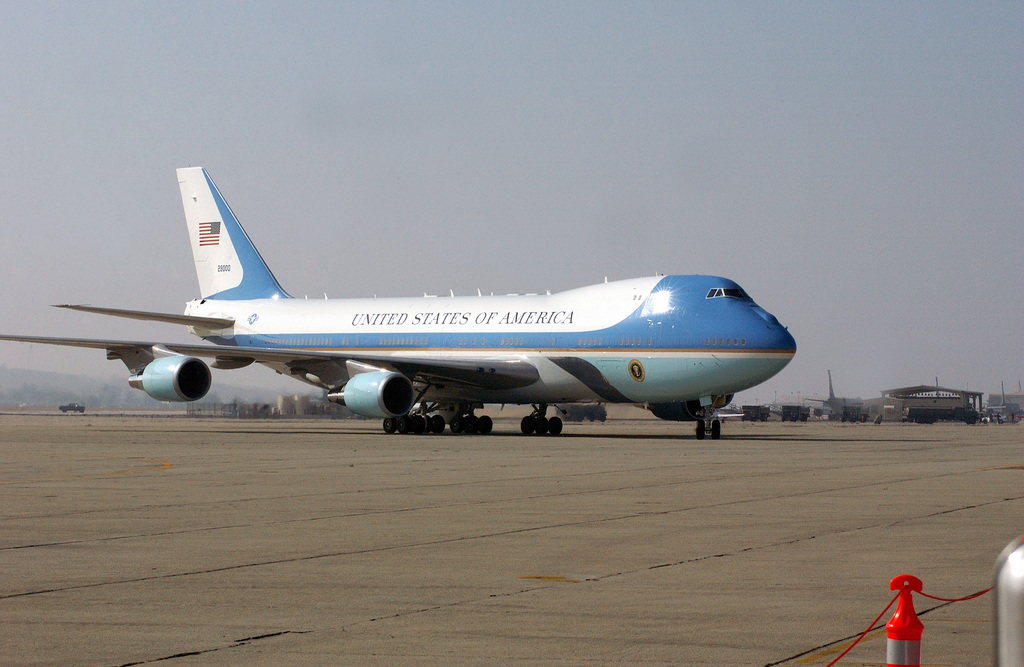
Donated Air Force One’s Full Conversion and Operating Costs Stay Unclear
The first permanent Boeing 747-8 being converted into the next Air Force One is expected to power on its electrical systems before the end of 2026. The Air Force then plans a first flight in 2027 and is targeting delivery of the aircraft, designated VC-25B, in mid-2028 after years of program delays.
Electrical power-on will allow engineers to expand integrated testing and verify that the aircraft’s interconnected systems work as intended. Meanwhile, a donated 747-8 modified as a bridge aircraft is giving Air Force personnel early experience operating, maintaining and sustaining the newer 747 platform before the two permanent presidential jets arrive.
That makes power-on more than a ceremonial switch-flipping exercise. A commercial airframe can be tested extensively at the component level while major modification work continues, but energizing the installed electrical architecture lets teams evaluate a much broader aircraft-level system. Problems involving interfaces, equipment configuration or incomplete work can then emerge before flight testing, when corrections generally become more disruptive to the schedule.
A milestone, not proof of completion
The planned sequence power in 2026, flight in 2027 and delivery in 2028 also shows how much work remains between an electrically active aircraft and one ready to transport the president. The latest program schedule places roughly a year between power-on and the first flight, followed by another period of testing and certification before delivery.
The VC-25B is based on the Boeing 747-8, but its commercial heritage does not make the conversion routine. Boeing is modifying two aircraft to satisfy specialized presidential operational requirements and U.S. government security standards. The work includes secure communications and other mission equipment, along with the supporting electrical, structural and certification changes needed to make those installations part of an approved aircraft.
Certification remains a separate constraint from installation. A recent Air Force acquisition update identified concerns involving certification of spare windshields and passenger windows, an issue affecting a wider group of aircraft rather than only the presidential jets. That distinction matters: completing hardware installation does not by itself establish that every configuration, replacement part and operating procedure is ready for service.
Boeing has also been replacing cracked structural stringers inside both conversion aircraft. The Air Force said the cracks do not affect aircraft safety and that the repairs are being performed under Federal Aviation Administration procedures. Even without a stated safety effect, the retrofit is work that must be completed before the targeted 2028 delivery and therefore remains relevant to schedule execution.
The bridge aircraft reduces one transition risk
The donated 747-8 does not substitute for the two permanent VC-25Bs, which are being built to a more extensive presidential mission specification. Its practical value is narrower: it allows the Presidential Airlift Group to encounter the operating and maintenance demands of the 747-8 before the permanent fleet enters service.
That experience can help separate aircraft-platform learning from mission-system introduction. Crews and maintainers can become familiar with the basic 747-8’s operating, maintenance and sustainment requirements while Boeing continues integrating the permanent aircraft. It does not eliminate certification work or guarantee that the delivery schedule will hold, but it can reduce the number of unfamiliar elements arriving at once during the fleet transition.
The bridge jet also carries an unresolved public-cost issue. The Air Force has said it spent less than $400 million modifying the donated aircraft for presidential use, including secure communications and defensive systems, but officials have not publicly itemized all classified security work or provided a complete long-term operating-cost estimate. The aircraft may have been transferred without a conventional purchase price, yet conversion, certification, staffing and sustainment still consume public resources.
For the permanent program, the original schedule called for operational capability in 2024. The present target has moved to 2028 amid unfinished design work, technical problems and cost overruns. Power-on will therefore be useful evidence of physical progress, but it will not resolve the broader cost and schedule questions by itself.
The next meaningful test is whether the energized aircraft can move through integrated checks without disrupting the planned 2027 first flight. Only after flight testing and certification will the program be positioned to meet its mid-2028 delivery target and begin replacing presidential 747-200 aircraft that entered service in 1990.
| More aerospace and engineering stories, right in your MSN feed. Follow AMI on MSN |
By Thomas Caldwell — AMI’s senior editor for mechanical and mobility engineering, covering vehicle electronics, systems integration, electrification, chassis systems, propulsion, and safety policy.