Ford F-150 Owners Say 1.39-Million-Truck Downshift Fix Is Paused
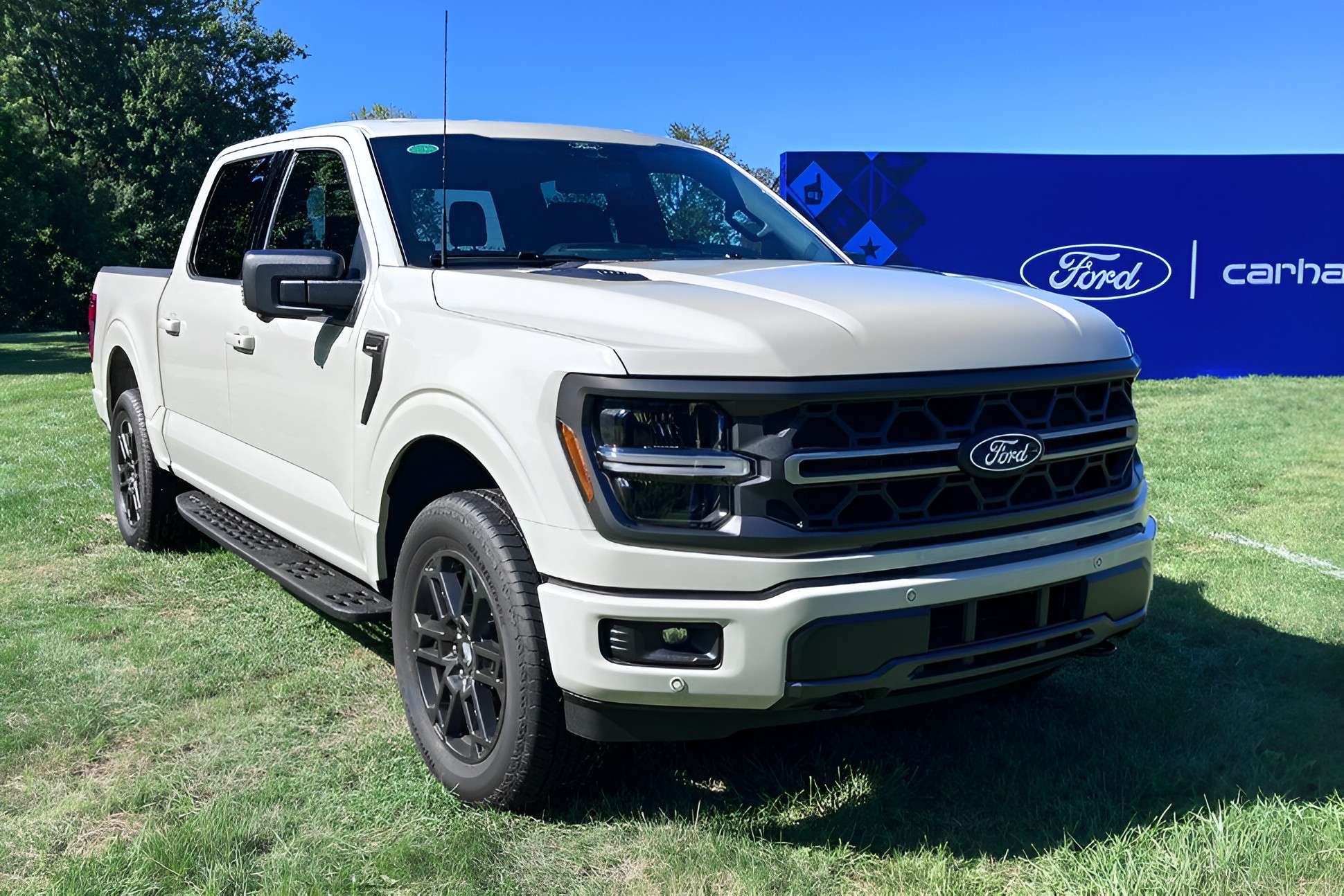
A safety recall may remain officially open while becoming practically inaccessible. Several owners of 2015–2017 Ford F-150 pickups reported on October 29 that dealers had stopped performing recall 26S28, which addresses unintended transmission downshifts. The owners said dealers described the remedy as being on hold, but Ford and the National Highway Traffic Safety Administration had not confirmed a nationwide pause.
Ford’s public recall page reportedly continued to list the remedy as available from July 9, with no restart date or explanation for the dealer reports. That leaves the status uncertain for owners of 1,392,935 affected trucks: the underlying defect and recall are documented, while the apparent interruption rests on owners relaying what individual dealers told them.
The repair changes the controller, not the connection
The recall covers F-150s equipped with Ford’s six-speed 6R80 automatic transmission and built from March 12, 2014, through August 18, 2017. The defect begins in the lead frame, a molded wiring carrier mounted to the transmission valve body. Ford says repeated heat cycles and vibration can degrade electrical connections in that assembly.
A deteriorating connection can corrupt the transmission-range-sensor signal sent to the powertrain control module. The central systems problem is then one of signal validity: the controller can act on data that does not accurately describe the transmission’s state. NHTSA’s engineering analysis identified a sixth-to-second-gear shift between 35 and 64 mph as the “worst case” under Ford’s shift logic.
The primary recall remedy recalibrates the powertrain controller to provide “additional time” for identifying a potentially invalid signal. That can prevent the software from reacting as quickly to intermittent bad data, but it does not restore the lead frame’s physical electrical connections. Ford reserves lead-frame replacement for trucks that have recorded specified diagnostic trouble codes.
This creates a consequential boundary around the remedy. A truck with the qualifying code can receive hardware work, while one with intermittent degradation but no preserved qualifying code may receive only the recalibration. Because intermittent faults may disappear before a service appointment, stored diagnostic history becomes part of the decision about which repair an owner receives.
Complaint data show why access matters
Among 329 owners in NHTSA’s complaint pool, 43% reported at least one rear-wheel lockup. The agency also found that 114 owners in that group had already replaced a lead frame or valve body. Ford’s chronology counted 444 warranty claims, 121 field reports, 105 customer-service reports, 316 NHTSA owner complaints, two injuries and one crash as of April 2, 2026.
NHTSA testing identified another operating condition involving the same sensor input. Loss of its signal while a truck was reversing uphill could cause the transmission to enter neutral, allowing the vehicle to roll forward. The recall paperwork described for 26S28 addresses unintended downshifts rather than this reverse-rollaway scenario.
A repair interruption can reduce recall effectiveness even when a campaign remains formally active. NHTSA’s recall-completion guidance says results depend on factors including owners’ understanding of the risk, current contact information, dealer access, convenience and barriers faced by different owner groups. Conflicting information between a public recall page and dealer scheduling adds another barrier: an owner willing to obtain the repair still cannot complete it if the servicing dealer declines to proceed.
That access problem is especially significant for older trucks that may have changed owners. Recall inclusion and completion must be checked by vehicle identification number rather than model year alone. Ford’s recall information also provides a 15-year or 150,000-mile extended warranty for covered parts, and the company handles eligible prior-repair claims through its general reimbursement plan.
Owners seeking service have a practical reason to avoid erasing diagnostic codes and to request a written repair order documenting what the dealer found and why work was declined or deferred. Those records can affect eligibility for lead-frame replacement, reimbursement or written requests for loaner assistance if a truck is grounded.
The unresolved issue is whether the reported stoppage is limited to certain dealers or represents a broader Ford instruction. Until Ford or NHTSA clarifies that point, owners face two separate constraints: a degrading electrical connection that software does not physically repair, and uncertain access to the recall procedure intended to manage its consequences.
| More aerospace and engineering stories, right in your MSN feed. Follow AMI on MSN |
By Thomas Caldwell — AMI’s senior editor for mechanical and mobility engineering, covering vehicle electronics, systems integration, electrification, chassis systems, propulsion, and safety policy.