Foreign-Jet Spending Curb Was Blocked Over Separate Air Force Program
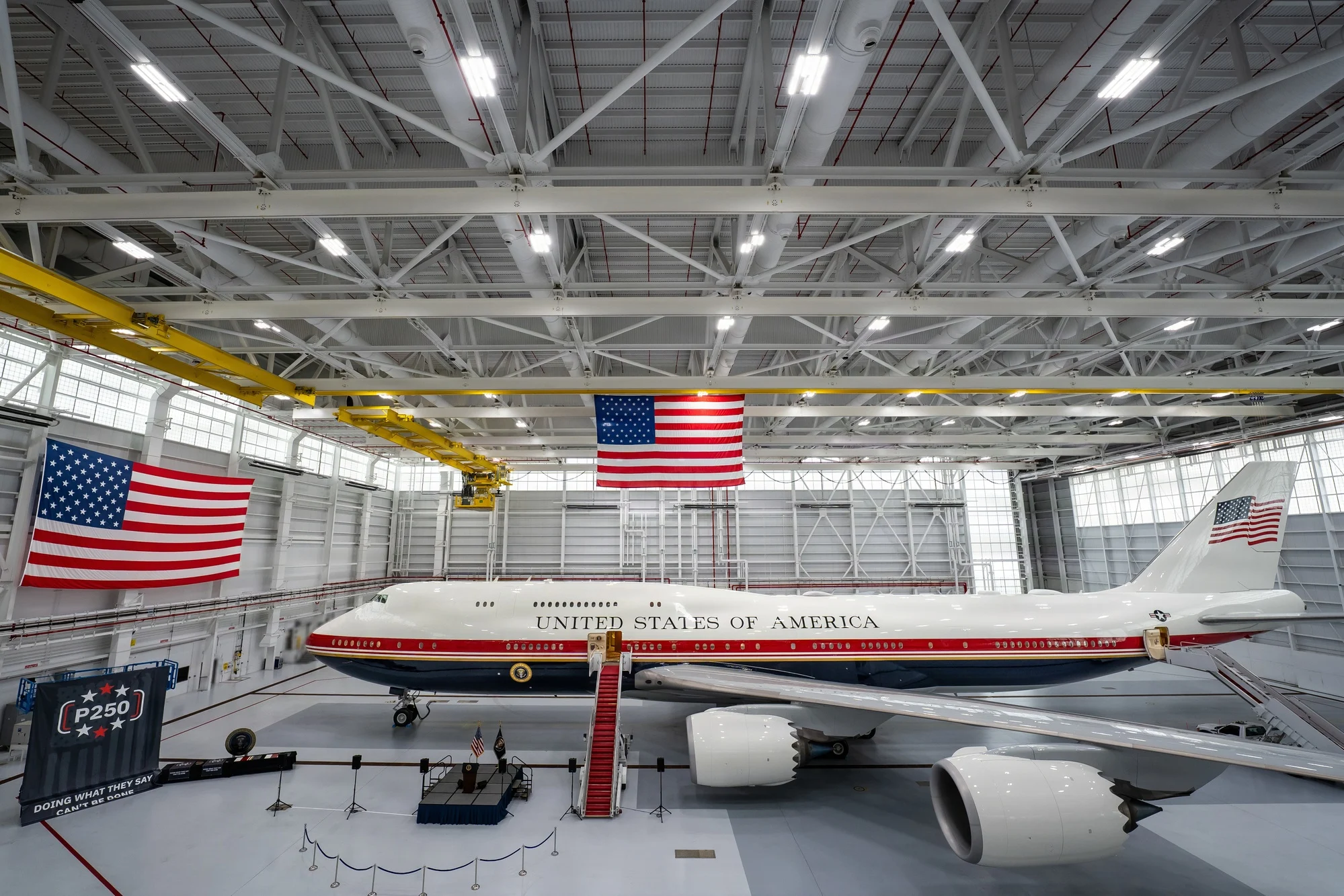
The first permanent new Air Force One is expected to achieve electrical power-on before the end of 2026, followed by its first flight in 2027 and delivery in 2028. The sequence gives Boeing and the U.S. Air Force a measurable path toward putting the extensively modified Boeing 747-8 into service after the original 2024 delivery plan slipped by several years.
Power-on starts the phase in which engineers can test the aircraft’s integrated electrical architecture and begin exercising connected mission systems under aircraft power. It is a critical systems-integration checkpoint, but not proof that the jet is ready to fly: Boeing is also repairing cracked structural stringers, completing unfinished design work and addressing certification concerns involving replacement windshields and passenger windows.
Why electrical power-on matters
A modern aircraft can contain components that pass individual bench tests but still expose problems when they are connected through the completed airframe. Power-on lets engineers verify electrical distribution, equipment interfaces and communication among installed systems in a more representative configuration. It also supports fault isolation before flight testing adds the risks, cost and scheduling constraints of operating an aircraft in the air.
That integration burden is unusually high for the aircraft formally designated VC-25B. Although it starts with a commercial 747-8 platform, it is being converted into a specialized presidential transport and secure communications aircraft. Its modified systems must function together and satisfy Air Force requirements and government security standards rather than merely reproduce the commercial airliner’s original configuration.
The milestone therefore reduces one category of uncertainty while exposing another. Successful initial power application would confirm that the program has reached a more mature physical-integration stage. It would not establish that every system meets its requirements, that certification work is complete or that the 2027 flight date is protected from later discoveries.
Repairs and certification remain schedule risks
Boeing is replacing cracked reinforcing stringers inside both permanent presidential aircraft. The Air Force said the cracks do not affect aircraft safety and that repairs are proceeding under Federal Aviation Administration procedures. According to an August 2026 program update, the service reported steady progress and expected the work to be completed ahead of the targeted first delivery in mid-2028.
Stringers form part of an aircraft’s internal reinforcing structure, so replacement is consequential production work even when the condition is not considered a safety threat. It consumes labor, access time and inspection capacity that must be coordinated with wiring, equipment installation and other modification tasks inside the airframe. The available information does not establish that the stringer work has delayed power-on or caused the broader program delays.
Spare windshield and passenger-window certification presents a different systems-management problem. The concern is not confined to the two presidential jets, and the Air Force has indicated that work is moving in the right direction. Nevertheless, replacement-component approval matters for long-term operation because a high-availability aircraft needs a support system capable of supplying compliant parts throughout its service life. Delivery of the airframe and sustainable fleet operation are related but separate achievements.
First flight is not the finish line
The planned 2027 first flight will move the program from ground integration into airborne evaluation. Flight testing can verify aircraft-level behavior under operating loads and conditions that ground tests cannot fully reproduce. The remaining interval before the 2028 delivery target provides time for test findings, corrections, certification and acceptance work.
The Air Force is also gaining 747-8 operating and maintenance experience from the Qatar-provided bridge aircraft, which entered the Presidential Airlift Group in June 2026 after modification and flight testing. Because it shares the underlying 747-8 platform, that aircraft can familiarize personnel with the type’s maintenance and sustainment demands before the two permanent VC-25Bs arrive. It does not replace the permanent aircraft’s own integration, security or certification program.
The bridge jet carries a separate public-cost debate. Its further conversion has been estimated by the administration at as much as $1 billion, and an effort to restrict Pentagon spending on previously foreign-owned aircraft was blocked. The objection was that the wording might also reach former Korean Air aircraft intended for the separate Survivable Airborne Operations Center program, although that possible program effect remains an attributed legislative argument rather than an established technical finding.
For the permanent fleet, the immediate test is more concrete: complete electrical work, apply aircraft power and begin proving that the installed systems operate together. If that checkpoint is achieved in 2026, the 2027 first flight becomes the next major measure of whether Boeing can protect the 2028 delivery target.
| More aerospace and engineering stories, right in your MSN feed. Follow AMI on MSN |
By Thomas Caldwell — AMI’s senior editor for mechanical and mobility engineering, covering vehicle electronics, systems integration, electrification, chassis systems, propulsion, and safety policy.