Drone Strikes Push Russia to Record Fuel Imports and Gasoline Buybacks
Russia imported a record 172,000 tonnes of refined fuel in August 2026, more than seven times its previous monthly high since the full-scale invasion began. The surge marks a national-scale supply response to refinery disruptions associated with repeated Ukrainian drone strikes, even as authorities tried to protect domestic availability through export bans and other market interventions.
The reversal is unusually stark for a country that was once the world’s largest oil-product exporter. Russia received fuel from South Korea and purchased gasoline refined in India from Russian crude, according to the Centre for Research on Energy and Clean Air’s August analysis. At the same time, revenue from seaborne oil-product exports fell 32% from July to €78 million per day, its lowest level since the full-scale invasion.
The import total was not enormous relative to Russia’s overall energy system, but its composition shows where the pressure was concentrated. Gasoline represented 74% of August oil-product imports, compared with only 6% between 2023 and 2025. The August volume was also three times the imported total for all of 2025, after seaborne fuel imports averaged less than 5,000 tonnes per month from 2023 through 2025.
A refining constraint became an international supply-chain problem
Crude oil availability and usable motor fuel are not interchangeable. Refineries convert crude into gasoline, diesel, jet fuel and other products through multiple processing stages. When enough refining units are unavailable, possessing ample crude does not immediately solve a gasoline shortage. Replacement fuel must come from another operating refinery and then move through ports, ships, rail networks and domestic distributors.
That distinction explains the India trade. India supplied 70% of Russia’s August oil-product imports and 94% of its imported gasoline, amounting to 120,000 tonnes of gasoline worth €78 million. Those cargoes came from the Vadinar refinery, which sourced all its crude from Russia during the first eight months of 2026. Rosneft also holds 49.13% of Vadinar operator Nayara Energy.
In practical terms, Russian crude was processed abroad and the resulting gasoline was transported back to Russia. That route adds freight, handling and insurance costs that would not exist if domestic refineries were meeting demand. It also lengthens the replenishment chain: imports can add supply, but they cannot replicate the speed and geographic convenience of normal domestic production and distribution.
South Korea provided another part of the response. Russia imported 18,000 tonnes of South Korean oil products in August, mostly gasoil. That was 41% above the previous post-invasion monthly record set in July and eight times the three-year monthly average. The Pacific trade has an established logistical rationale because some eastern Russian ports are difficult to supply from other routes, but the new scale indicates that this channel was carrying more of the burden.
Exports, wholesale supply and motorists show the same constraint
The trade reversal coincided with shrinking exports. Russian port loadings of oil products declined for a third consecutive month in August and fell below half their August 2025 level. Export volumes dropped 21% month over month, while revenue from products unloaded at destination ports dropped 32%. Those figures suggest lower refinery throughput and domestic prioritization were affecting both the amount available for export and the revenue generated from it.
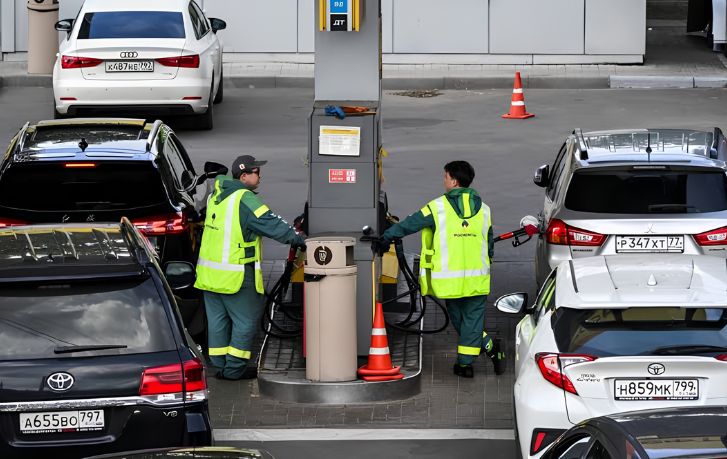
Pressure was also visible inside Russia. Gasoline sales on the St. Petersburg International Mercantile Exchange fell by an average of 20% from the second half of July to early August. Authorities in at least 10 regions were dealing with difficult filling-station supplies, while some stations in the Moscow region reportedly lacked gasoline. Diesel remained available at almost all stations there.
Government measures had briefly improved conditions by late July. These included gasoline and diesel export restrictions, higher imports and relaxed quality requirements for some petroleum products. Renewed refinery disruptions in late July and early August then overlapped with higher summer consumption, and regional sales controls returned. For motorists and other fuel users, that sequence matters: the earlier stabilization did not establish a durable supply margin.
The scale is clear, but attribution has limits
The August figures establish a major change in fuel flows, not a precise accounting of cause. Refinery strikes occurred alongside seasonal demand, export policy and distribution constraints. Available reporting does not isolate how much of the shortage was attributable to drone attacks alone, and outage estimates can change as shutdowns are confirmed or plants restart.
Even with that uncertainty, three separate indicators point in the same direction: record imports, a 20% decline in wholesale gasoline sales and record-low seaborne oil-product export revenue. Russia’s response has moved beyond local rationing into international substitution most notably buying back gasoline made in India from Russian crude. The unresolved issue is whether imported supply can restore a stable domestic buffer while refinery disruptions continue and wholesale availability remains constrained.
| More aerospace and engineering stories, right in your MSN feed. Follow AMI on MSN |
By Stephen Wallace — Editor for AMI’s aerospace integration and unmanned mobility coverage, focused on drone manufacturing, VTOL systems, autonomous networks, and air-ground mobility links.