F-35 Scored 97% for Missions, but Canada Still Weighs a Mixed Fleet
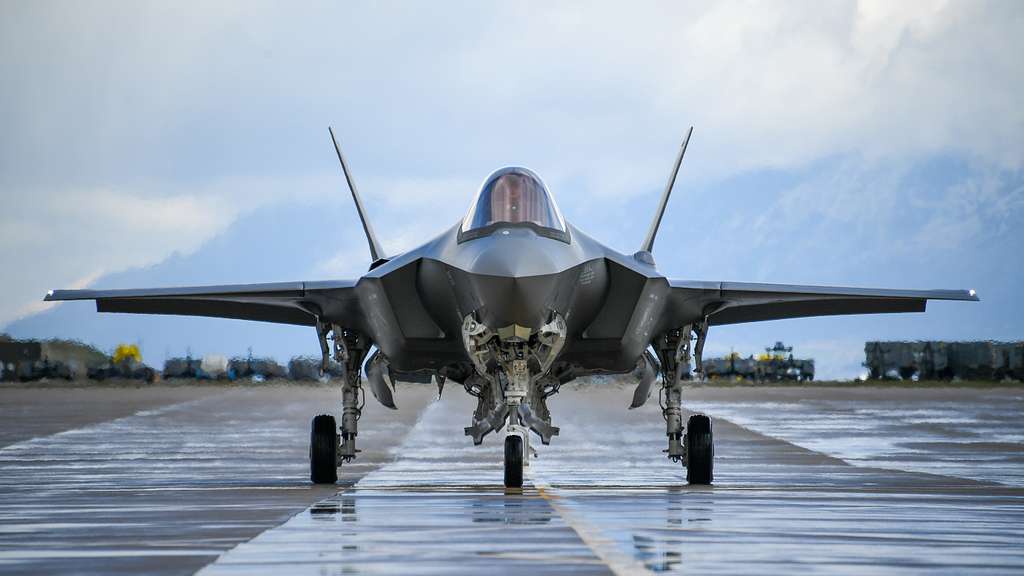
The Lockheed Martin F-35A held a commanding advantage in Canada’s fighter evaluation: a 97 percent mission-performance score against 22 percent for Saab’s Gripen E. Yet Ottawa is still reviewing how to fill its 88-aircraft requirement, with government briefing material listing “all options, including a mix of fighter aircraft.”

Canada pledged in 2022 to purchase 88 F-35As, but the acquisition estimate rose from C$19 billion that year to C$27.7 billion in 2024. The Auditor General of Canada also found that the later figure excluded at least C$5.5 billion for infrastructure, advanced weapons and other requirements needed to achieve full operational capability. Canada has placed a firm order for 16 aircraft and started paying for critical equipment for 14 more, according to a CBC account of the continuing review.
The evaluation result was not close
The mission score was only one part of the 2021 competition. Defence Department figures gave the F-35 57.1 of 60 points for overall military capability, versus 19.8 for the Gripen. The F-35 also ranked higher in upgradability, technical criteria, capability delivery and sustainment.
Those results establish what Canada’s formal evaluation valued and which aircraft best met those requirements at the time. They do not prove that the F-35 is universally superior for every mission or that capability must override cost and industrial policy. They do, however, set a high bar for changing the planned fleet: a split purchase would need to deliver benefits substantial enough to justify moving away from the competition’s clear capability winner.
The current cost figure also requires careful reading. The increase from C$19 billion to C$27.7 billion is a project acquisition estimate, not simply a change in the advertised price of each aircraft. Fighter programs purchase far more than airframes, including training, initial support, equipment and program services. Even so, excluding at least C$5.5 billion in additional needs means taxpayers cannot treat C$27.7 billion as the complete cost of reaching full operational capability.
Two fighters create two support systems
A mixed fleet could give Canada more procurement flexibility and a larger domestic industrial role. Saab says it remains prepared to establish Canadian capacity to produce Gripen E/F aircraft. It has also signed an agreement with CAE covering possible training, simulators, mission-systems engineering and sustainment. Saab chief executive Micael Johansson has advocated combining the two aircraft rather than abandoning the F-35 entirely.
Those are proposed industrial benefits, not a selection decision. Their value would depend on the number of Gripens ordered, the depth of work performed in Canada and the durability of the resulting support base. Domestic assembly can shift employment and technical capacity into Canada, but it does not erase the cost of establishing production or supporting a second aircraft type.
For the Royal Canadian Air Force, a mixed fleet would divide a relatively small 88-aircraft requirement into separate communities. Pilots and technicians would need different training pipelines. Maintainers would work with different procedures, test equipment and technical documentation. The service would also need separate spare-parts inventories and support arrangements, while infrastructure would have to accommodate both types.
That duplication does not make a mixed fleet unworkable; several air forces operate more than one fighter. Scale is the constraint. Every fixed training or logistics cost is spread over fewer aircraft when the fleet is divided, potentially reducing the savings expected from buying a less costly or more domestically supported second type. Canada would also have to decide how missions are allocated without creating two fleets that are individually too small to sustain training, maintenance and deployment demands efficiently.
Modernization risk remains part of the F-35 calculation
The F-35’s evaluation advantage does not remove schedule risk. The U.S. Government Accountability Office said in September 2025 that the aircraft’s Block 4 modernization was more than US$6 billion above previous estimates and at least five years late. All 110 F-35s delivered by Lockheed Martin in 2024 were late, with an average delay of 238 days.
Canada’s initial aircraft remain planned for training rather than immediate domestic operations: eight Canadian F-35As are expected at Luke Air Force Base in Arizona by 2027 for pilot preparation. That milestone will begin building an F-35 workforce before Ottawa settles the final composition of the 88-aircraft fleet.
The unresolved choice is therefore narrower than a simple rematch between two fighters. Canada must decide whether the Gripen’s proposed industrial and procurement benefits justify the added overhead of a second training, maintenance and logistics system even after the F-35 beat it by 75 percentage points in mission performance.
| More aerospace and engineering stories, right in your MSN feed. Follow AMI on MSN |
By David Whitaker — Associate editor for AMI’s aerospace and drone systems desk, translating flight systems, aircraft programs, spaceflight, and UAV developments into accessible technical stories.